Marceli Klimek
HAND EMBROIDERY ba hons
Royal school of needlework
Specialisms: Embroidery / Textiles - Print/Embroidery / Textile Innovation/Textile Art
Location: London, United Kingdom
Marceli Klimek
First Name: Marceli
Last Name: Klimek
Specialisms: Embroidery / Textiles - Print/Embroidery / Textile Innovation/Textile Art
Sectors:
My Location: London, United Kingdom
University / College: Royal school of needlework
Course / Program Title: HAND EMBROIDERY ba hons
About
Hi, I am passionate about Hand Embroidery and exploring cultural symbols, deconstructing them through media analysis. I value the diverse experiences embroidery has the potential to provide through interaction with music, cinema, and psychology. My focus is on satirical and reconstructive perspectives towards tradition in art and culture. Reinterpreting the traditional is an important element of my practice, and the adaptation of broad thread manipulation techniques is a signature style of my work. From my studies at The Royal School of Needlework, the importance of reinterpreting conventional designs through a contemporary lens became a priority. I am inspired by multi-disciplinary artists like Stanislaw Szukalski and Janina Kraupe-Swiderska to inform my work on communication in art and recontextualising hierarchies in wider society through a careful consideration of design, including those that exist in textiles as well as wider art and craft practices. My designs involve digital art, sound, textiles, and fashion, all in the context of metamodernism and contemporary theory.
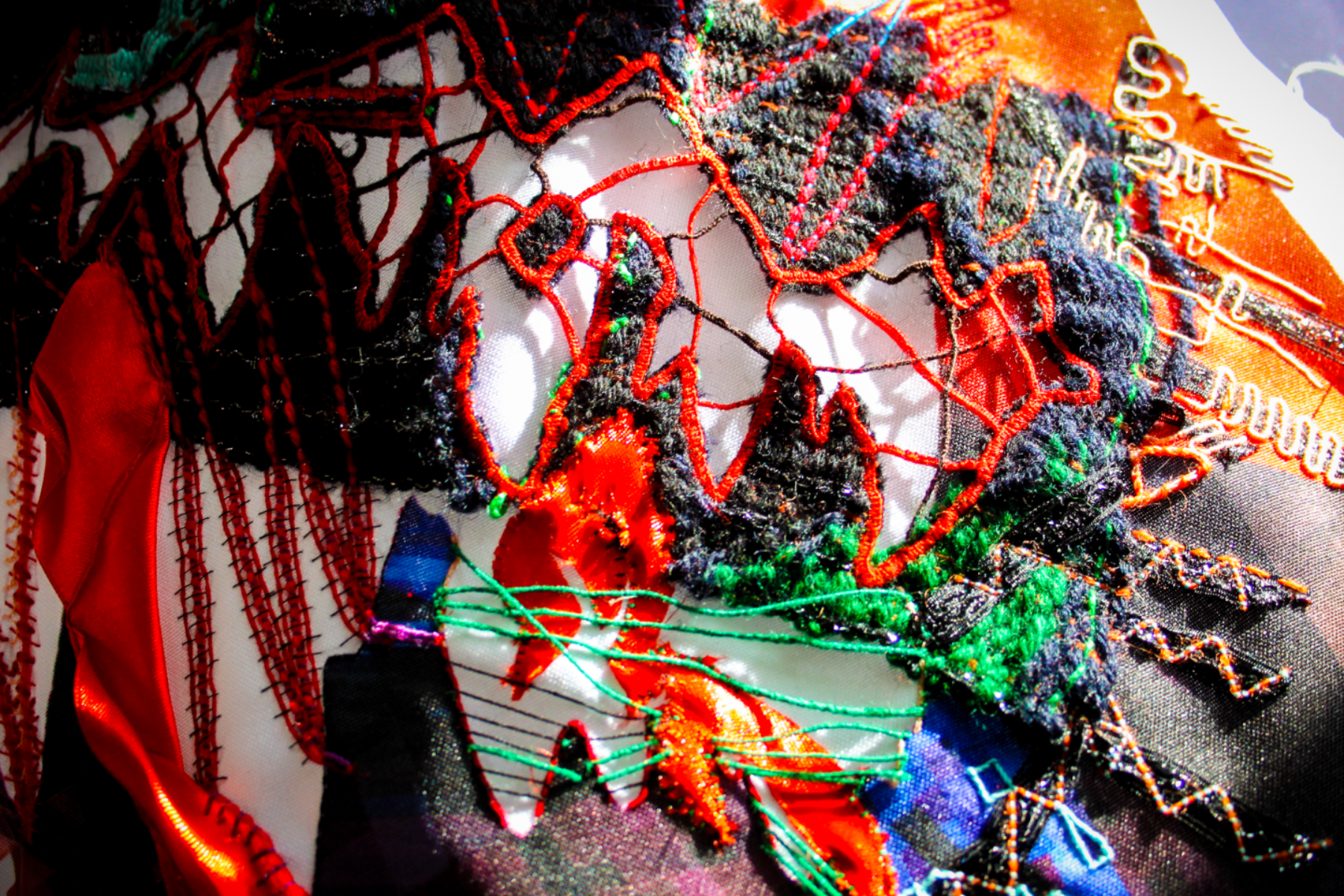
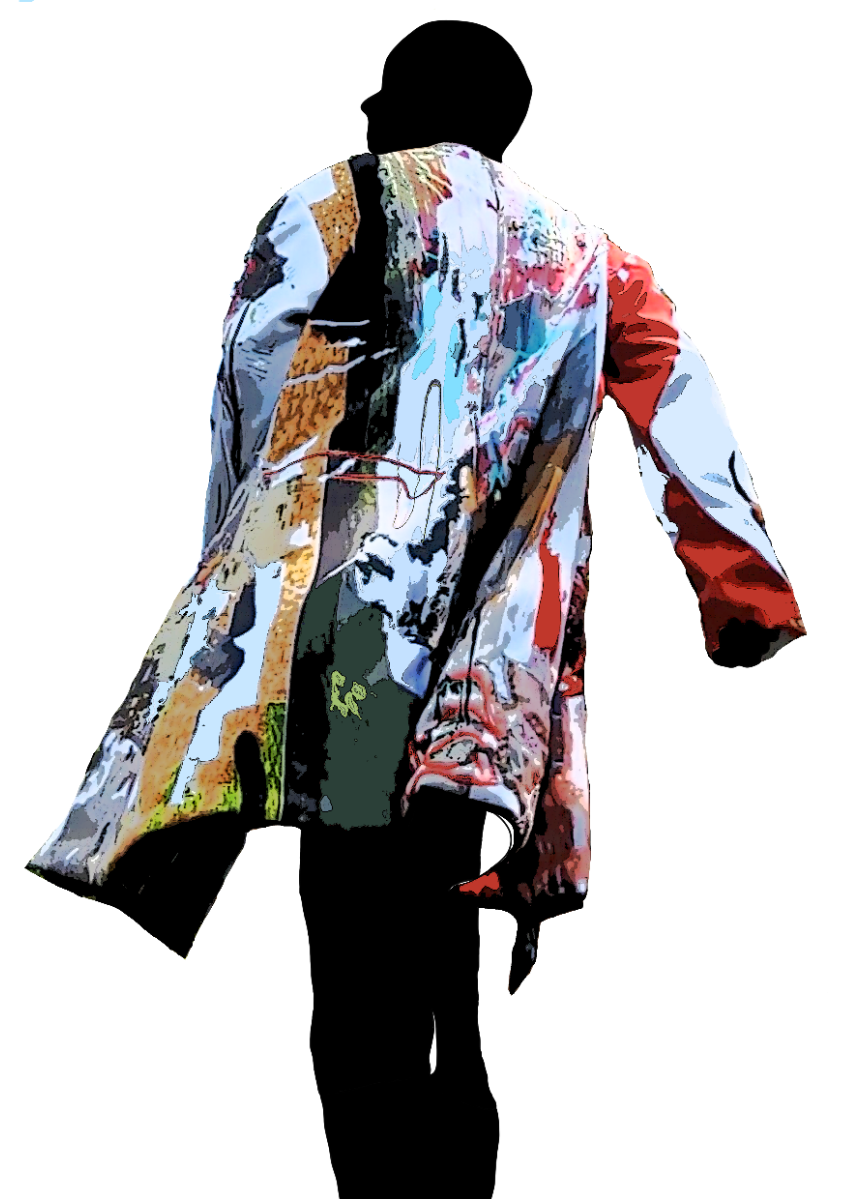
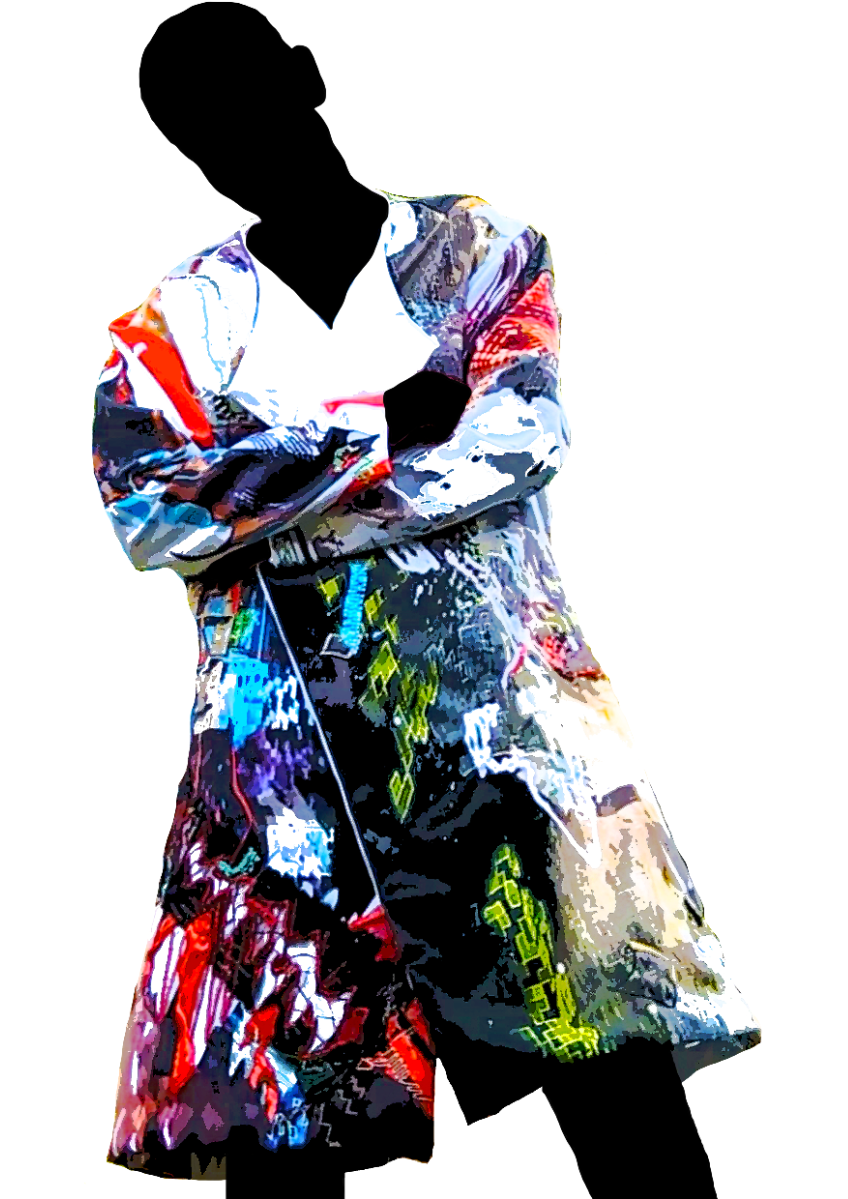
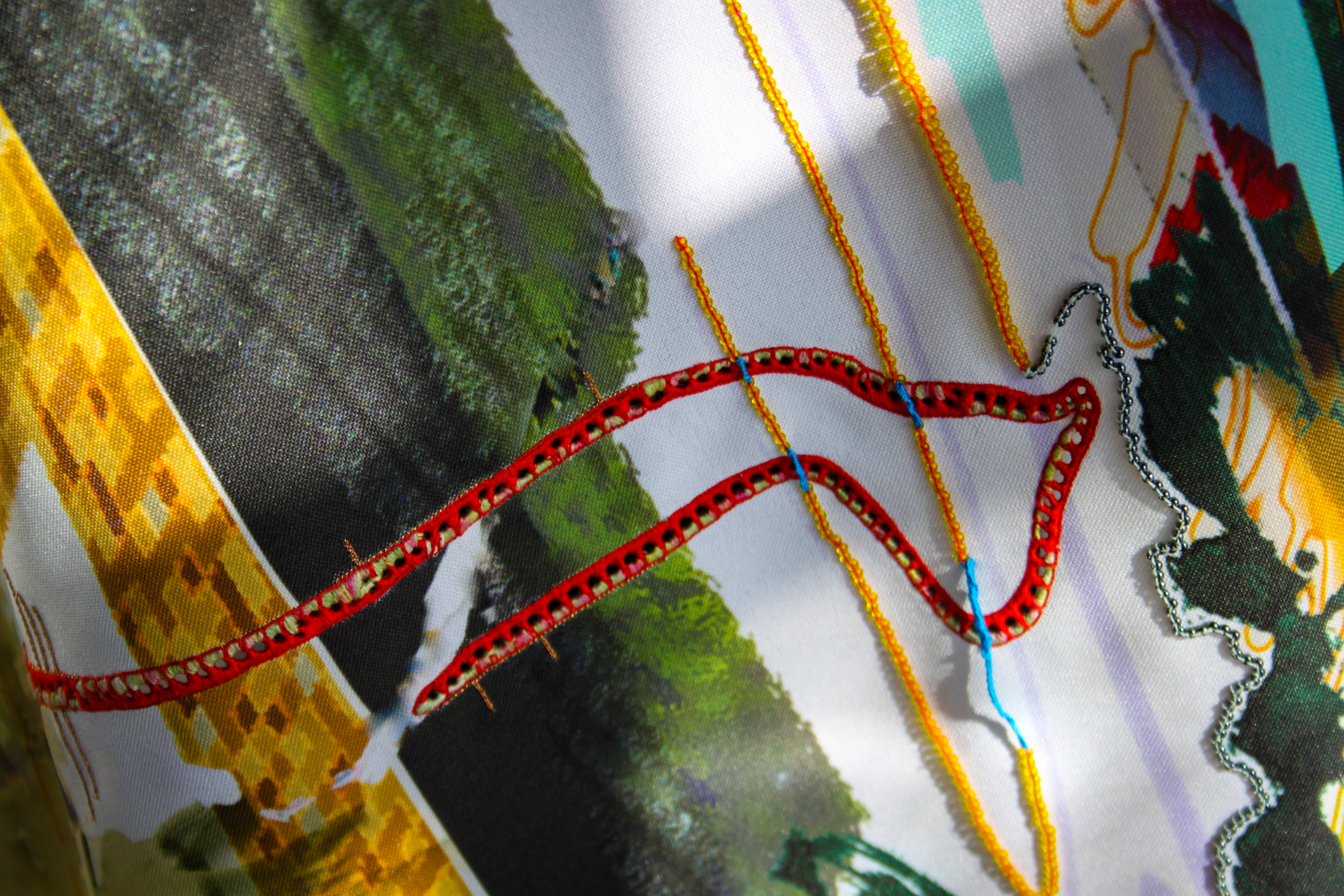
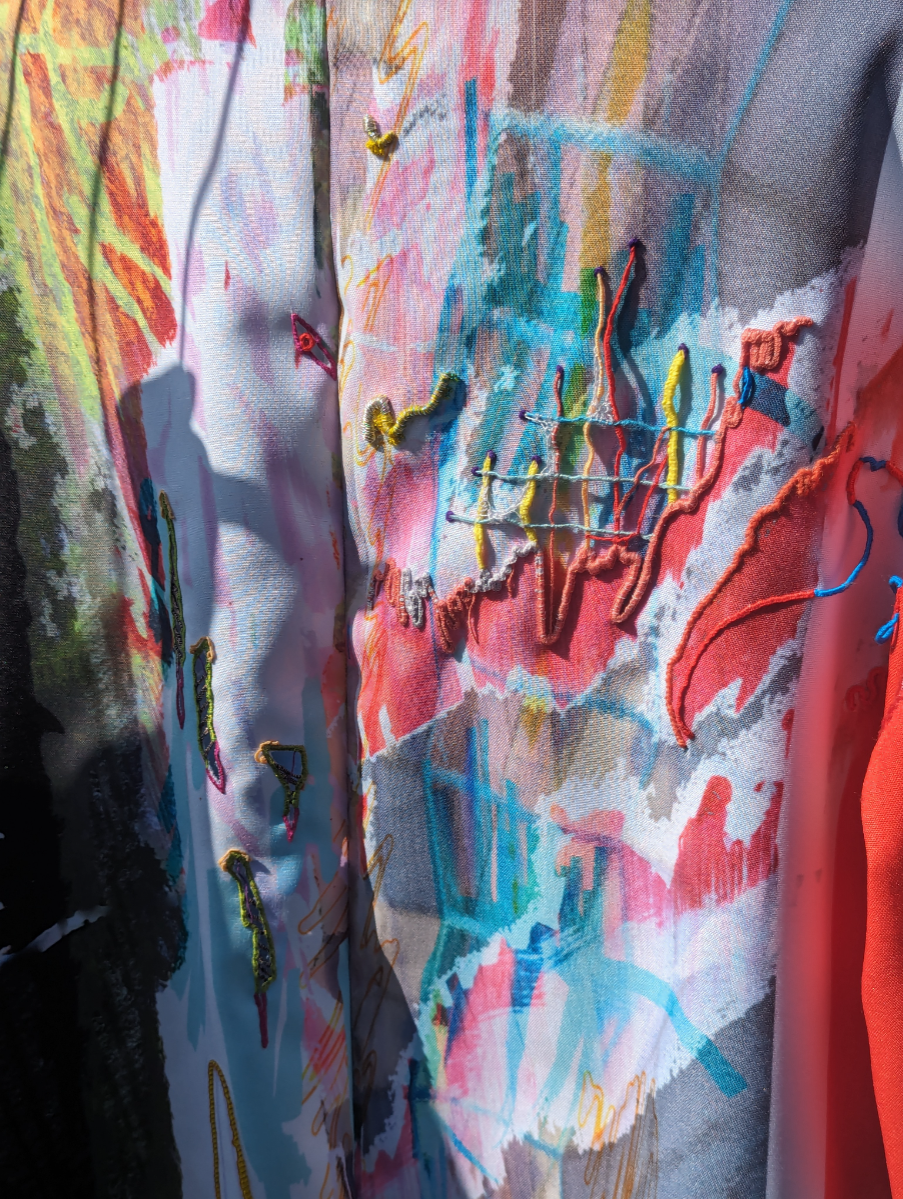
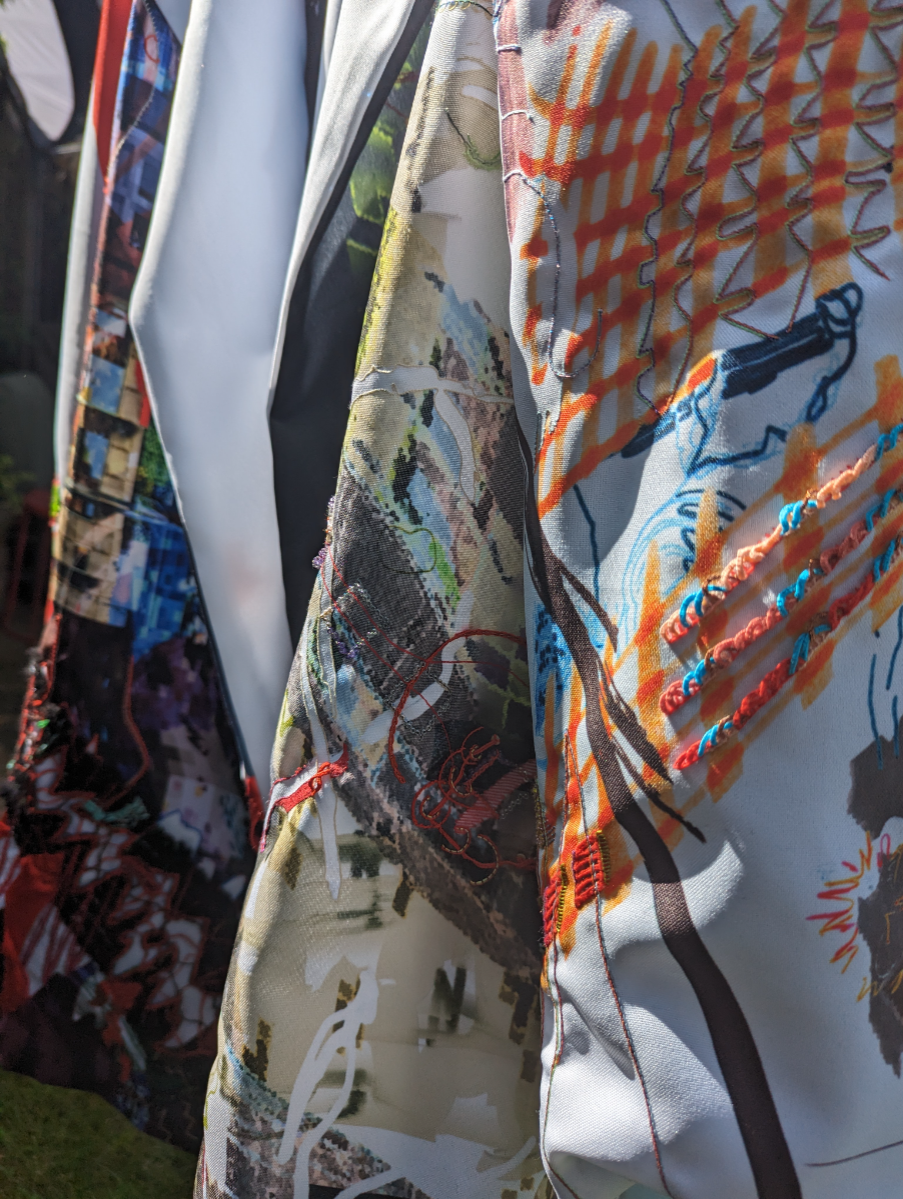
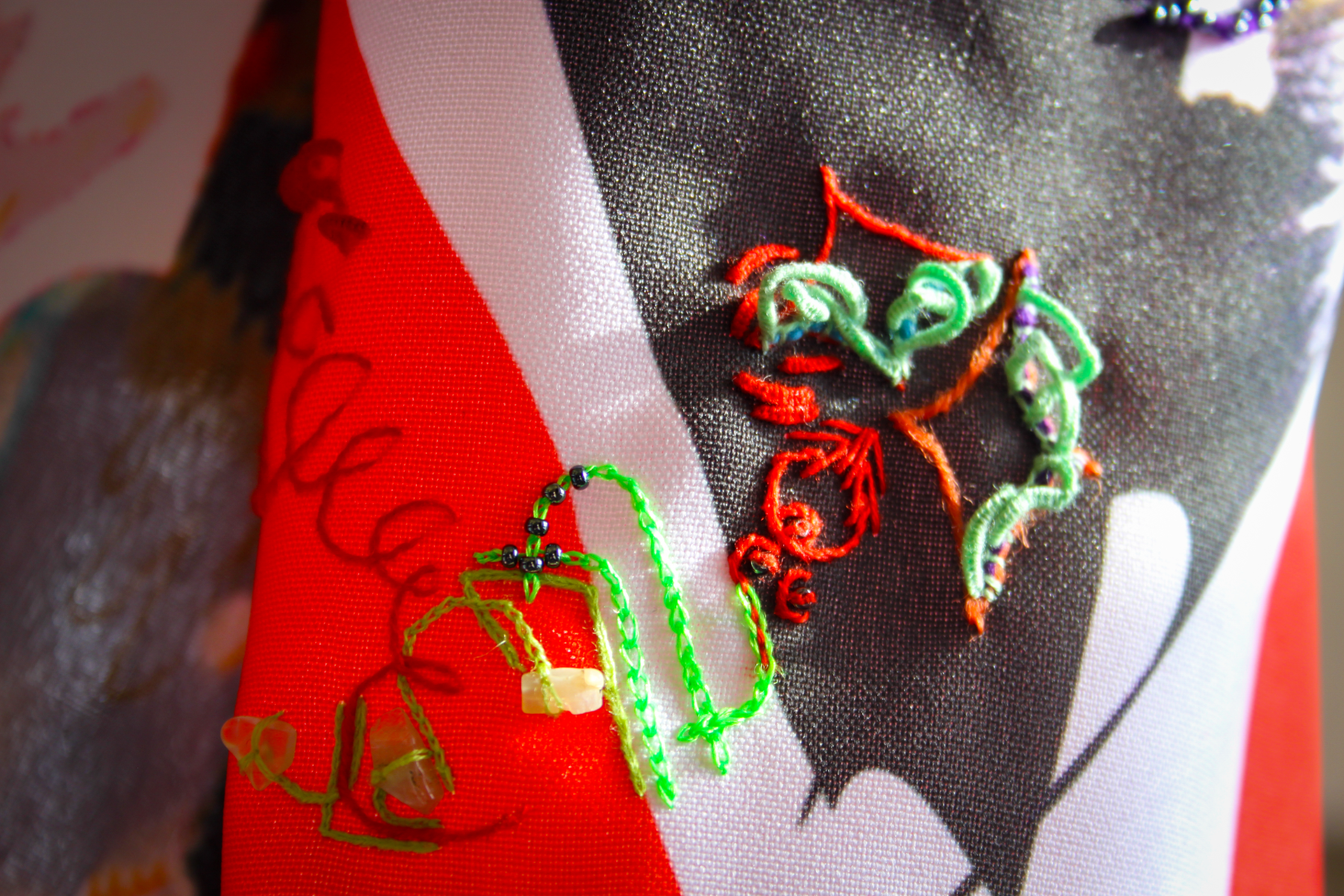
Cuh Rs an anagram of Crush by Hayden Silas Anhedonia. The fluidity of music, strength of album covers. Opila, a digital bird, representation of relations. Experimentation with mythologising and applying symbolic meaning. Ammonia, chaos, and change. Processing, creating, and destroying within the human mind and body. Cuh Opilamonnia Rs is an exploration of interpersonal relationships through embroidery. Through this new piece Marceli aims to demonstrate embroidery as a fine art, as well as its potential purpose within craft and society. He researches the strengths of embroidery for use in fashion. Playing with textile hierarchies of weave, print and, embroidery to deliver a diverse visual and sensory experience. Fashion, being a medium that can blur the boundaries of modern conceptual function, suits this high concept theoretical practice.
Competitions
TEX+ 2024

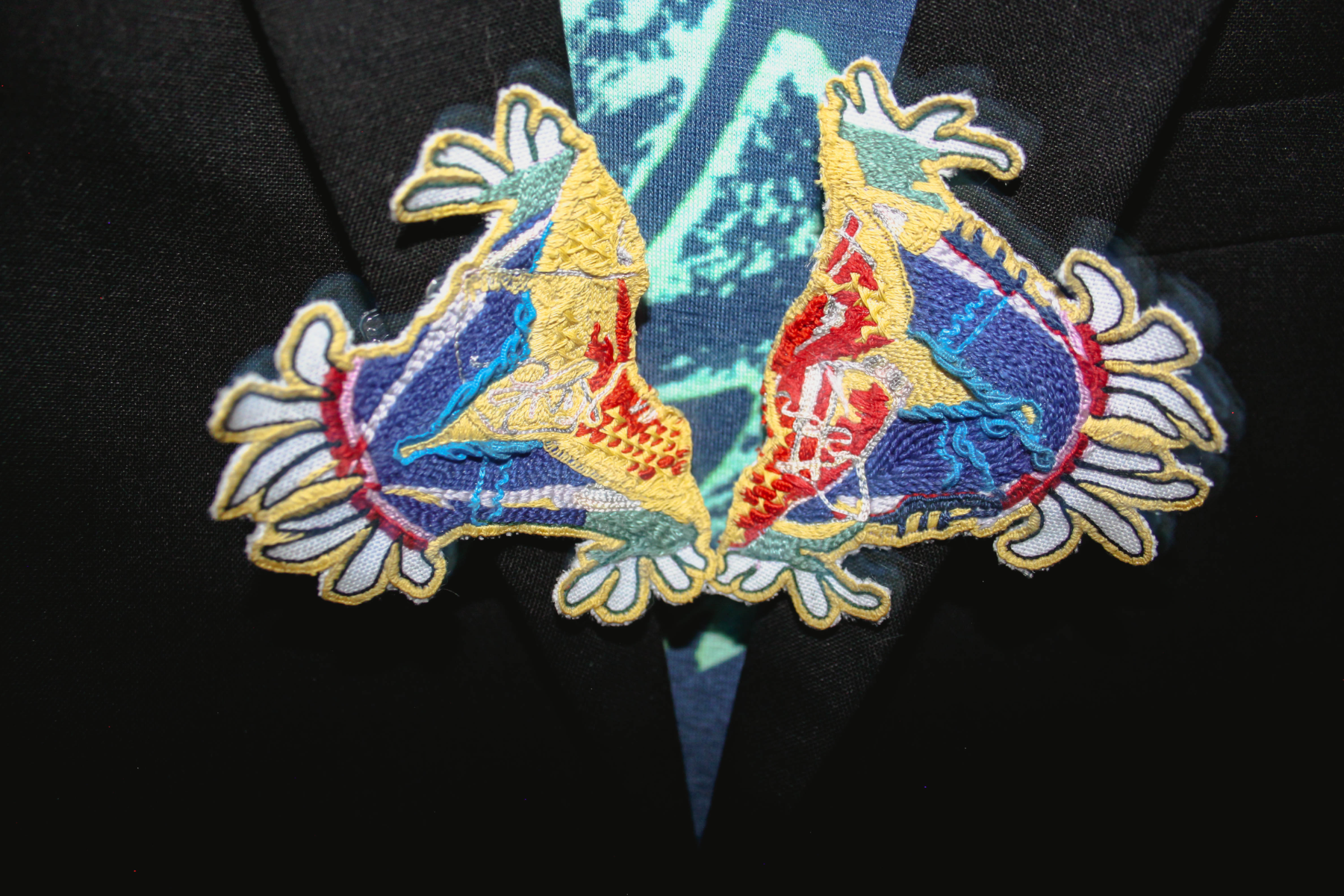
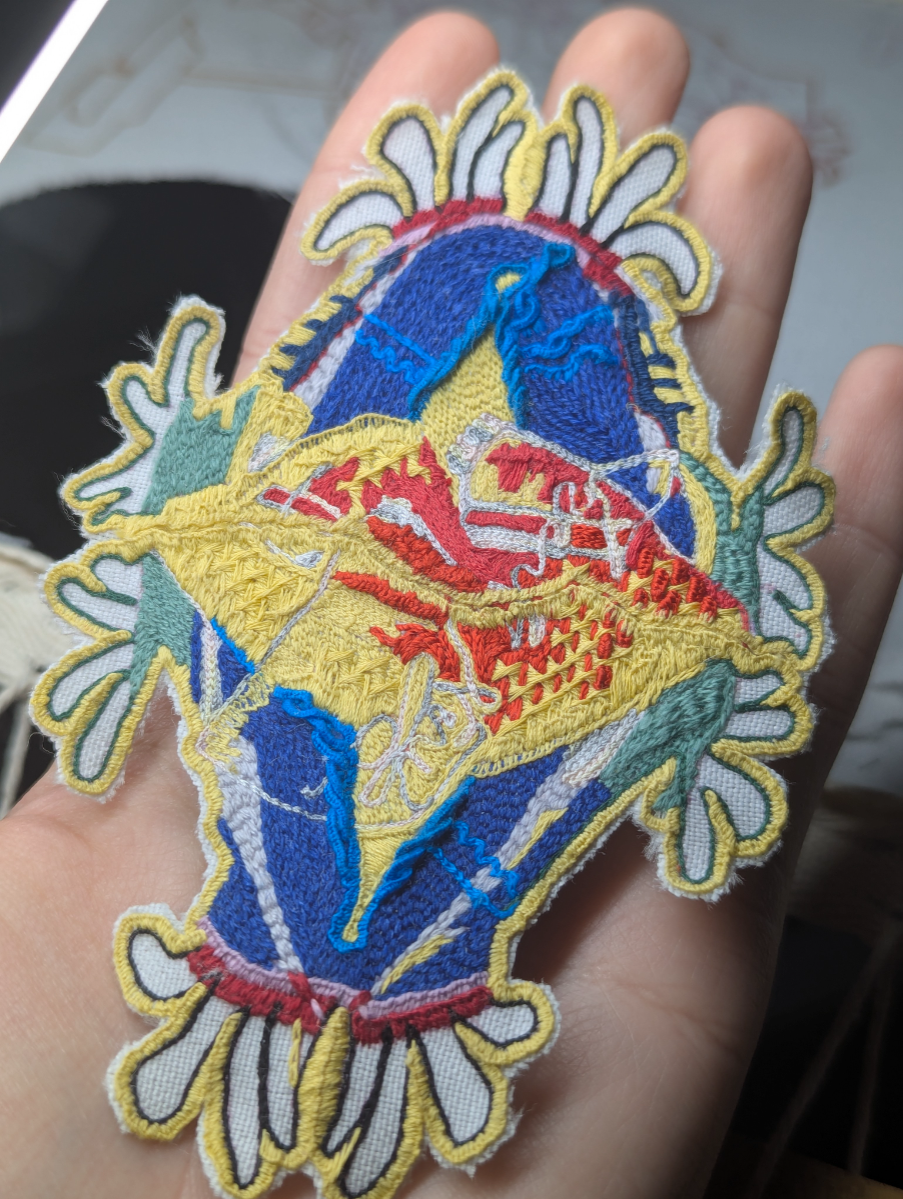
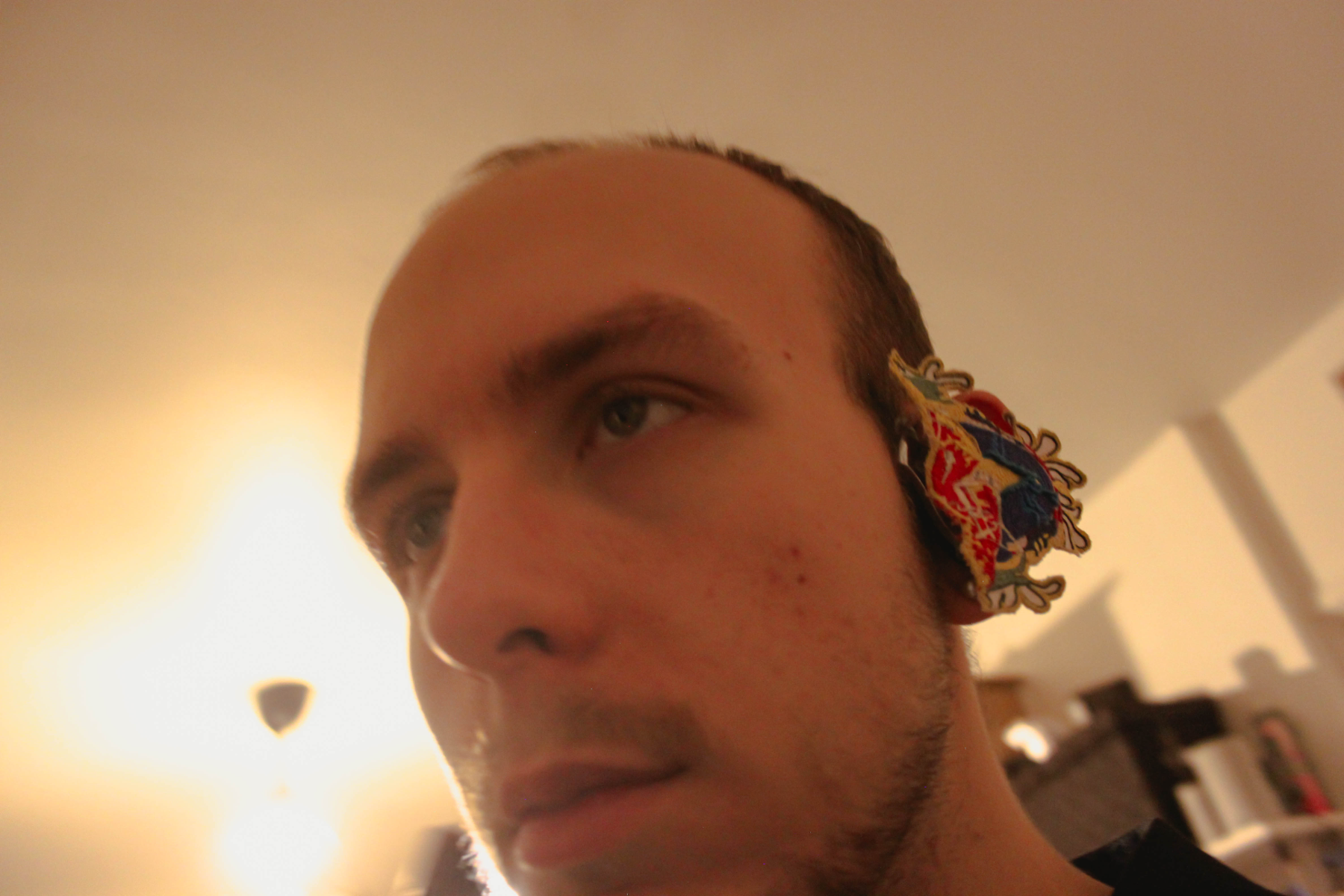
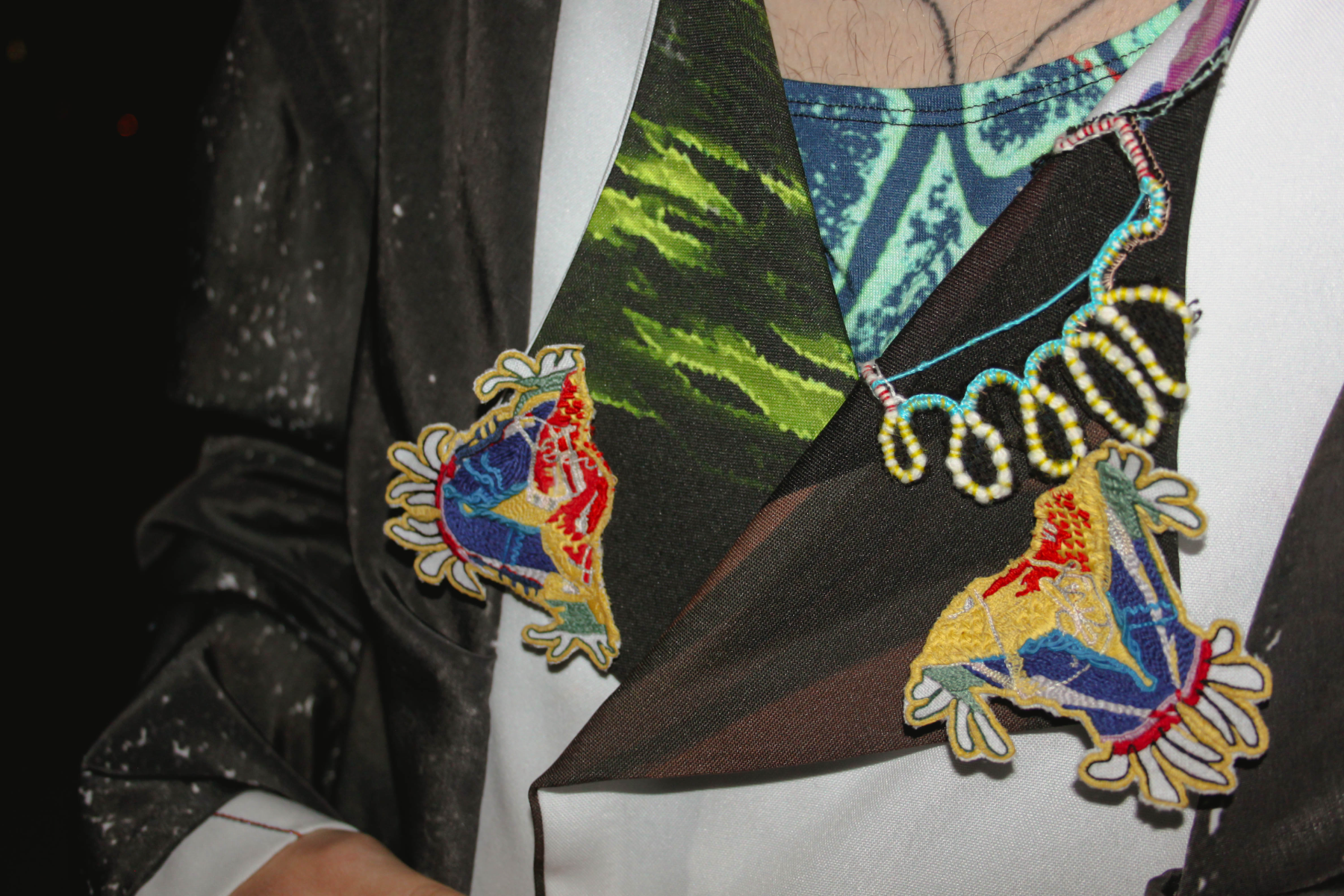
Forming a heart with your hands tends to produce a diamond-like shape in the middle stages of the action, just after intention and before completion. Embroidery is likewise an art focused on the process, and certain parallels like the transience and unimportance of the process can be applied to this gesture. Embroidery and various other types of media, like cinema, music, usually don't disclose their working process to the consumer. Not that they’re not important, sometimes it’s to protect specific techniques or ideas from competitors. When designing motifs for my graduate piece, I wanted to effectively distil themes relating to relationships, familial, romantic, and friendly into shapes that could permeate my piece without being noticed outright. Hidden in the final result, whilst being evident in the process. To achieve this, I mimicked the way smear frames capture the feeling of motion in between key frames in movies with multiple distorted brush strokes, glitched effects. I formatted the composition and layout of colours to the structure of a pop song/ballad, the bridge, chorus. Encompassing every design aspect of my motifs with these considerations allowed them to blend in and accentuate the main print and embroidery of the garment. My approach of combining multiple similar things to achieve a similar effect in another medium is arguably haphazard and considerably chaotic. In Opilamonnia, this wasn’t a problem as the whole project centred around the power of contradictions and visually translated into quite chaotic forms and designs. For future projects that wish to incorporate intermedial practices, a careful cherry picking of schematics to suit a stricter colour scheme would also work if the work commits to an uncritical conversation with itself. All four main diamond motifs pictured here experiment with my feelings towards individuals in my life. Put on show with the use of my diary entries as text, yet obscured by my hesitance to share them. Plagued with a self-conscious design directive. Drawings of sketches of objects associated with people I care about and people I don’t. Drawings and photos of hands, always reaching outwards for something yet drowning in a sea of unreal and unrealistically vibrant colours. Nothing in service of celebrating or condemning a certain person, but simply portraying their existence/idea. The colours work to mystify their colloquial meanings and it is never clear if they’re warm because they’re loving or cold and damning, but certainly always full of intent and passion and purpose. A burning insecurity and desire to be seen and seen through strikes through these designs.