Ringailė Demšytė
Art science MA
Royal Academy Of Art The Hague KABK
Specialisms: Design Research / Installation/Sculpture / Graphic Design
Location: Vilnius, Lithuania
Ringailė Demšytė
First Name: Ringailė
Last Name: Demšytė
Specialisms: Design Research / Installation/Sculpture / Graphic Design
Sectors:
My Location: Vilnius, Lithuania
University / College: Royal Academy Of Art The Hague KABK
Course / Program Title: Art science MA
About
Ringailė Demšytė is a designer and researcher exploring non-human intelligence and more-than-human perspectives. By cultivating Physarum polycephalum (slime mould) in small-scale laboratory setups, she moves beyond capitalist notions of speed, efficiency, and control. Rather than treating living organisms as tools, Demšytė approaches nature as an active collaborator—shaping conditions through simple interventions and allowing the organism's behaviour to guide the final output. Her work spans time-lapse video, experimental typography, and participatory workshops that invite audiences to rethink design as a practice of care, attention, and coexistence.
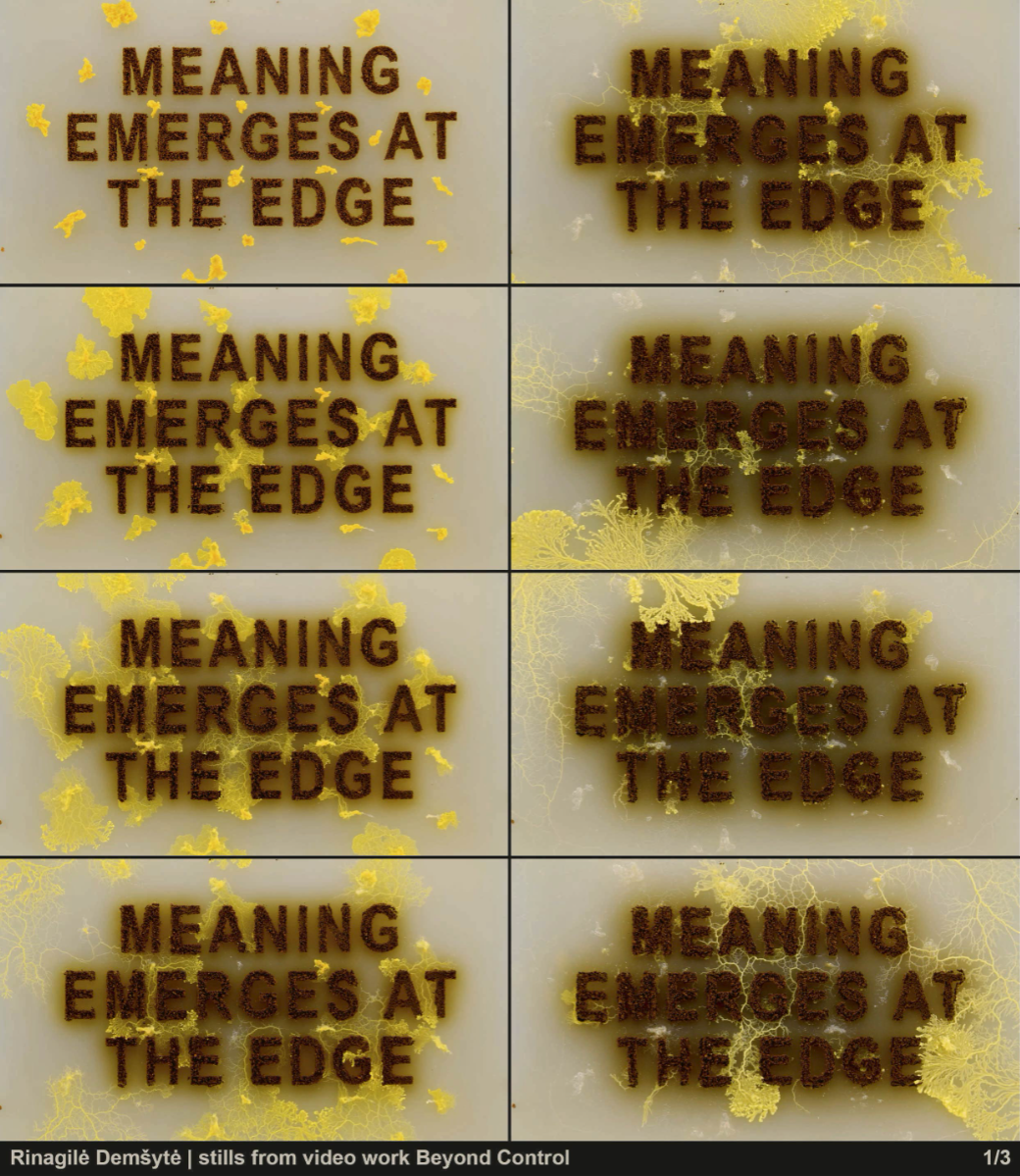
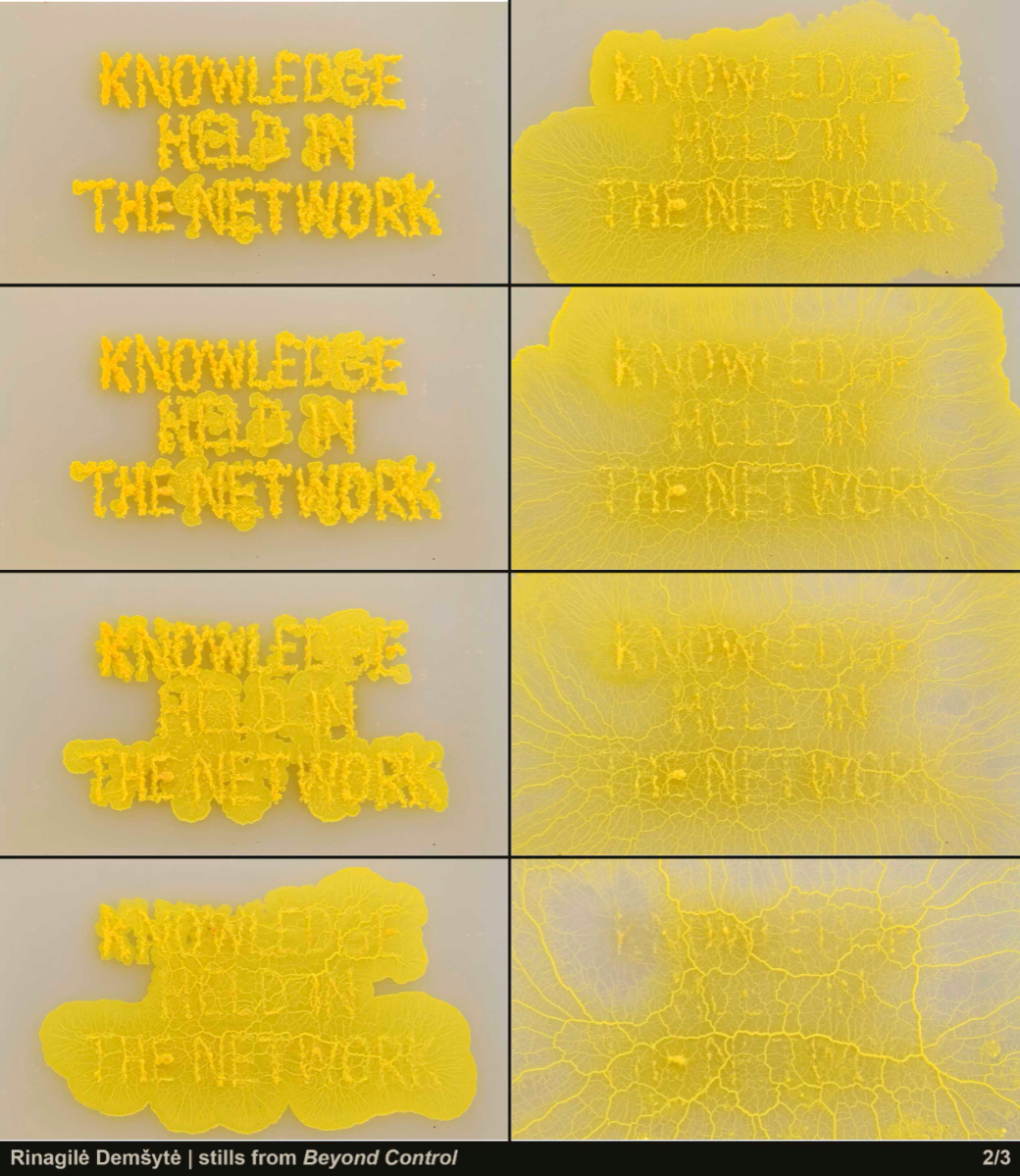
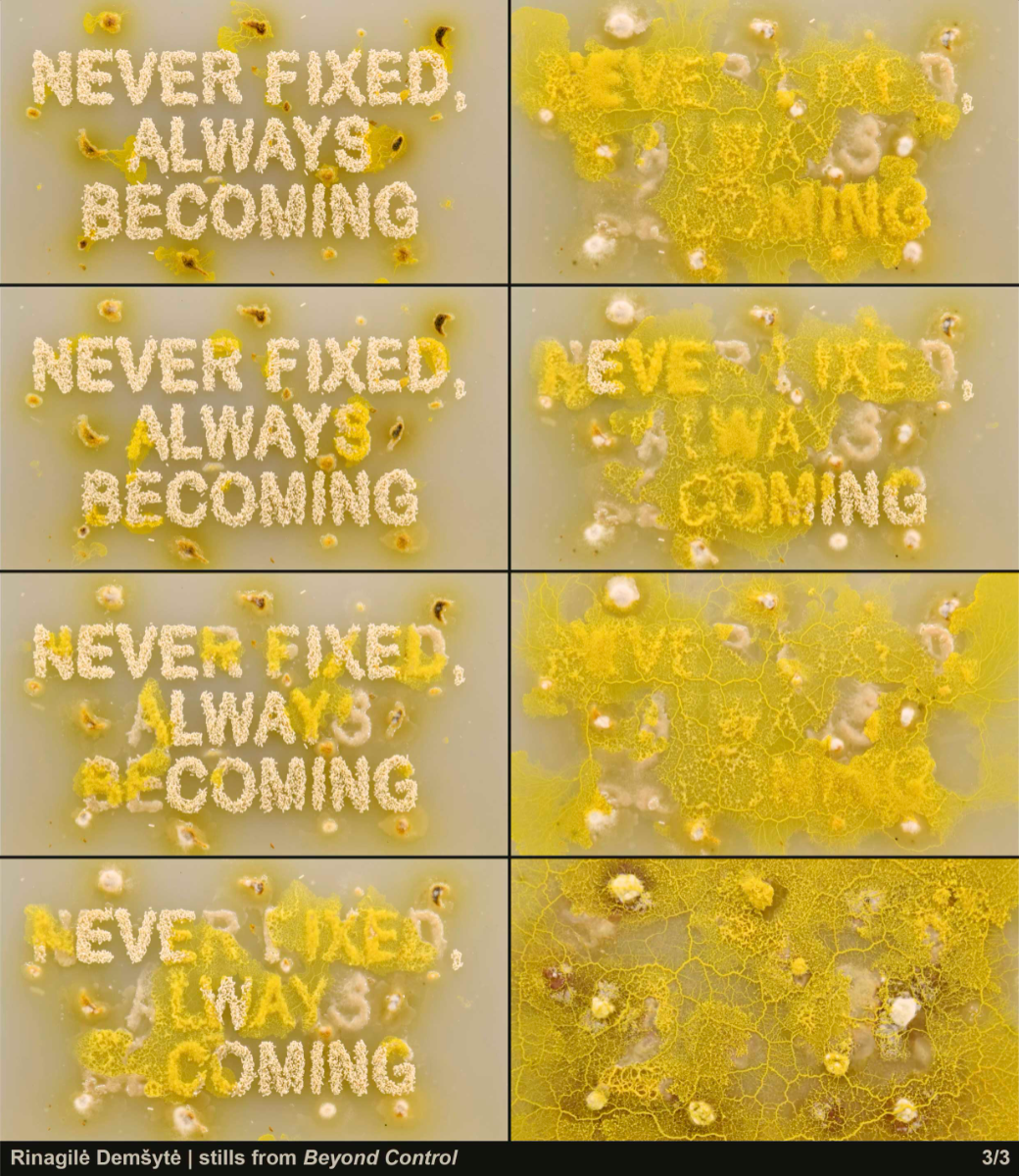
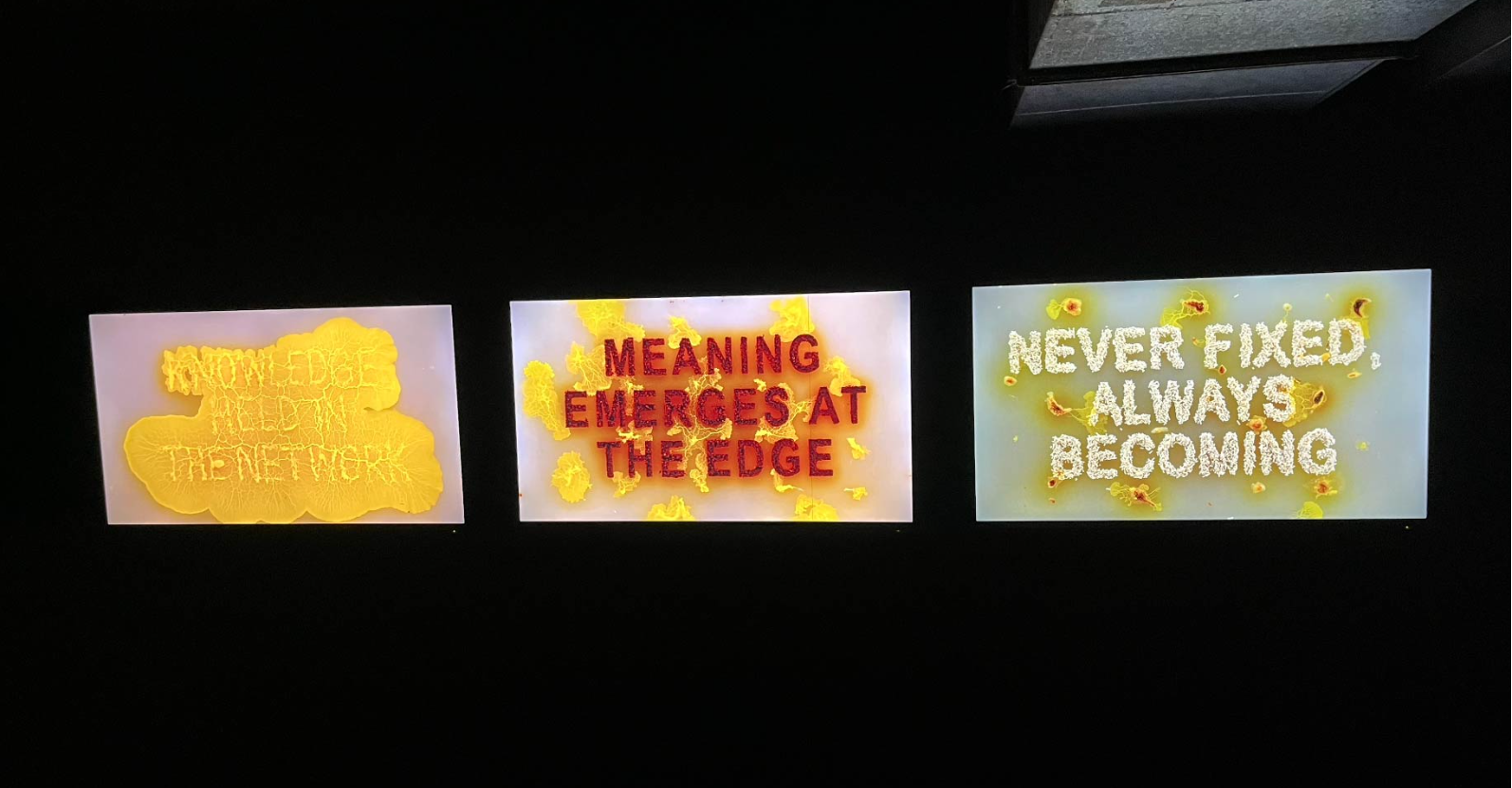
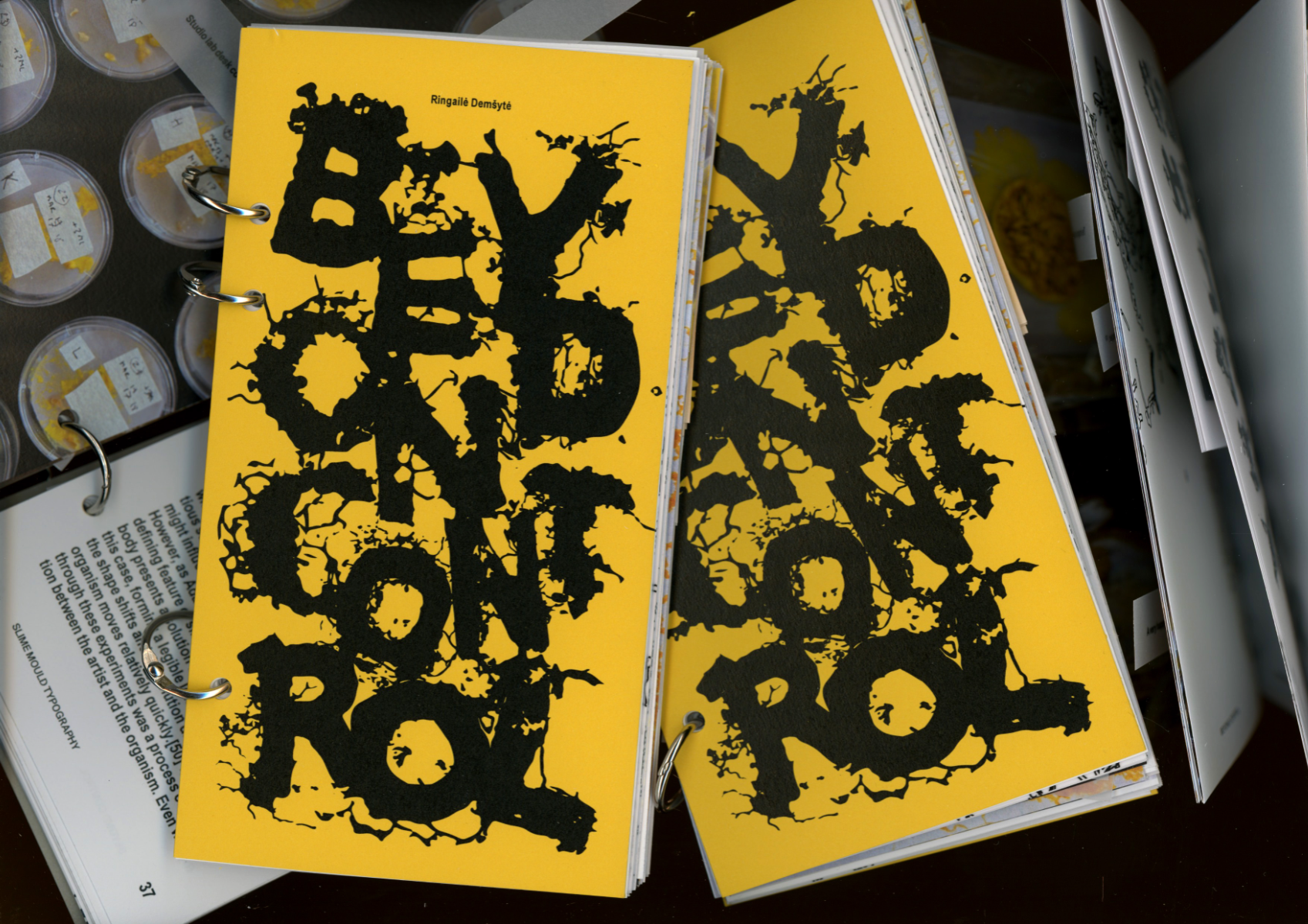
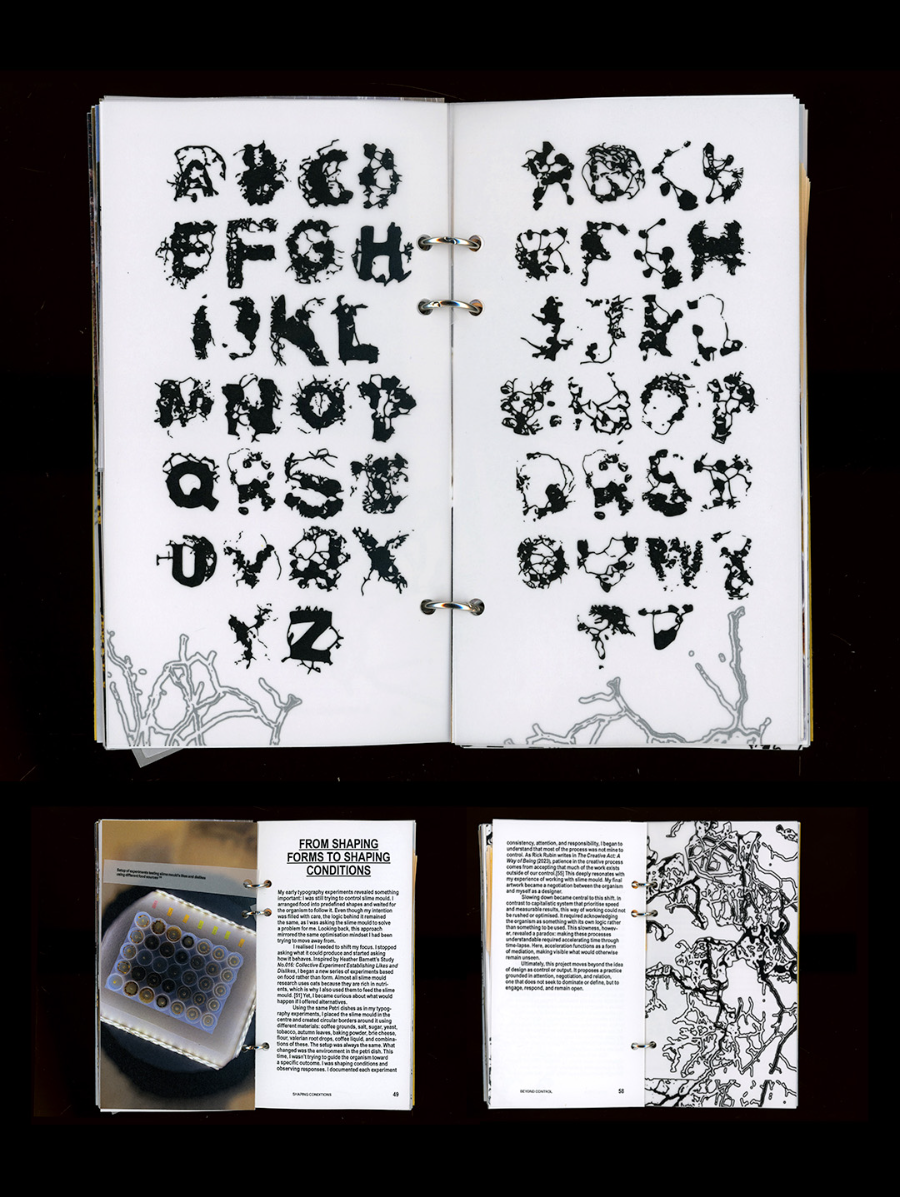
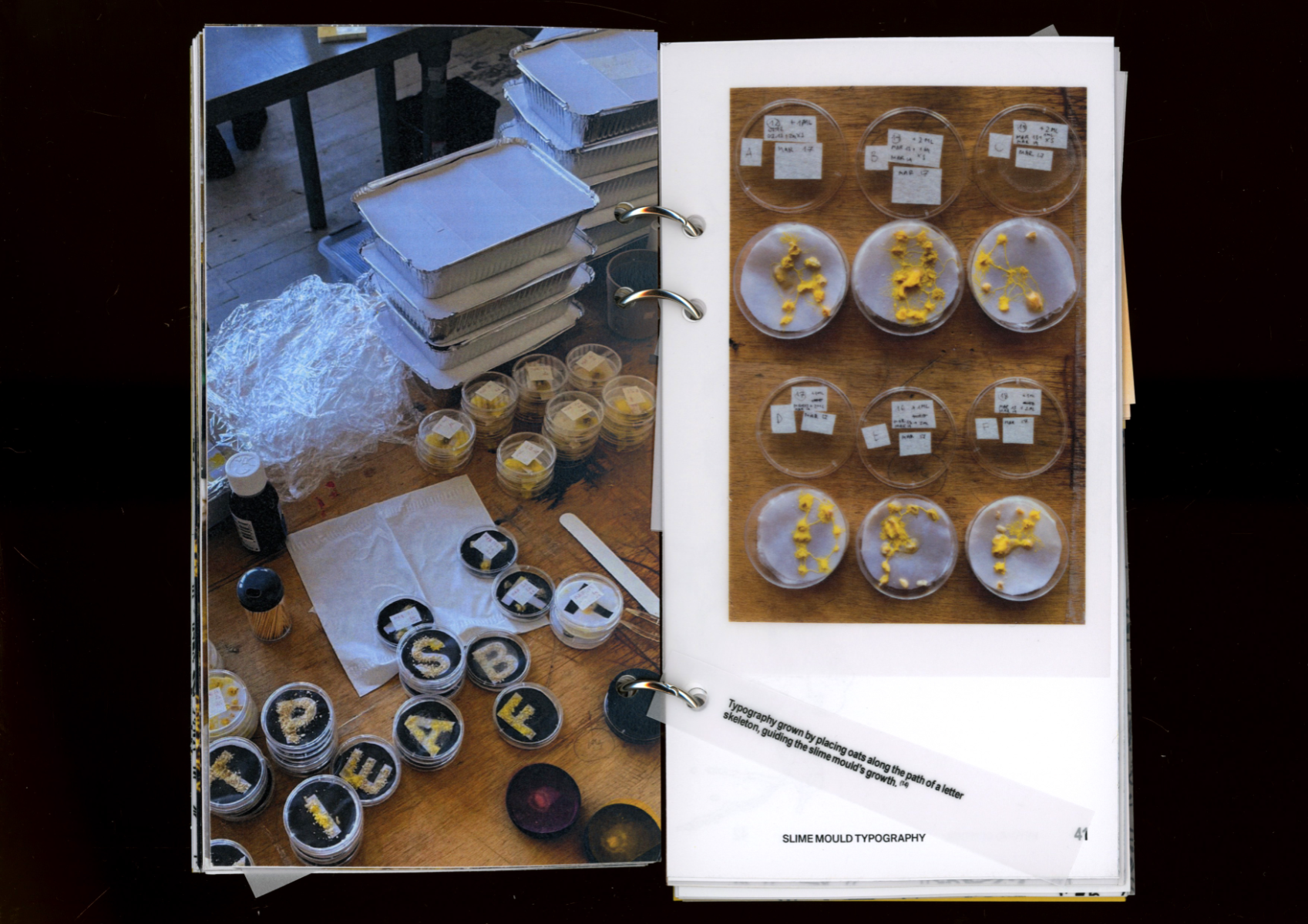
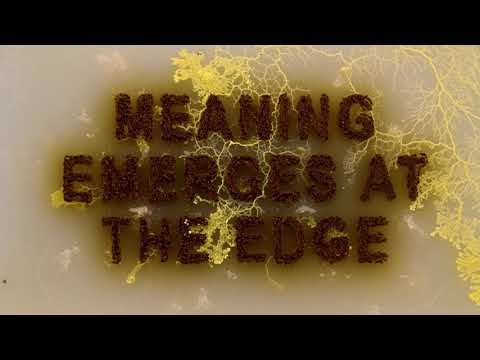
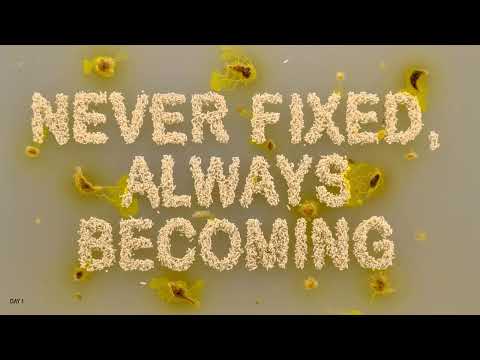
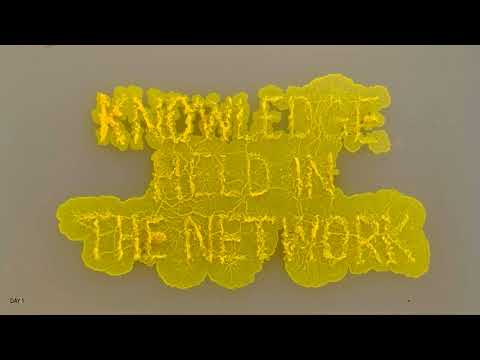
My work explores how design can move beyond speed, efficiency, and control — values often reinforced by capitalist production systems. Inspired by fungal thinking and more-than-human perspectives, I work with living organisms to rethink design as a relational practice. Working with Physarum polycephalum (slime mould) invites me to slow down and pay attention to non-human forms of intelligence. Rather than treating nature as a resource or tool, I approach it as a collaborator that reshapes how I think, design, and observe. I cultivate slime mould in small experimental environments using Petri dishes, agar, and food sources such as oats, yeast or coffee. Through daily care, observation, and time-lapse recording, I study how the organism moves, connects, and responds to different conditions. My experiments often begin with simple interventions, such as arranging food, materials, or spatial structures, and then observing how the organism reacts to the environment. Rather than forcing a specific result, I shape the conditions and allow the organism’s behaviour to guide the outcome. The results include time-lapse videos, slime-mould typography, a publication, and workshops that invite people to observe slime mould directly and to consider design as a practice of attention, care, learning, and coexistence with other living systems.
Competitions