Juanita Alba
Printmaking and Publications
OCAD University
Specialisms: Printmaking / Fine Art / Art History
Location: Toronto, Canada
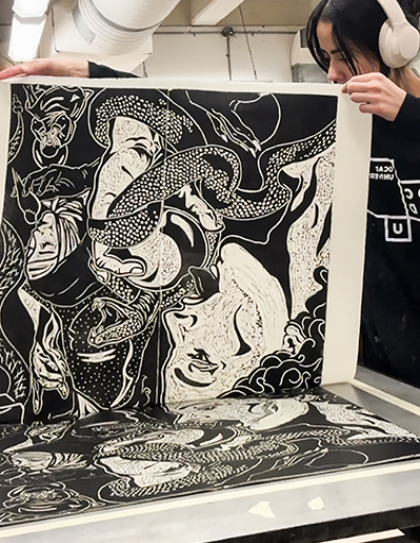
Juanita Alba
First Name: Juanita
Last Name: Alba
Specialisms: Printmaking / Fine Art / Art History
Sectors:
My Location: Toronto, Canada
University / College: OCAD University
Course / Program Title: Printmaking and Publications
About
Juanita Alba is a Colombian artist and Printmaking and Publications graduate from OCAD University in Toronto, Canada. Her practice is rooted in relief printmaking and artist books, with a focus on large-scale linocut and installation. Working at the intersection of art history and Latin American visual culture, she invites viewers into contemplative encounters with images that are both personal and collective. Through printmaking, she explores how belief, history, and identity continue to shape the self.Influenced by religious iconography and Colombian traditions, her research-driven practice takes form through material processes. She examines memory and identity, paying particular attention to how cultural belief systems persist beyond personal conviction.
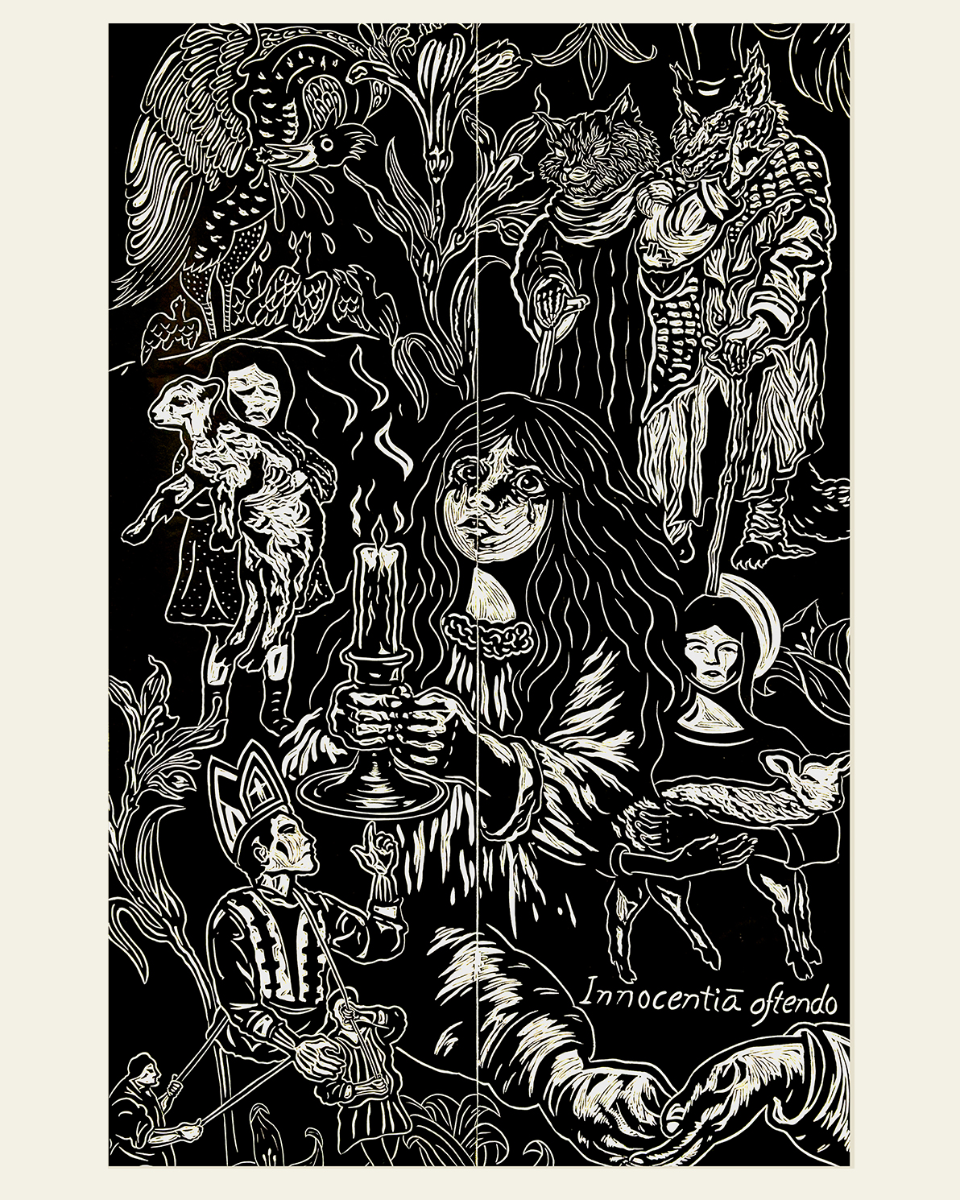
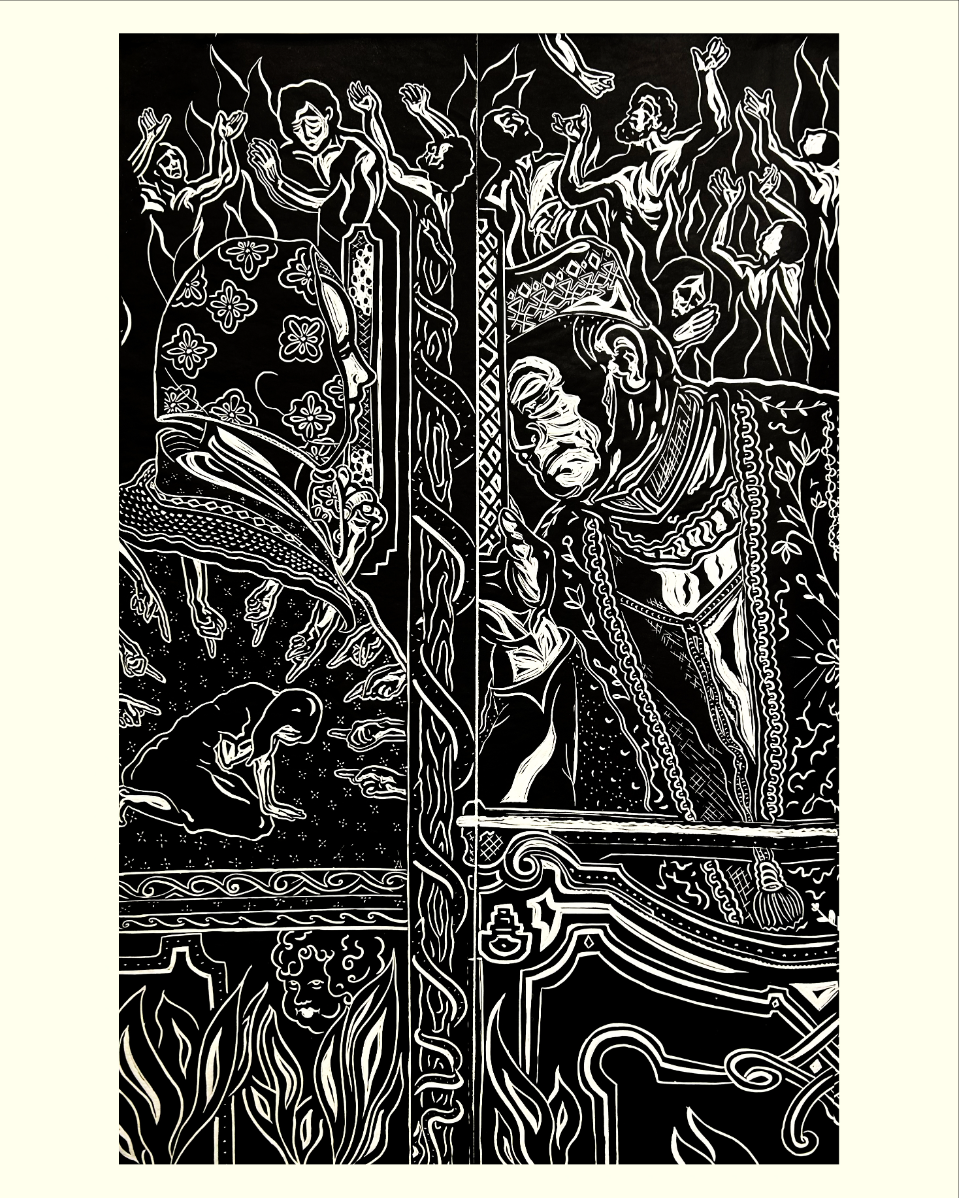
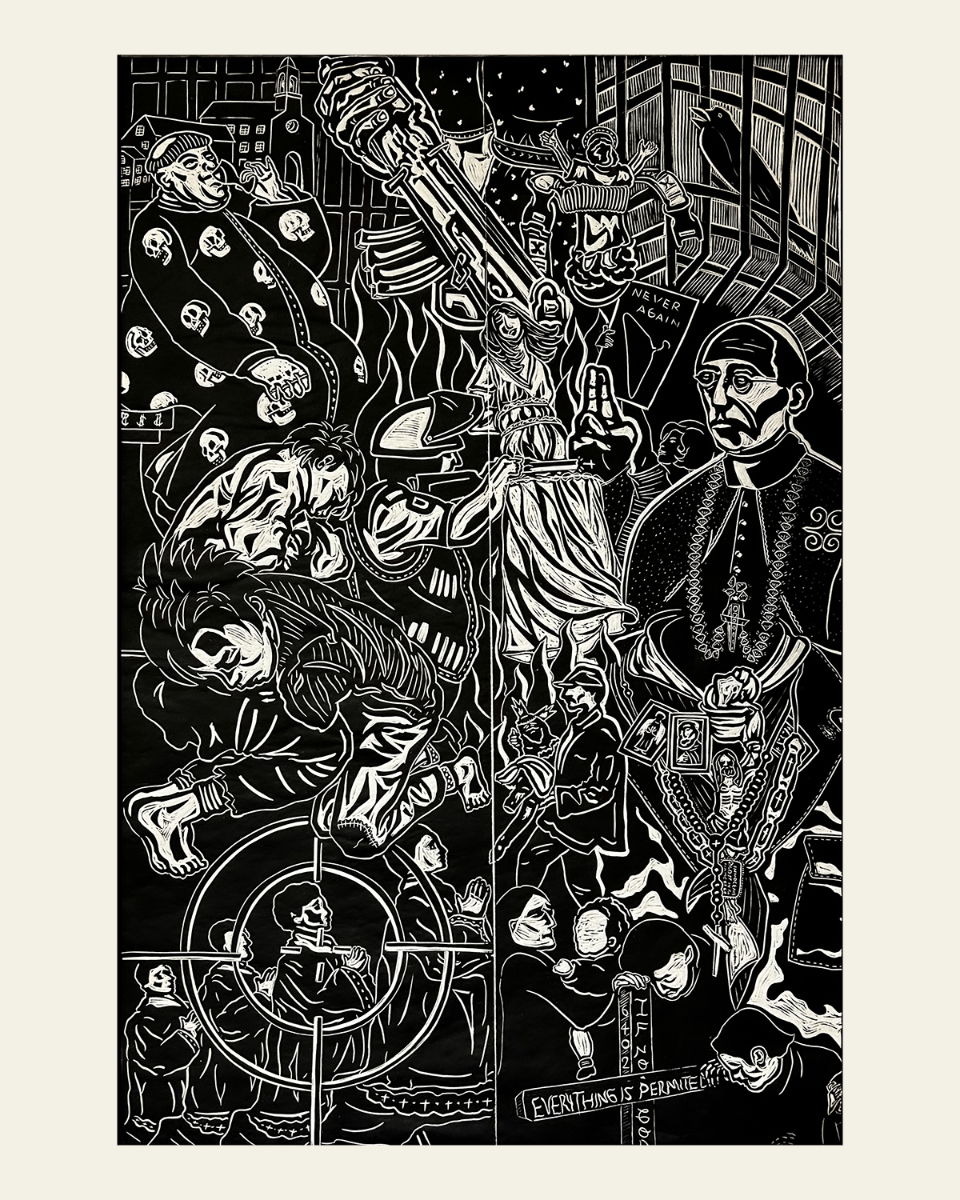
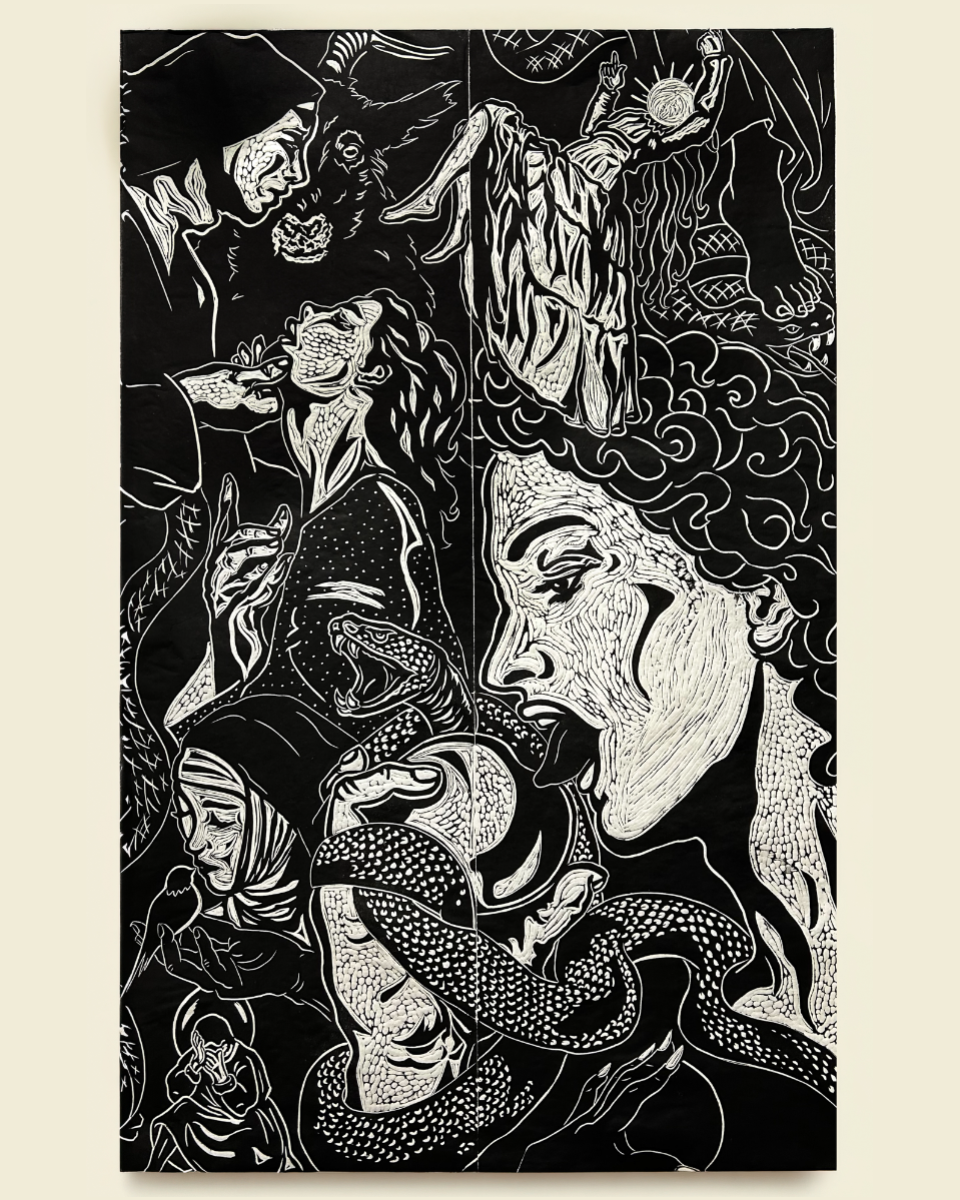
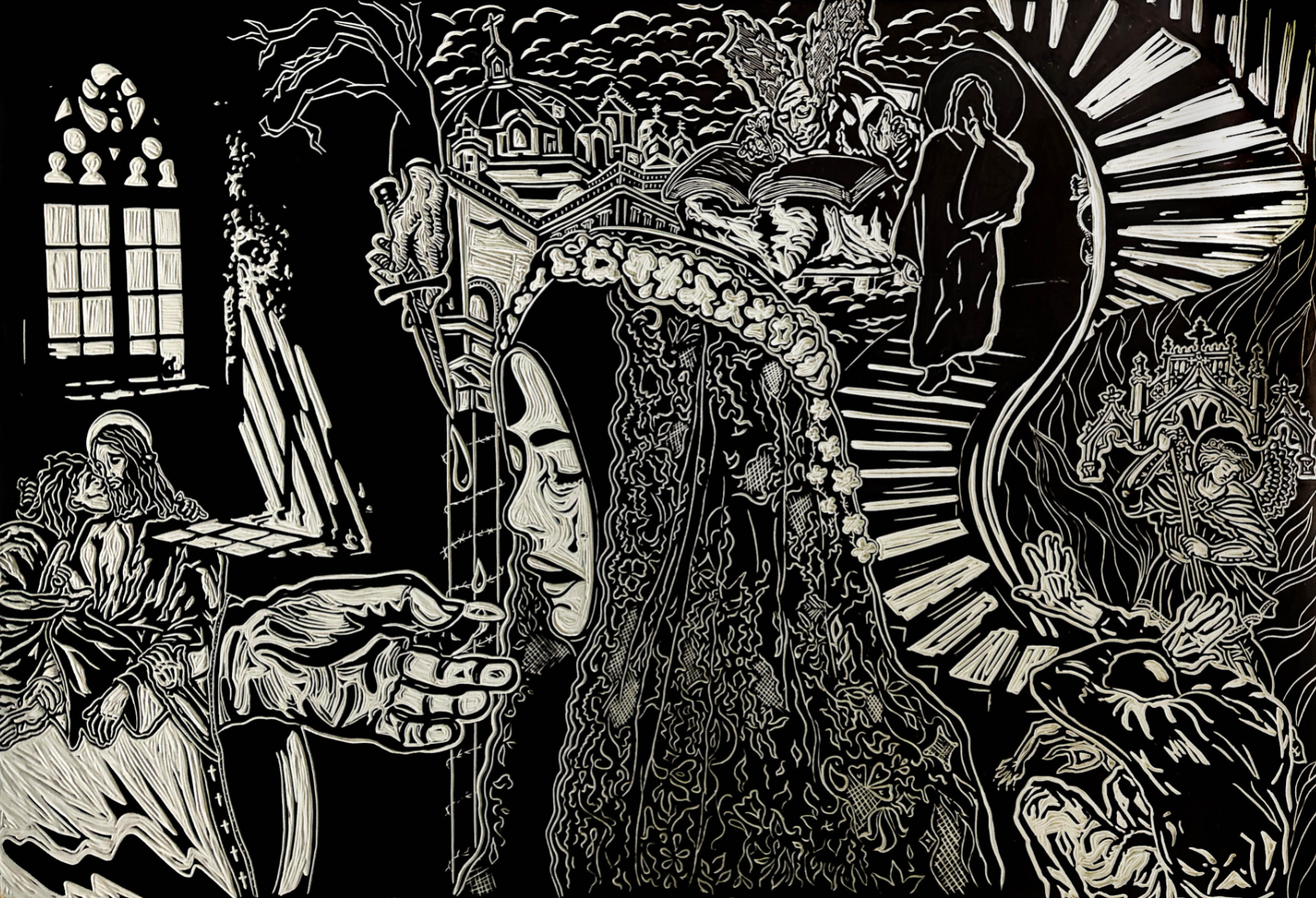
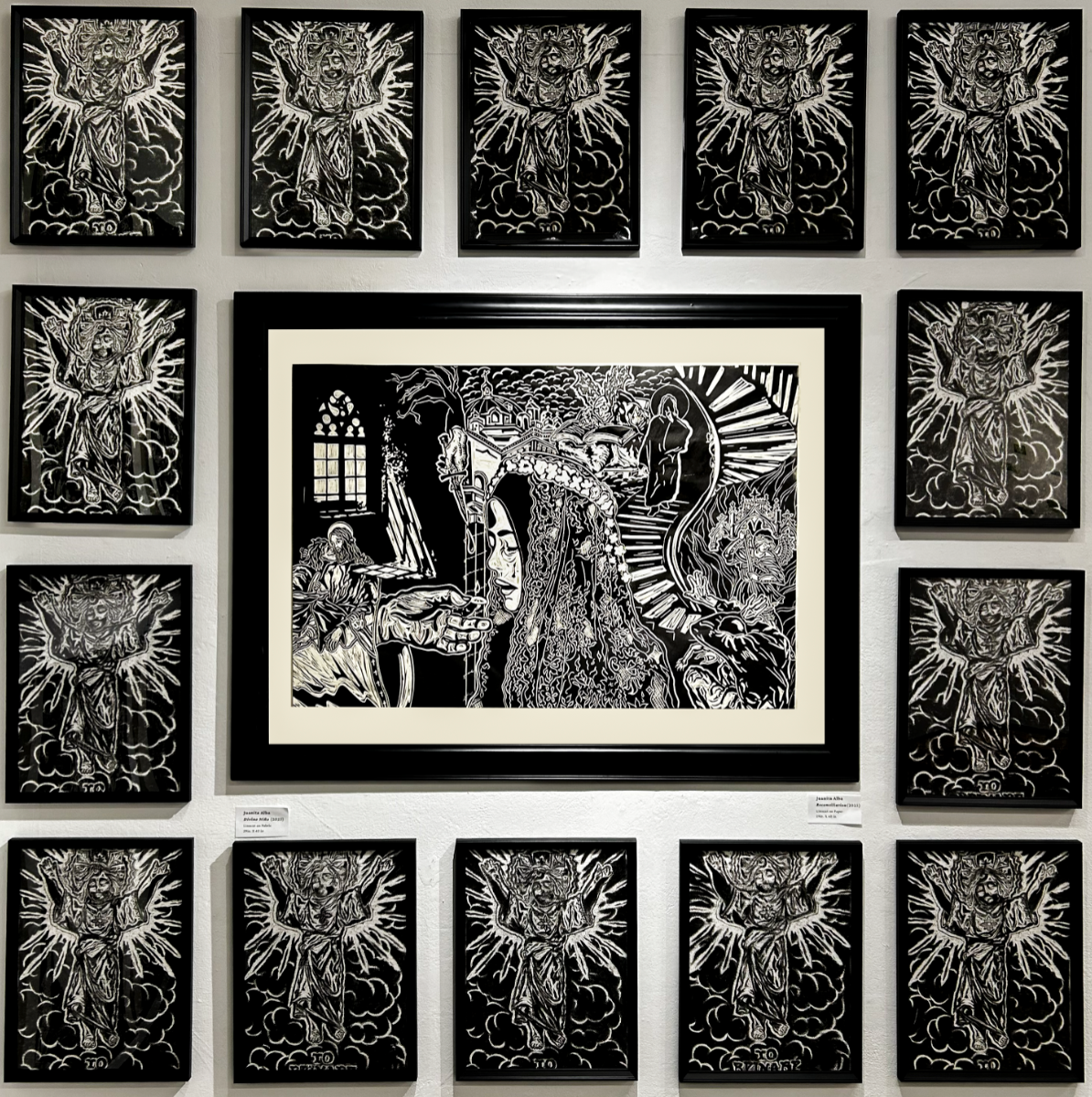
This project presents a re-evaluation of acedia, transforming a historically condemned “sin” into a tool for psychological and aesthetic liberation. Structured as a fragmented self-portrait, Acedia traces the symbolic language of my cultural and devotional upbringing, examining how these inherited forms continue to shape perception and meaning-making. “Spiritual indifference” is approached here as the tension that unfolds between belief and its gradual withdrawal and not as a moral failure. Central to this inquiry is the Latin American experience, where religious structures operate as embedded systems of cultural meaning. These structures persist through repetition, ritual, and image, remaining active even after ruptures in faith. They do not disappear with disbelief; instead, they continue to organize perception, affect, and interpretation. I. Immersion, 2026 Linocut on Kozuke Japanese Paper 29 in X 40 in "Immersion" addresses early religious formation in which belief is received rather than chosen. Figures, symbols, or spatial structures evoke instruction, discipline, and ritual repetition. The image reflects a condition of passive absorption, where identity begins to take shape through external authority. II. Fear, 2026 Linocut on Kozuke Japanese Paper 29 in X 40 in "Fear" explores a central part of early faith where belief is reinforced through anxiety, discipline, and the threat of consequence. It reflects how guilt becomes internalized, shaping the self through the absorption of religious dogma. III. Disillusionment, 2026 Linocut on Kozuke Japanese Paper 29 in X 40 in "Disillusionment" reflects a growing loss of trust in both religion and society, where lived experience reveals a gap between belief and reality and calls their truth into question. IV. Rupture, 2026 Linocut on Kozuke Japanese Paper 29 in X 40 in "Rupture" traces rupture through sin, where the pull toward freedom is shadowed by the persistence of guilt. This print is part of "Acedia", a series that explores the experience of losing faith and how it continues to shape memory and identity. Across six large-scale linocuts, the work takes shape as a fragmented self-portrait. v. Reconciliation, 2026 Linocut on Kozuke Japanese Paper 29 in X 40 in "Reconciliation" does not resolve the series but returns it to itself. Earlier symbols reappear and what has been rejected is not erased. Faith remains as a cultural, visual, psychological imprint; continuing to shape the self despite disbelief. It becomes part of identity, something I return to through thought and image, engaging it as a source of beauty rather than belief. Fourteen repeated images of the Divino Niño surround the image. Christ as a child, arms open in blessing, is a figure deeply rooted in Colombian Catholic visual culture persisting as both cultural inheritance and a marker of identity, familiar and difficult to escape. I. Immersion “The true corruption of the youth. The lamb. The lily. White forms of obedience. A child before the eternal flame, learning that her innocence is her offering. To remain pure is to remain close to God. Holiness. It is trained. It is watched. It is rewarded. The fox and the cat softly arrive, figures of deception dressed as guidance. Pulling the strings of a dirty institution Suffering appears early, It’s ok it’s not violence, just a painful instruction. Guilt learns to speak. Faith fills the air.” II. Fear “My guilt has overwhelmed me- like a burden too heavy to bear. Psalm 38:4 Faith moves inward. Confession. Repetition. Exposure. That which is born in sin will die in sin. Purgatory waits. to live is to delay. The body becomes evidence. The body becomes danger. A woman, already suspected. Already near the fall. Guilt imposed. Guilt absorbed. intimate. To surrender body and soul is called love. To fear oneself is called devotion.” III. Disillusionment “Again I looked and saw all the oppression that was taking place under the sun: I saw the tears of the oppressed— and they had no comforter; power was on the side of their oppressors— and they had no comforter. Ecclesiastes 4:1 The image fractures. What I witness no longer obeys what I was taught to see. A country consecrated to poverty, death, and silence. A sacred heart to feed the hungry. Women restraned in golden cages. let the others be buried Power learns to speak in the language of salvation. The institution blesses what it should mourn. God becomes distant. Or worse: present, and unbearable.” IV. Rupture “Grant me chastity and continence, but not yet. Desire persists where devotion collapses. The body moves toward what faith forbids. The bird is free I remain bound. Pleasure does not liberate. Rebellion does not resolve. There is no innocence left to protect. Nothing changed but Everything is now exposed. Melancolía. I do not believe. I do not escape. No way out. No way back.” v. Reconciliation “Suffering is the sole origin of consciousness” Dostoevsky, Notes from Underground Recognition Does not resolve what precedes it. There is no return to belief, and no redemption that would restore it. Persistence. They continue to operate, still demanding devotion. But their authority ceases to function as doctrine and becomes language. It loses its transcendence and becomes material. settling into form, shaping meaning. The movement is an oscillation between rejection and return. Belief becomes impossible, but so does ignorance. To refuse the image is not to escape it.”