Harrison Cameron-Barr
Architecture
Glasgow School of Art
Specialisms: Architecture
Location: Glasgow, United Kingdom


Harrison Cameron-Barr
First Name: Harrison
Last Name: Cameron-Barr
Specialisms: Architecture
Sectors:
My Location: Glasgow, United Kingdom
University / College: Glasgow School of Art
Course / Program Title: Architecture
About
I am a recent graduate from the renowned Mackintosh School of Architecture, Glasgow School of Art. Throughout my studio time and work in industry, whether it was working on my own, working collaboratively, or with peers studying different disciplines, there has been no doubt that this has helped me grow as a architect, and indeed, as a person. I have explored a range of project briefs from civic, residential and infrastructure, as well as on a local, city and international scale. The body of work presented on the following pages is the result of the knowledge gained over my years at the Mack - its briefs and projects I have had the opportunity to explore and develop - all culminating in my ability to complete my final year thesis project: VidenKraft 42, which has received awards and scholarships nominations, including being nominated for the Norman Foster Travelling Scholarship and being awarded the Charles Rennie Mackintosh Scholarship to further my research in this field. VidenKraft 42 is a project about the world's first civic supercomputer, addressing the tension between autonomous dystopia and physical human experience. These data typologies currently affect our lives daily, yet they remain detached from the urban realm, isolated and introverted for security and lack of accountability. The thesis project images a model for digital infrastructure in the heart of the city. However, how can this building typology, currently seen as resource-intensive, become embedded within a city and its local context - computing and storing information on an incredible scale whilst also providing civic benefit? The project is therefore centred around harnessing the supercomputer's offset energy and disseminating that for philanthropic, social and economic use, creating experiential, informative and social spaces on the site to invite people to use, understand and debate the advanced digital revolution. The programmatic uses include: the supercomputer, education and laboratory wings, experiential quarter, expo centre, conference hall, greenhouse and public pools.
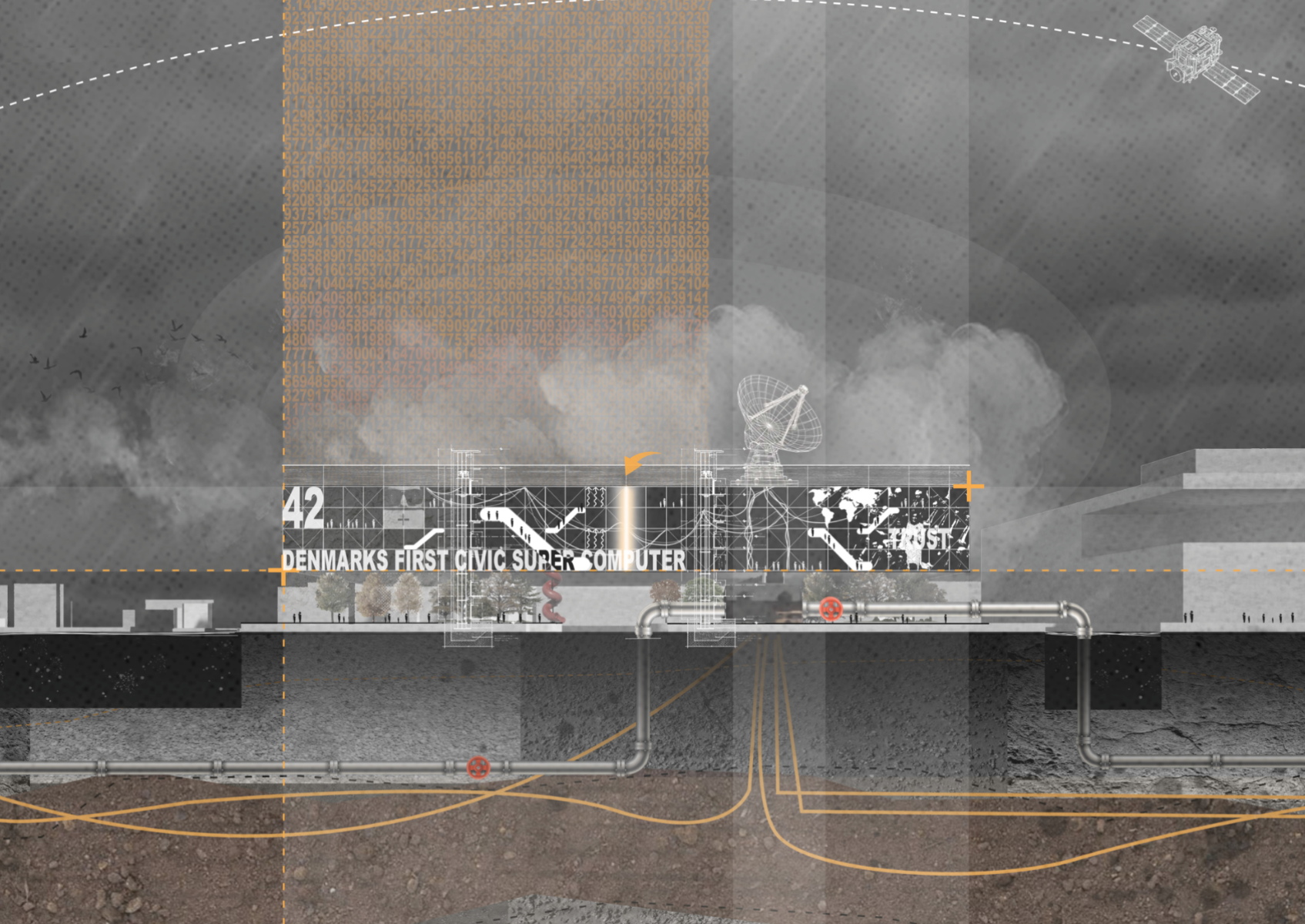
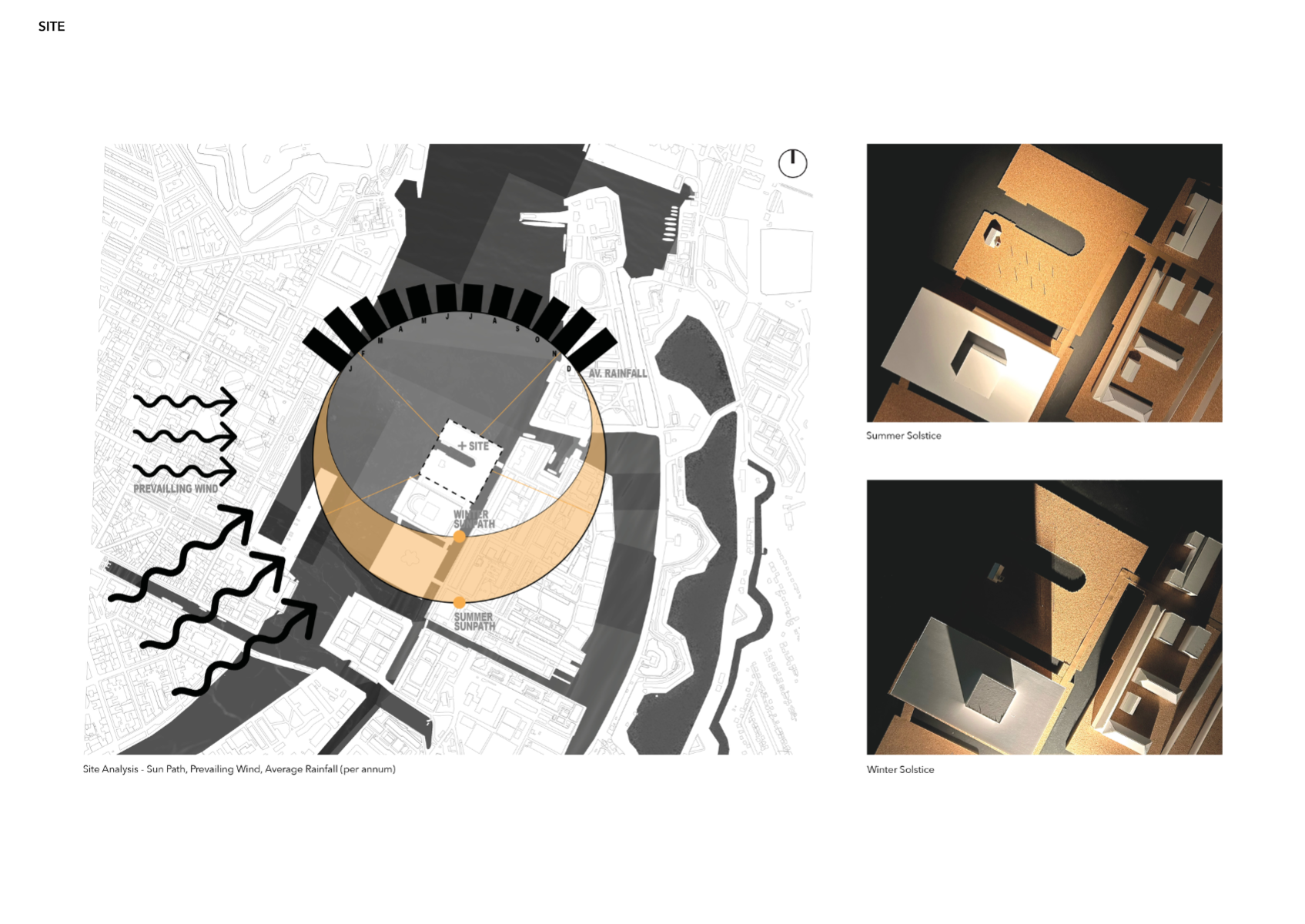
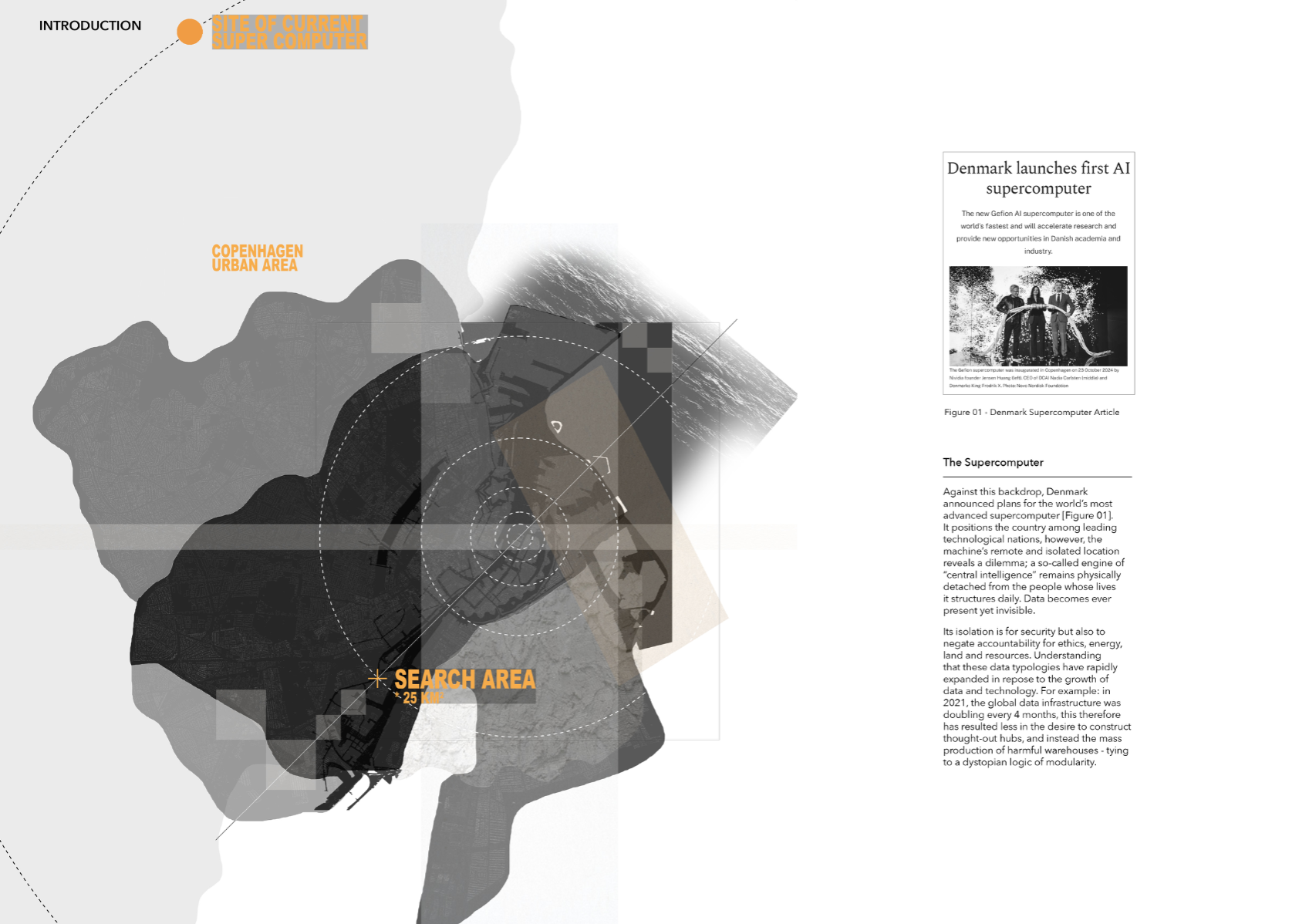
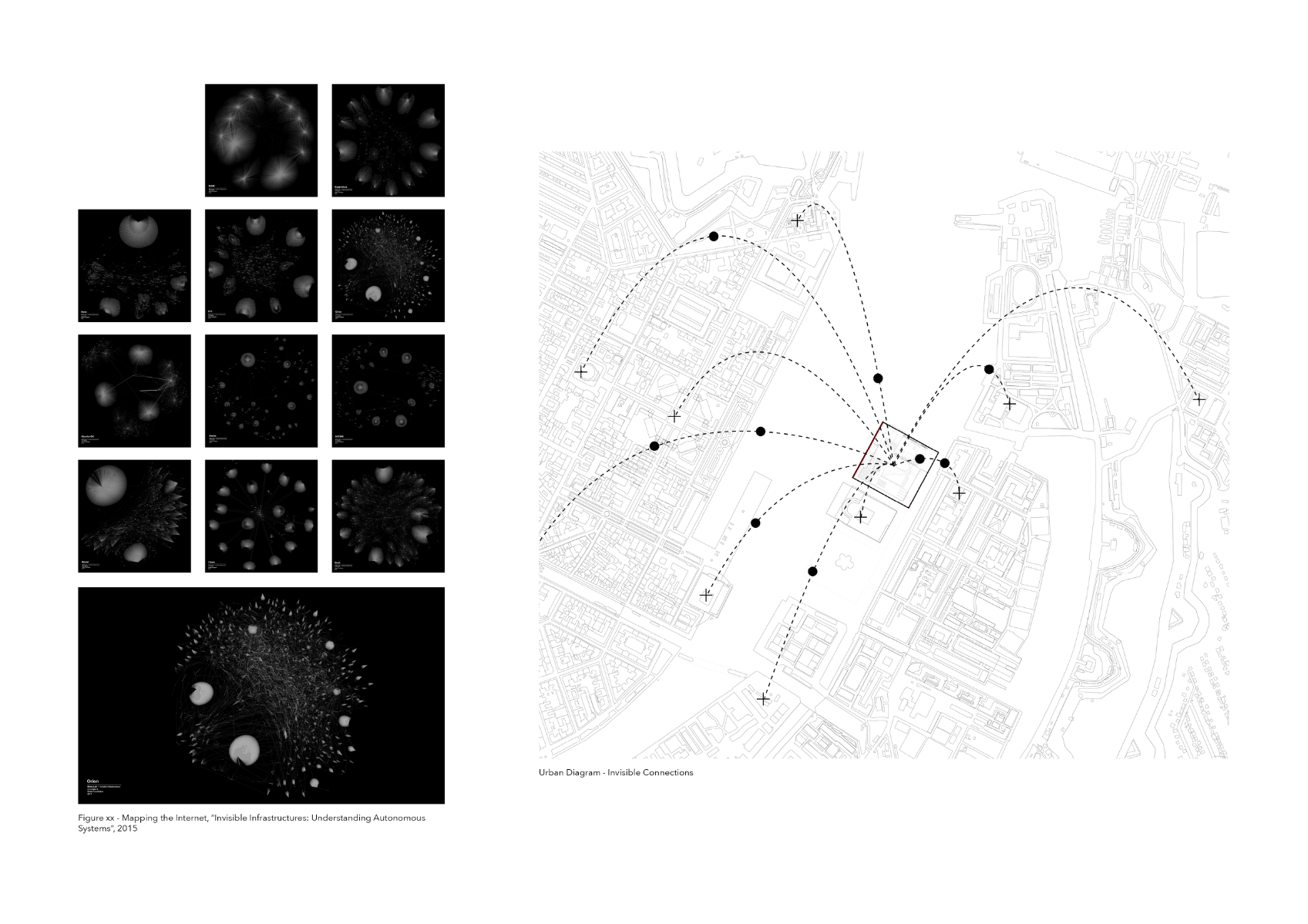
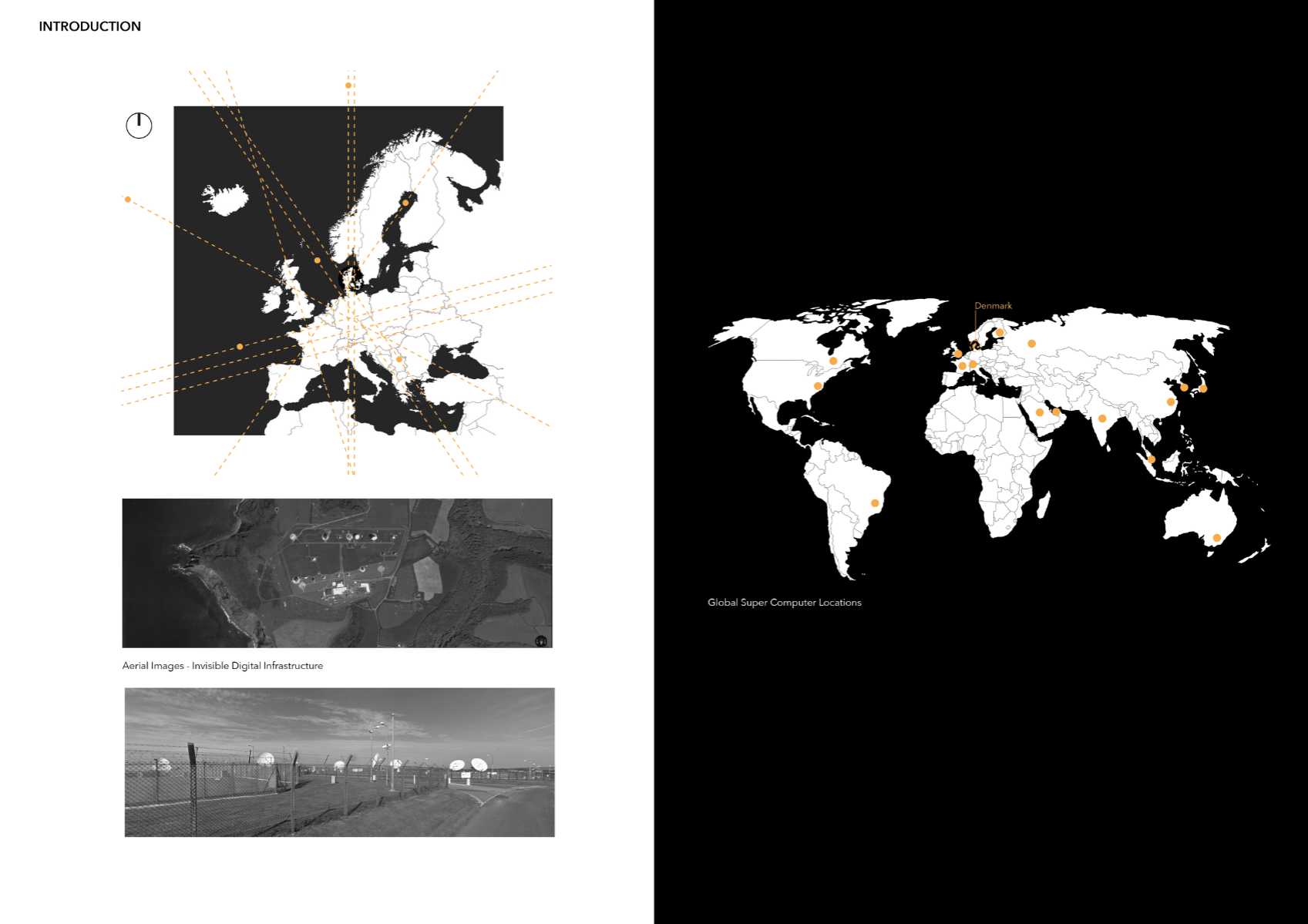
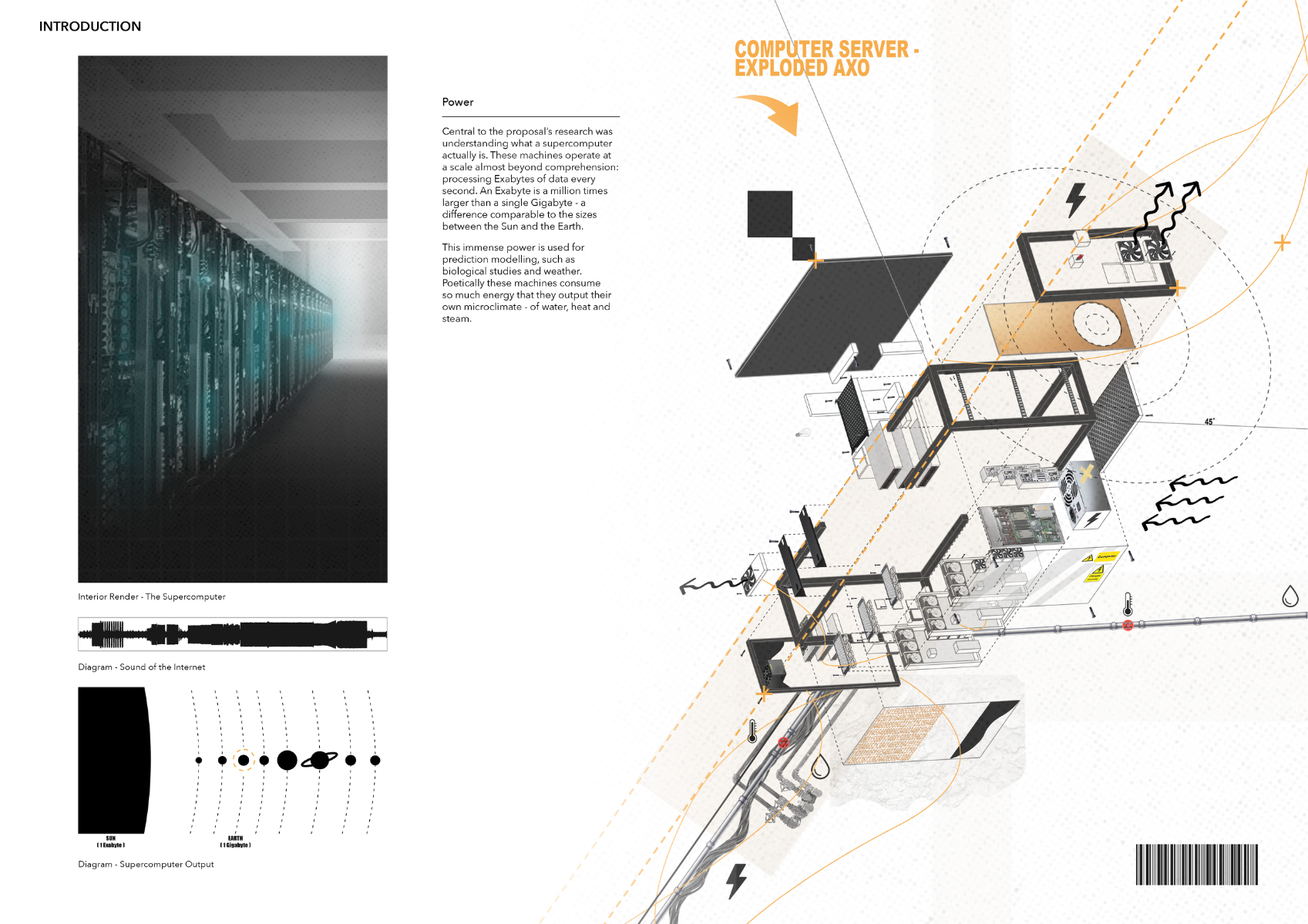
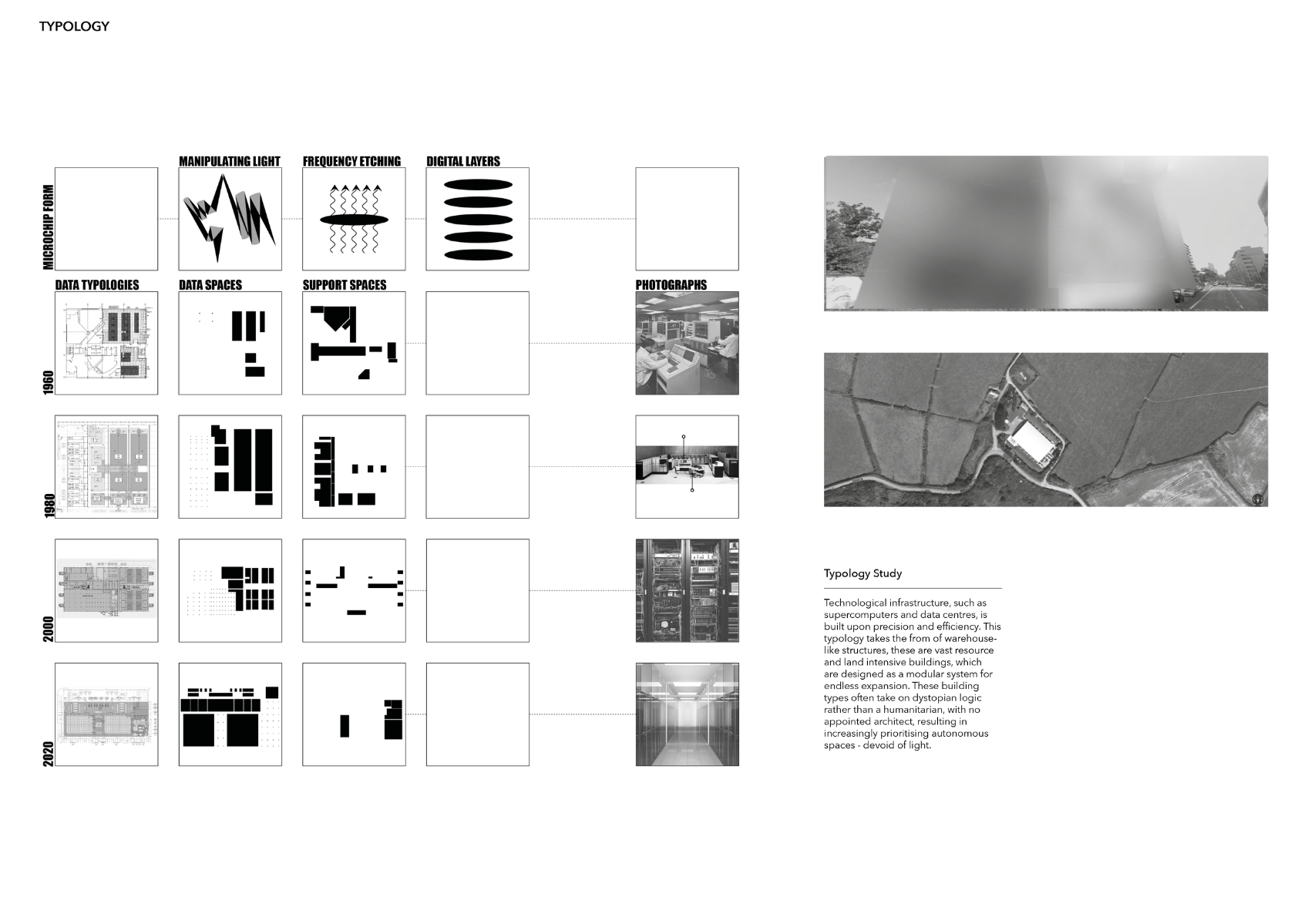
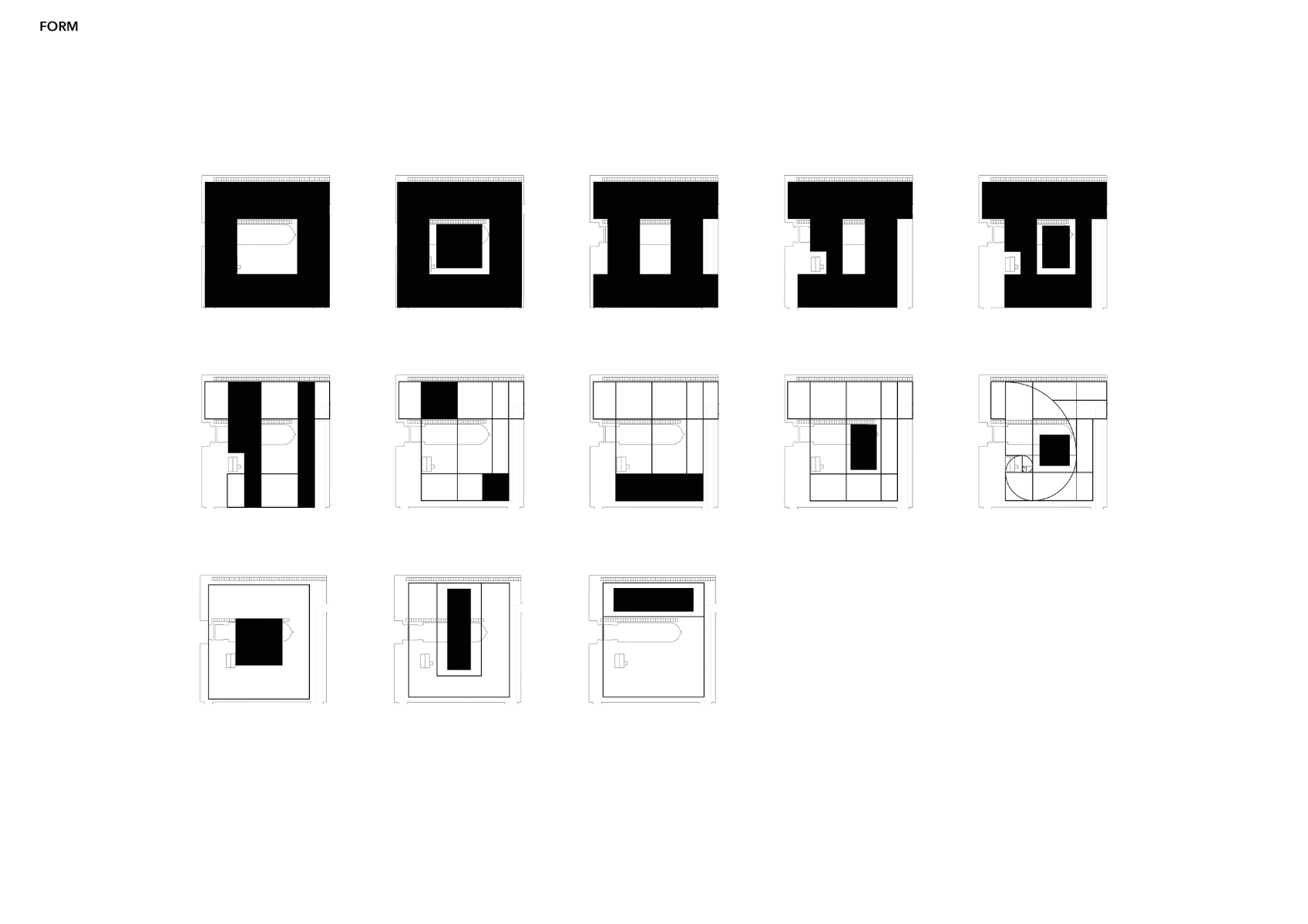
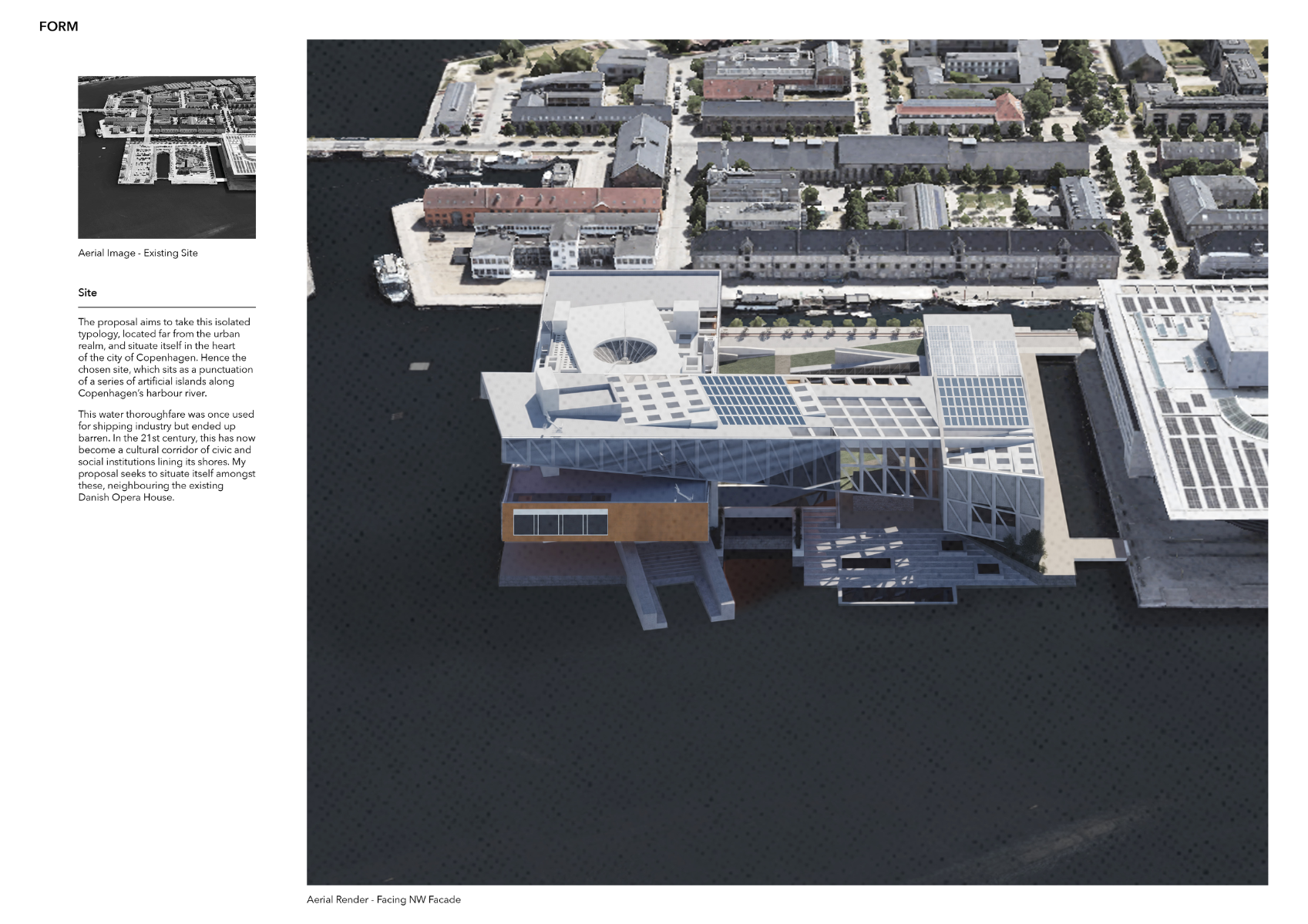
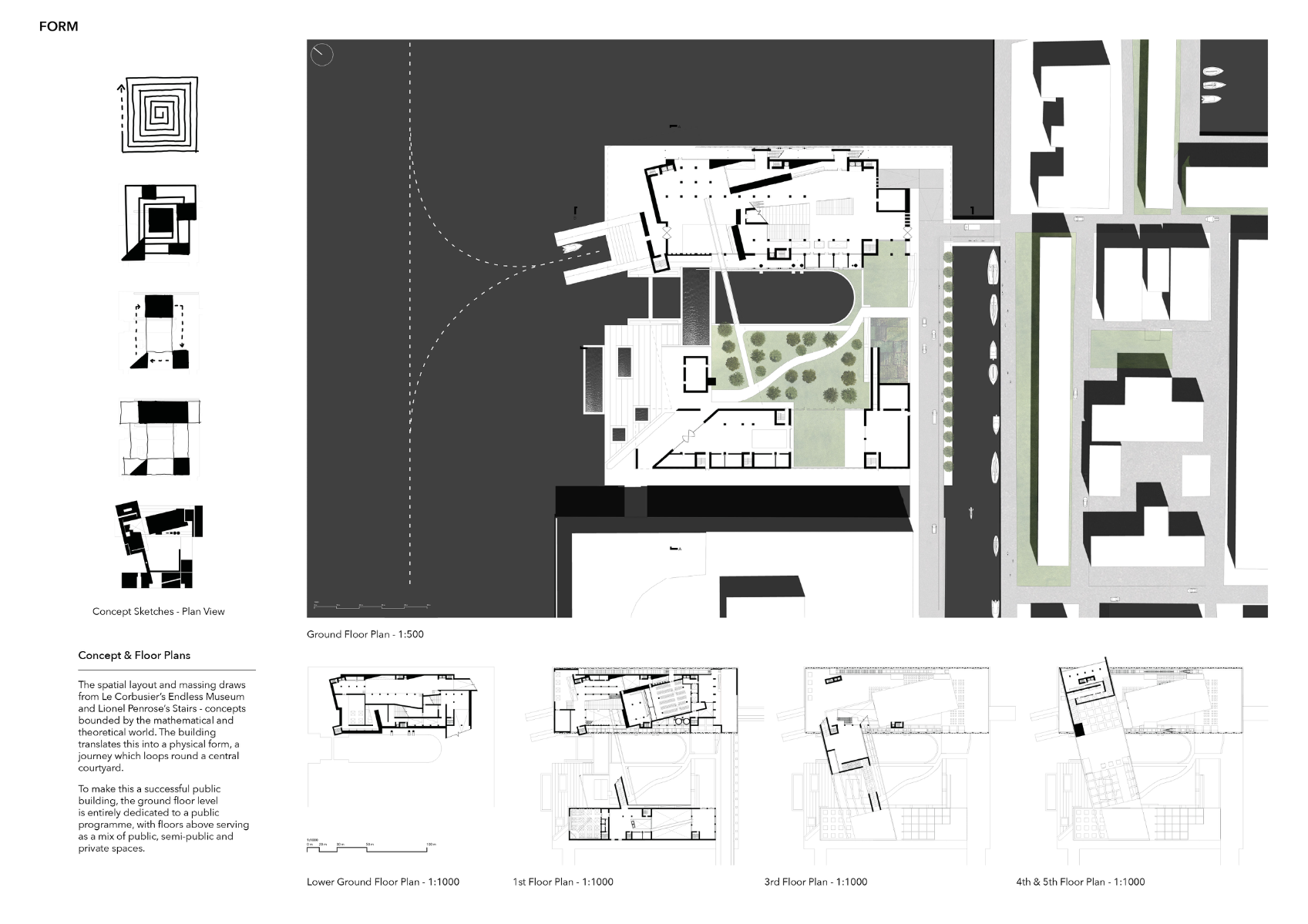
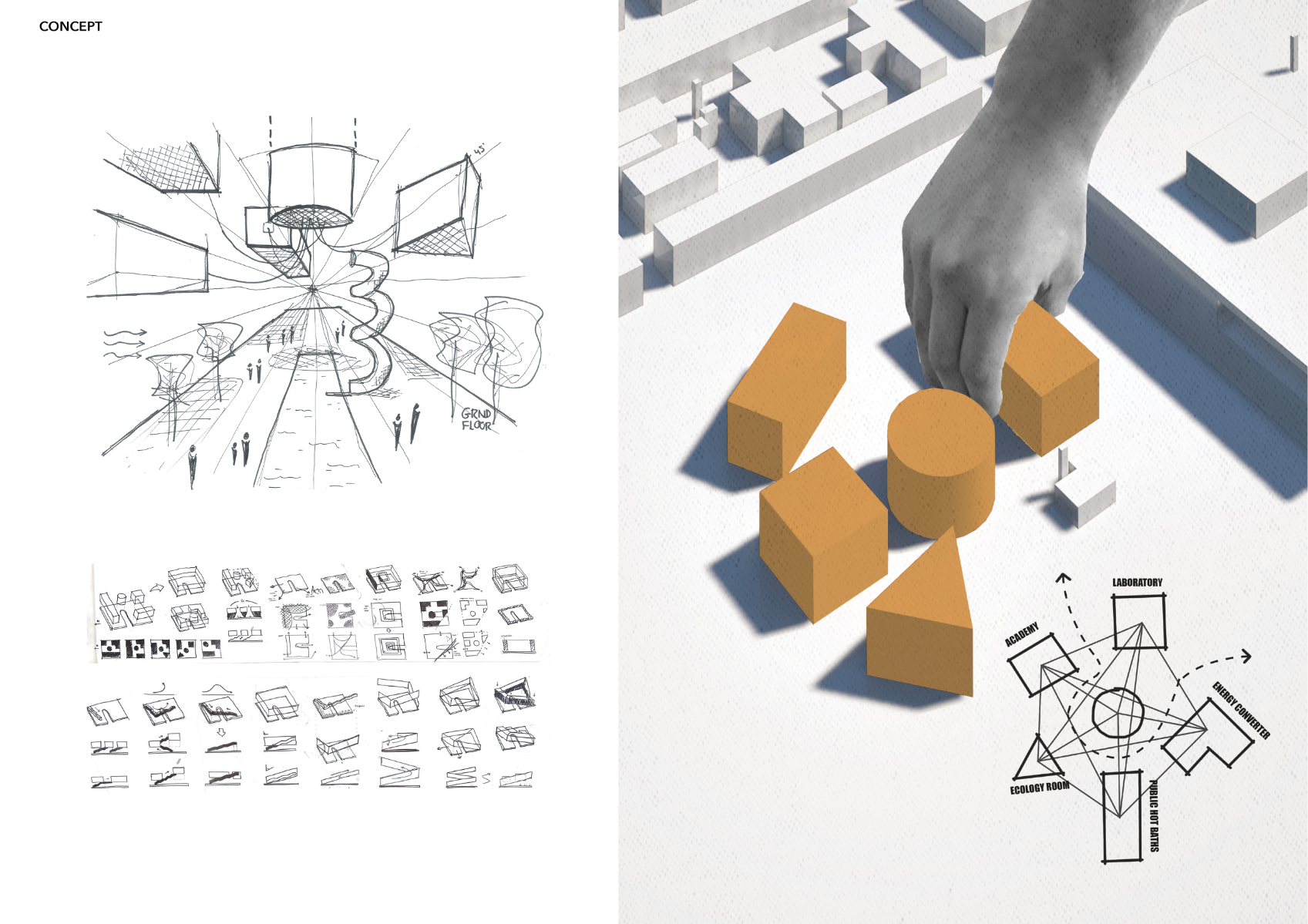
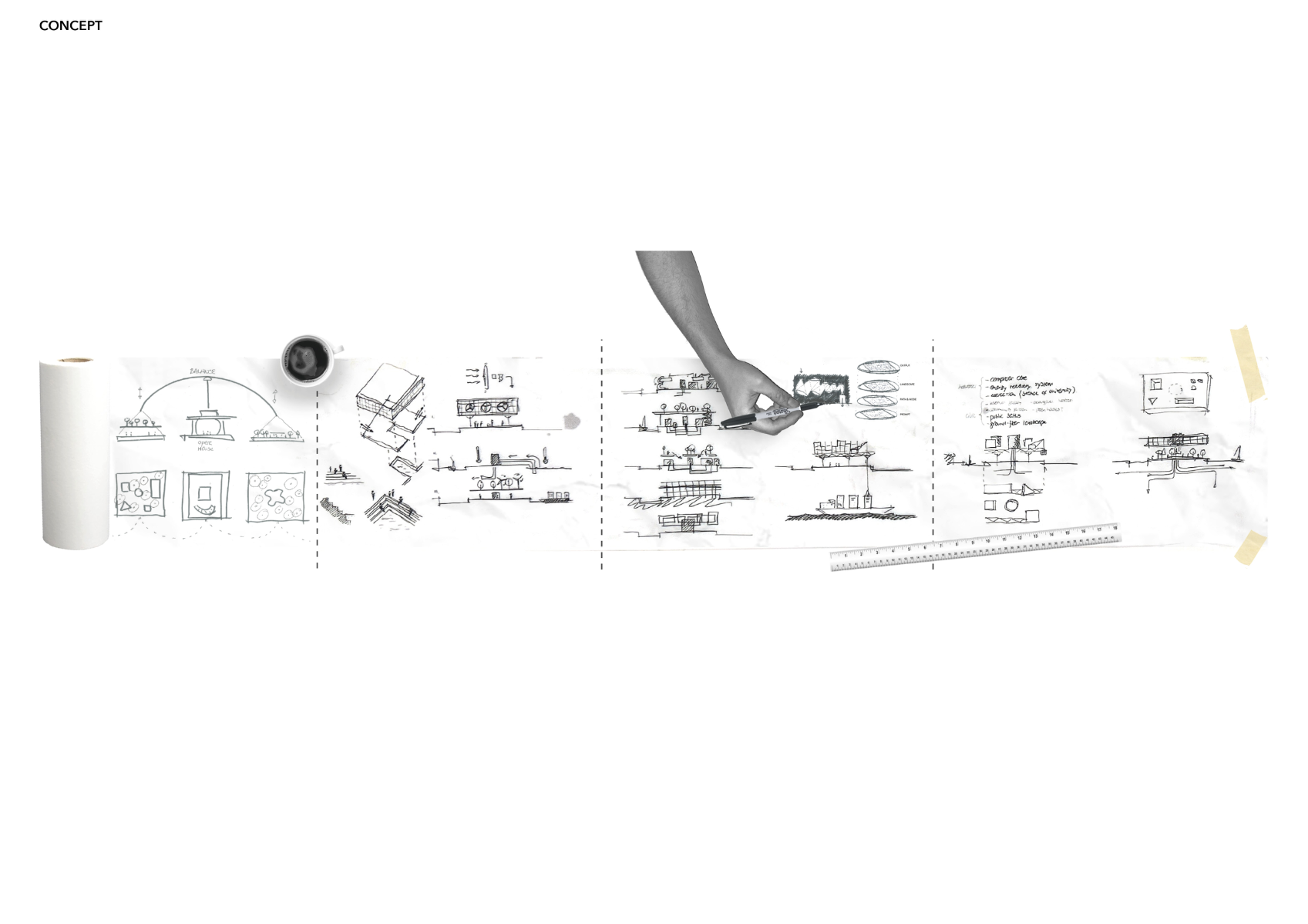
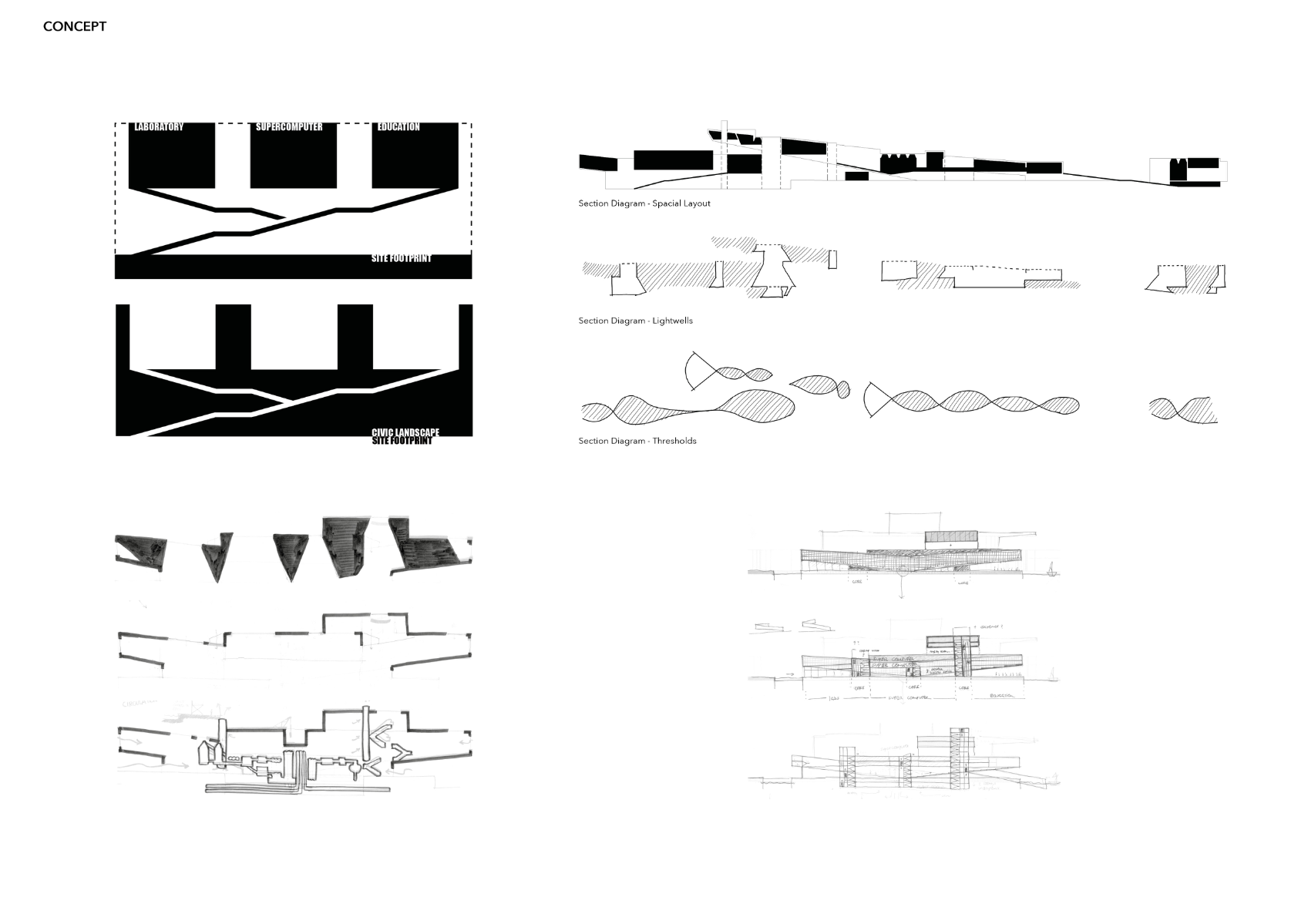
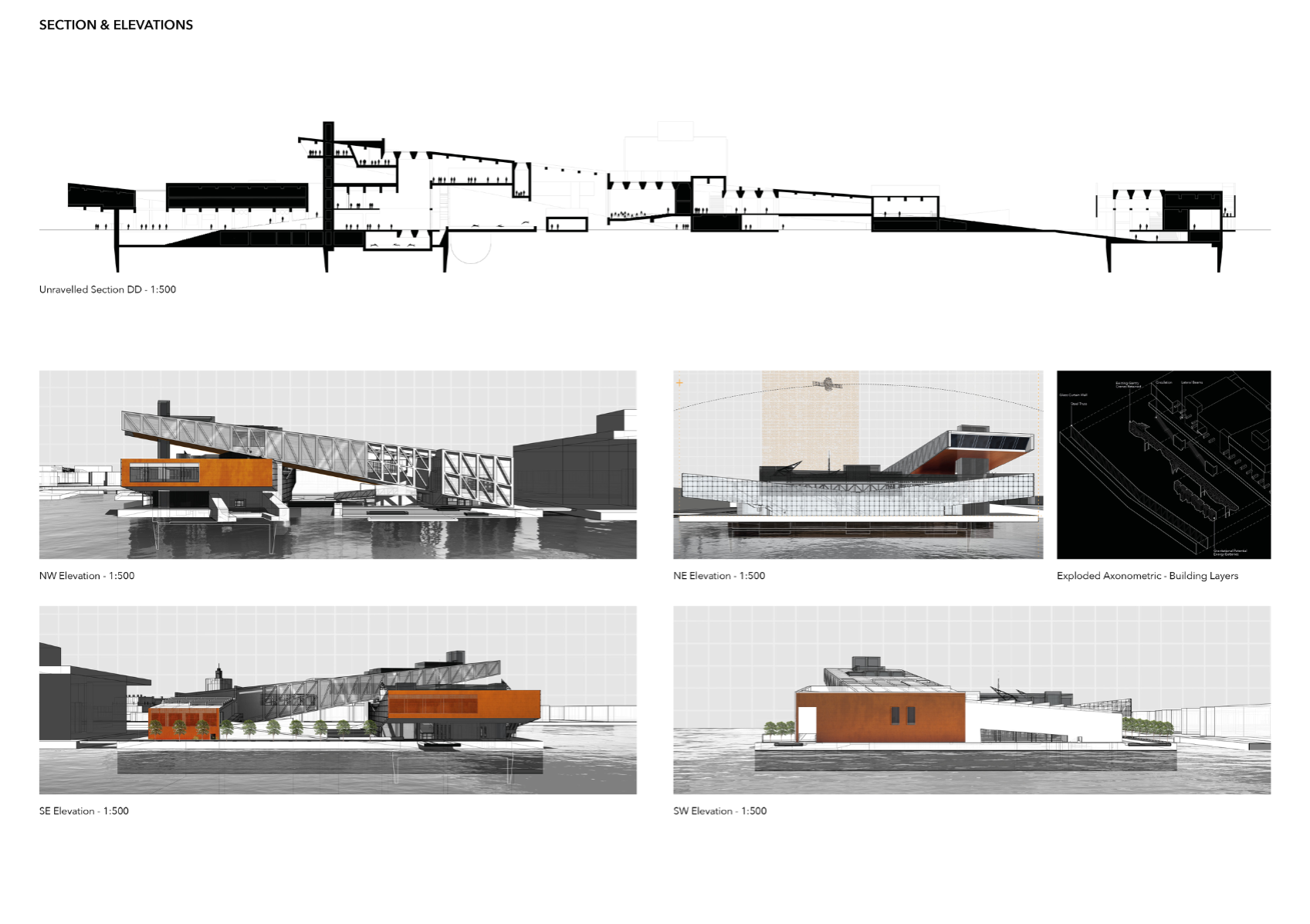
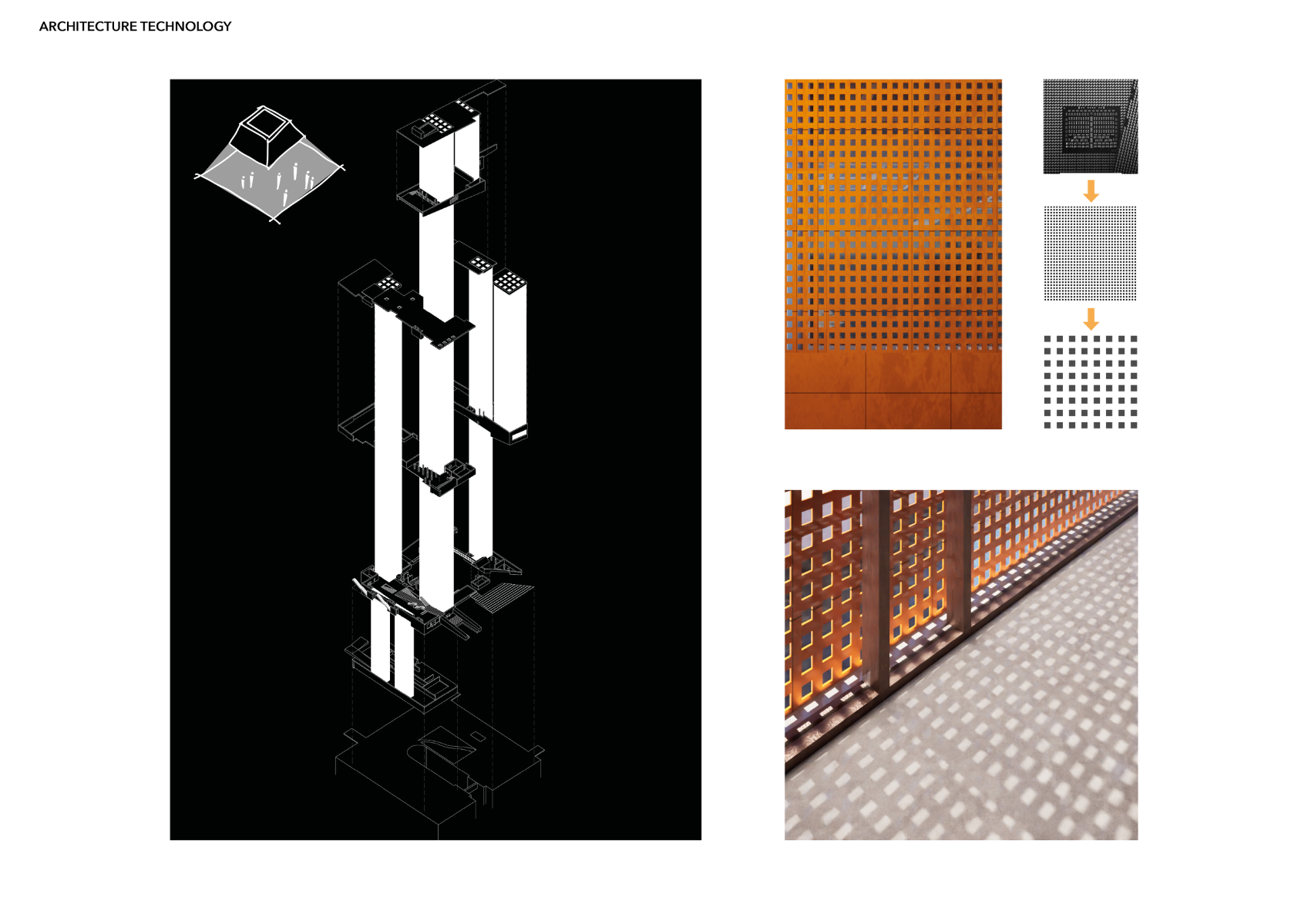
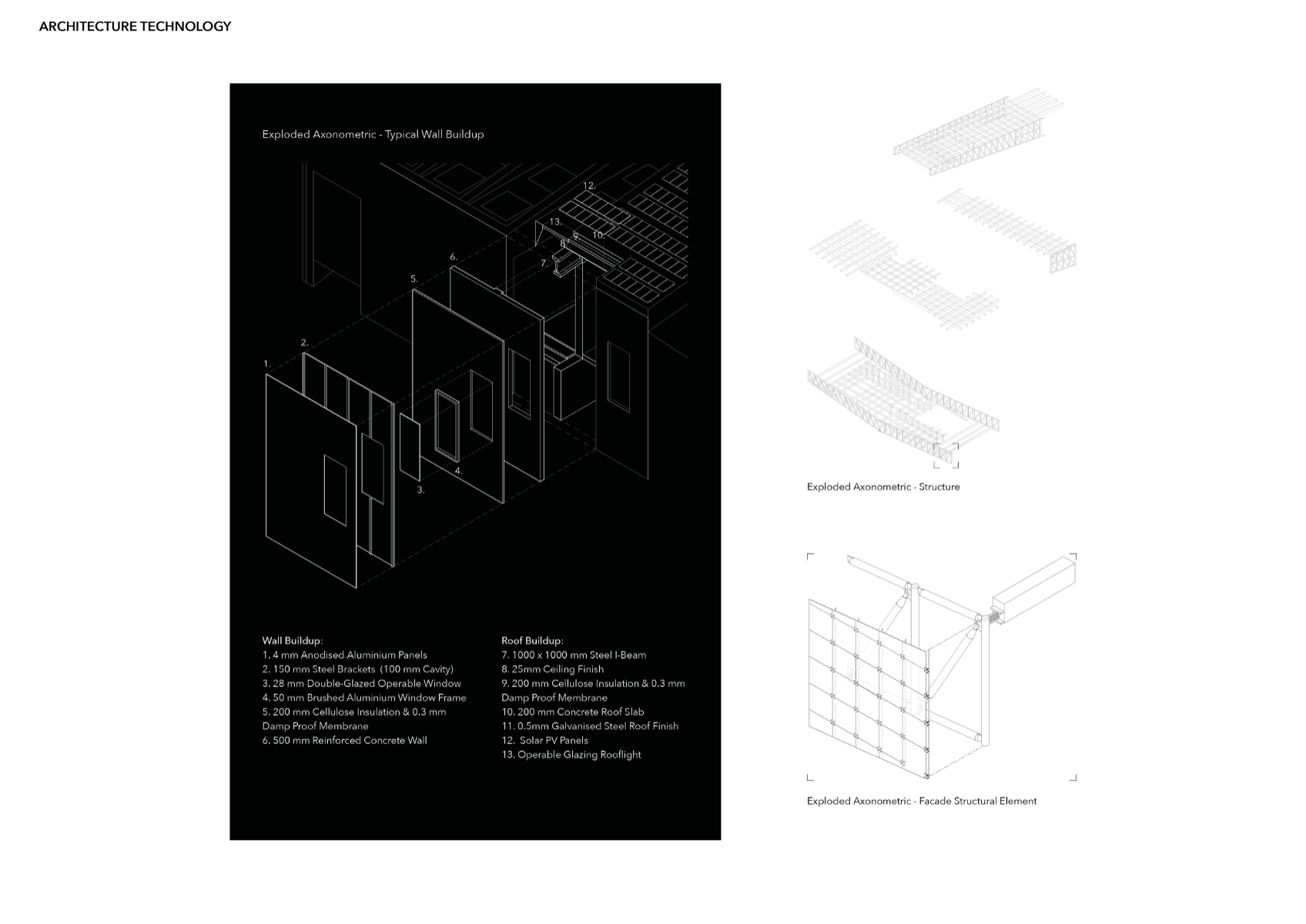
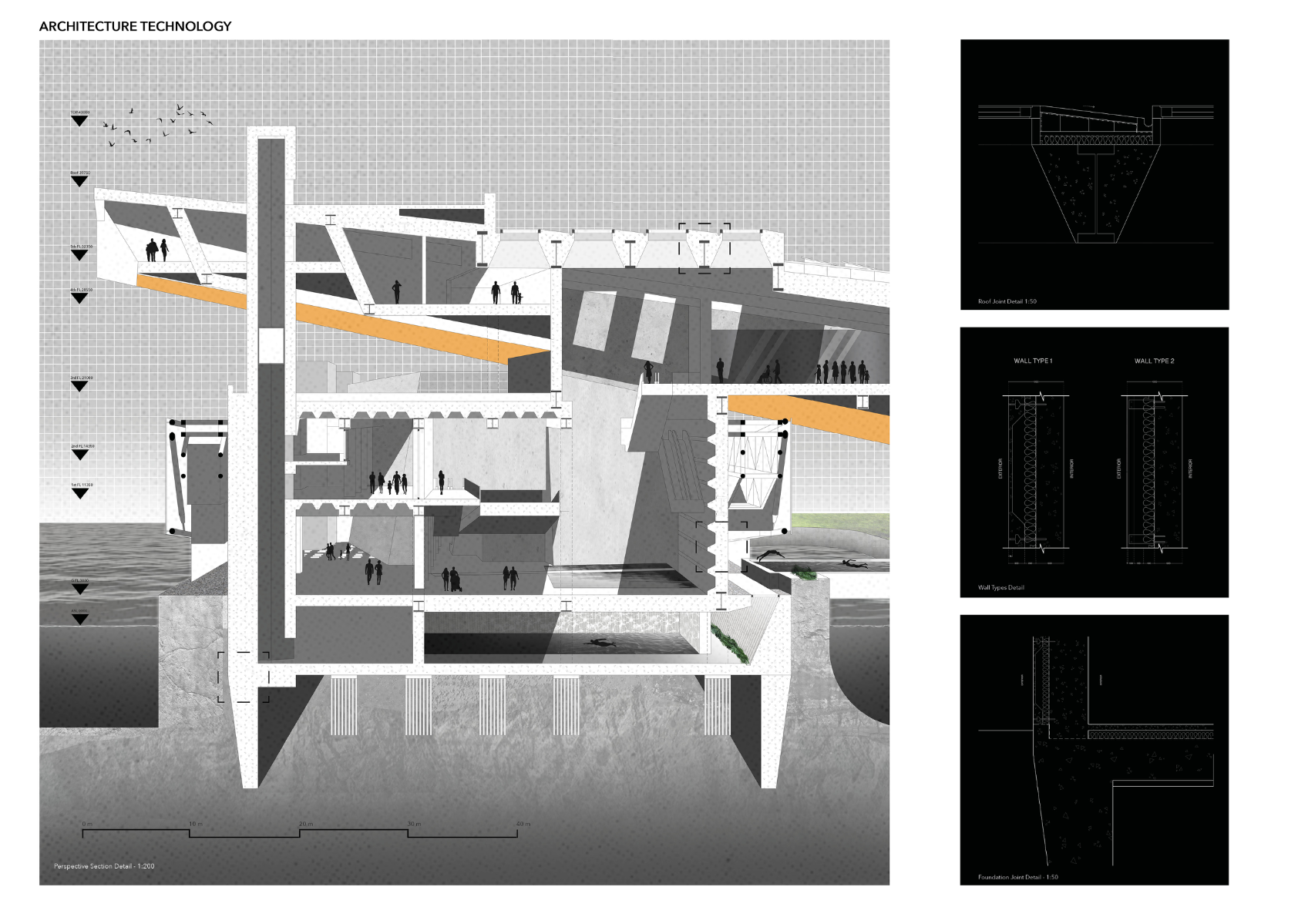
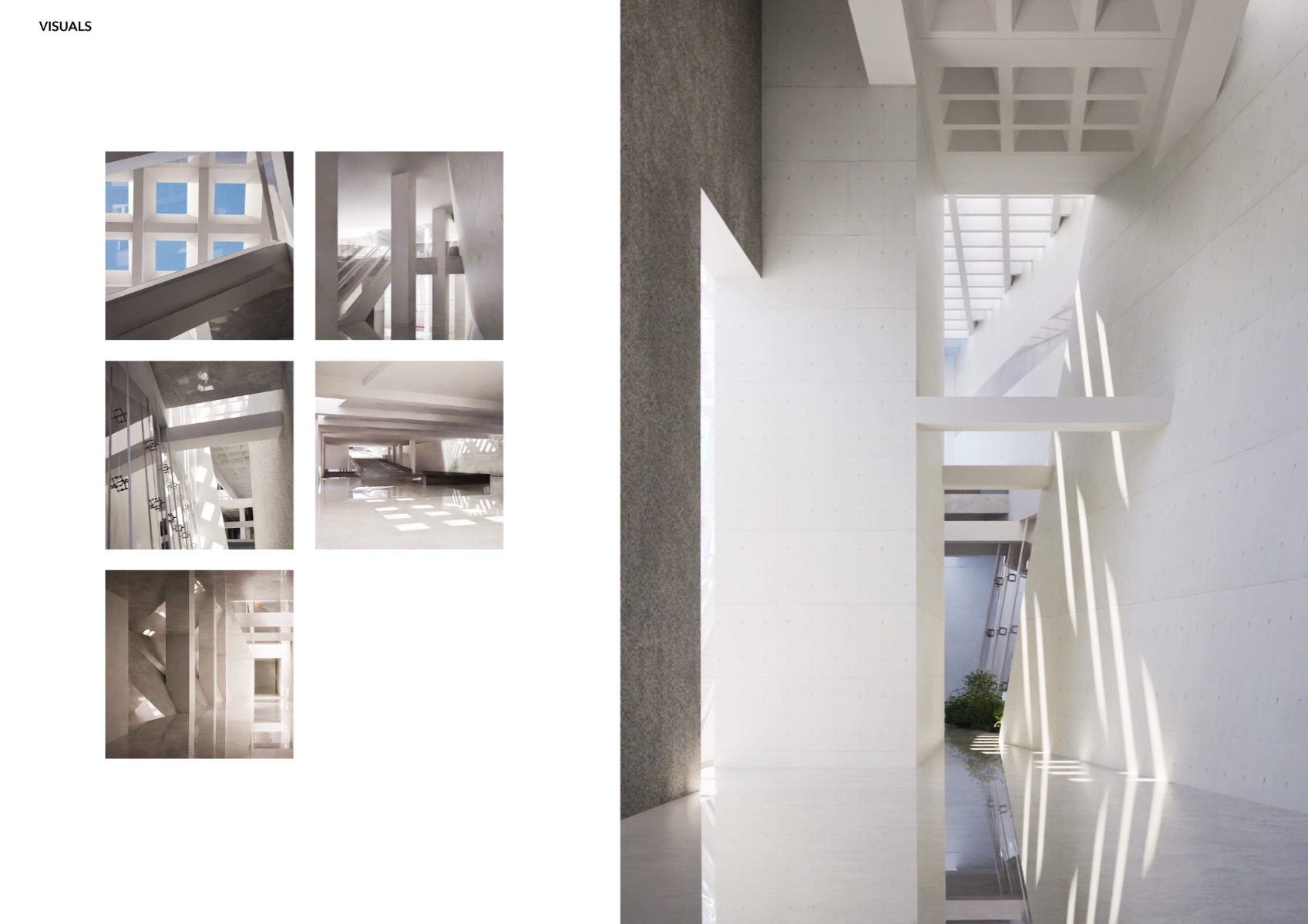
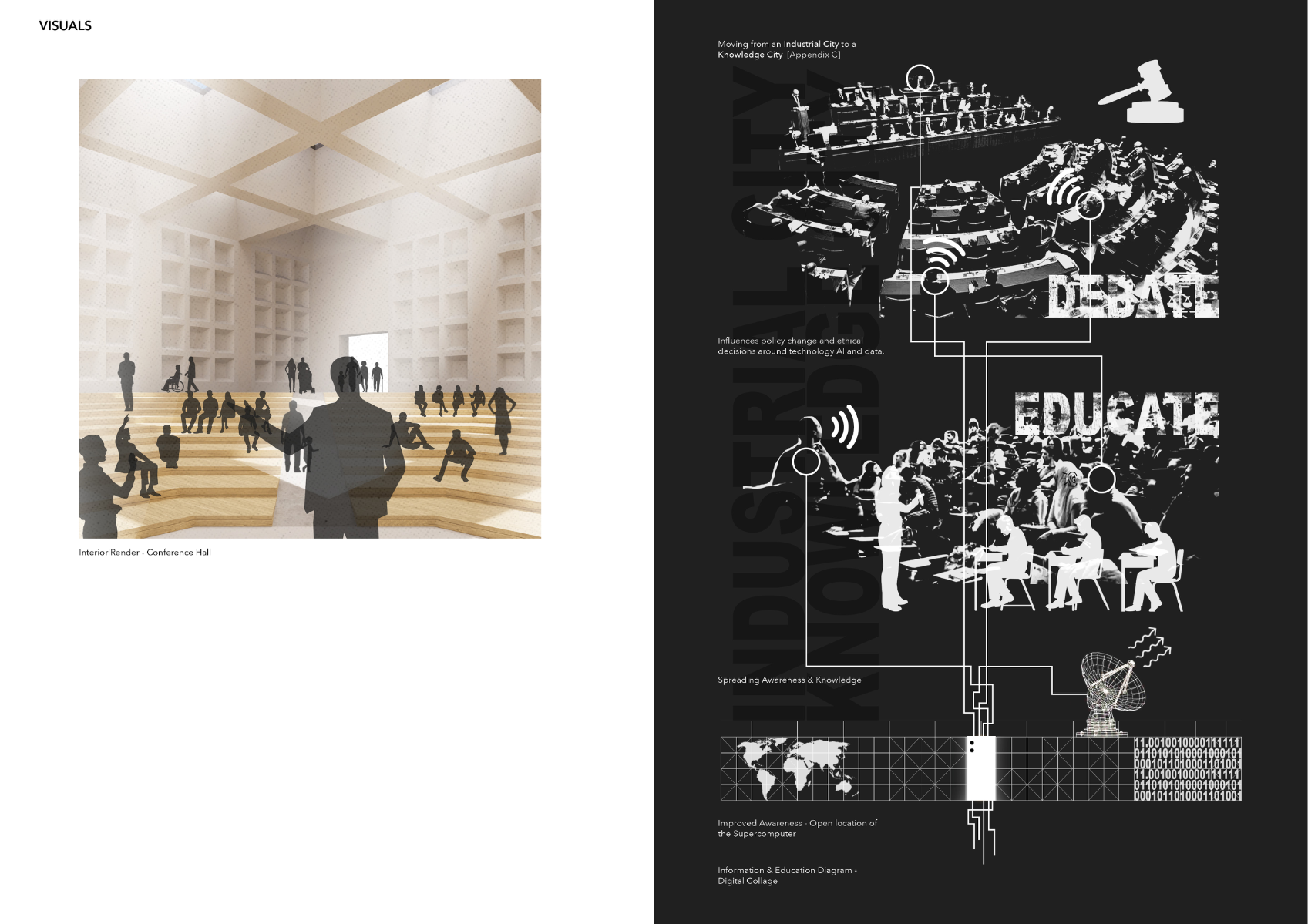
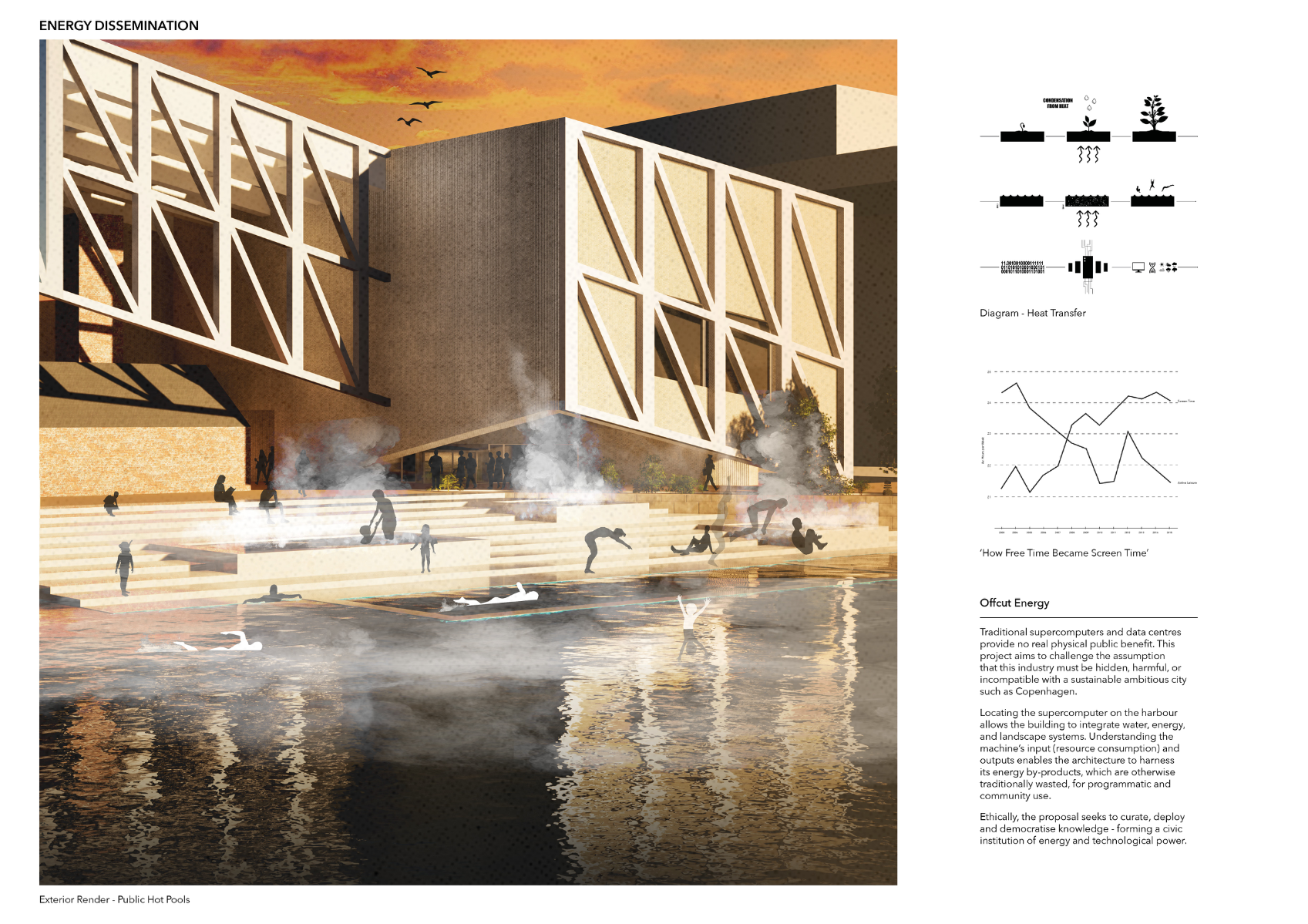
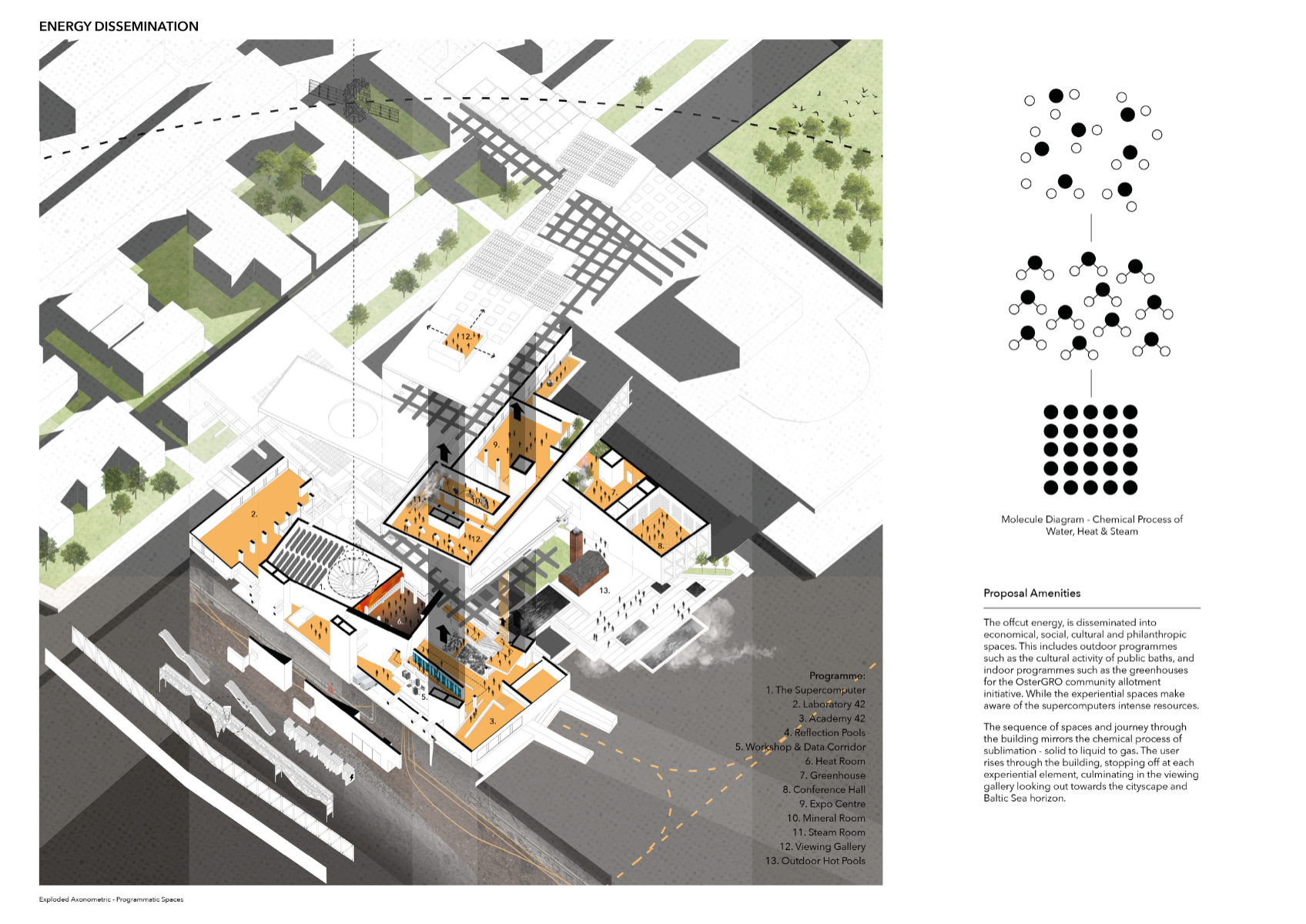
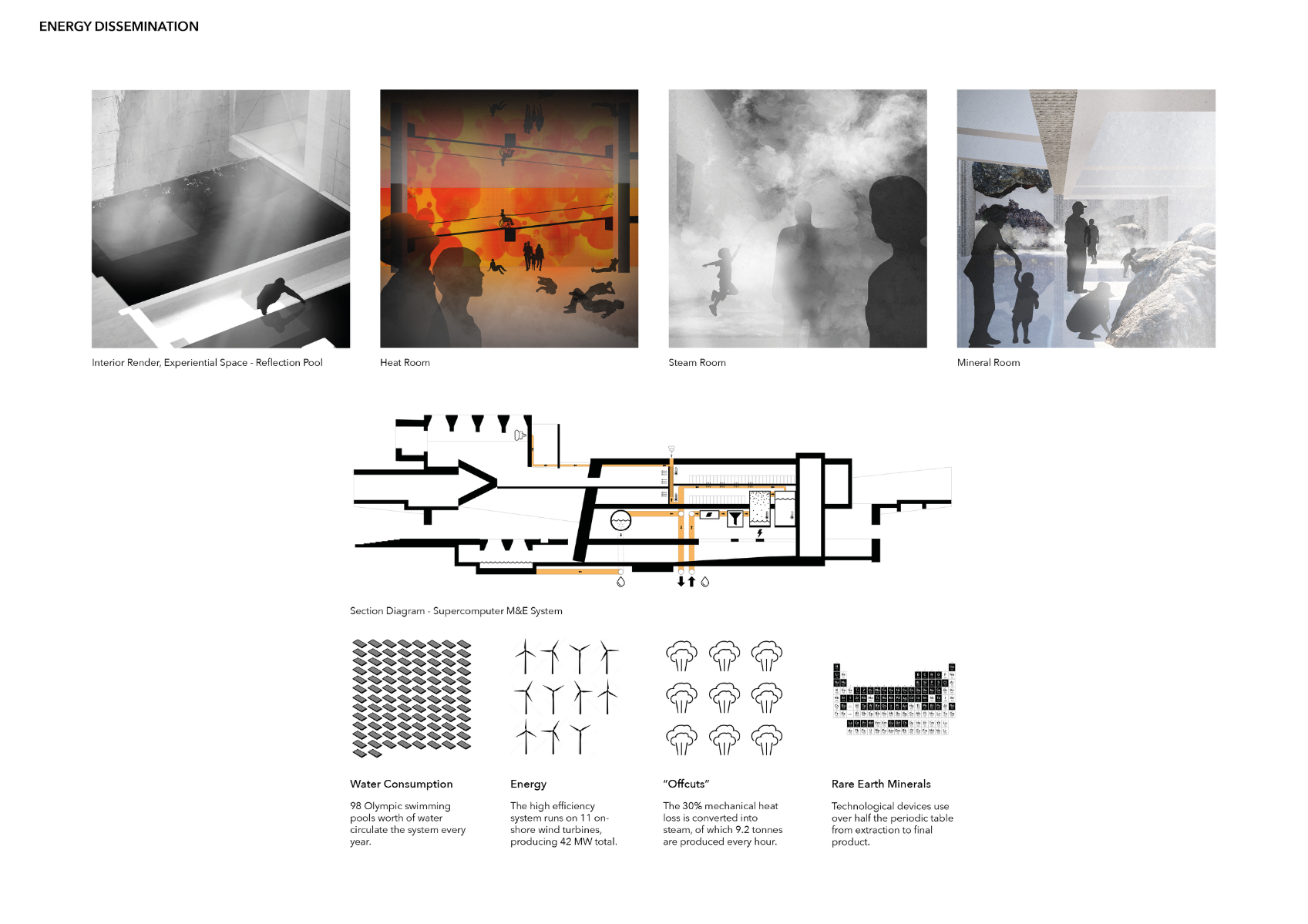
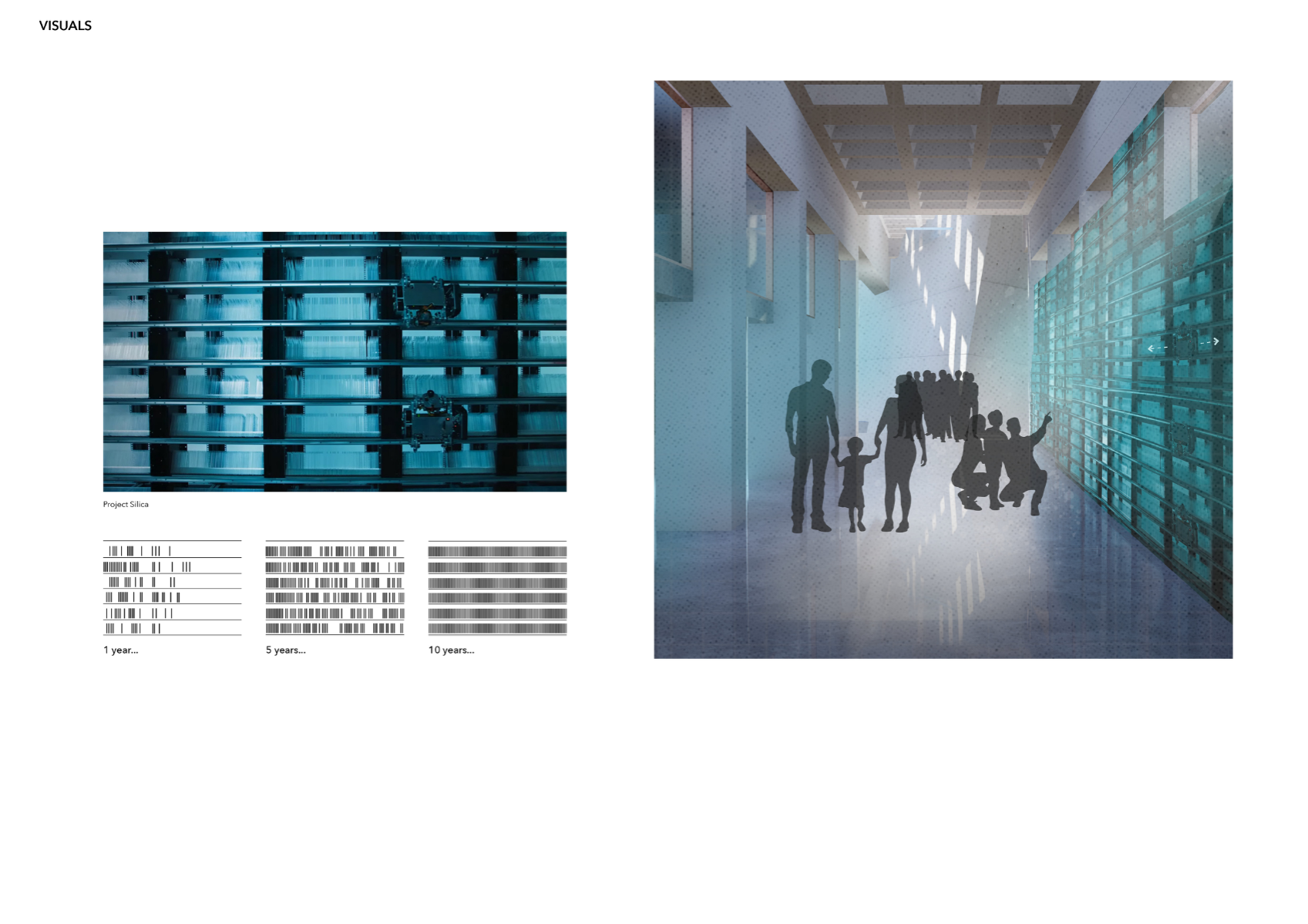
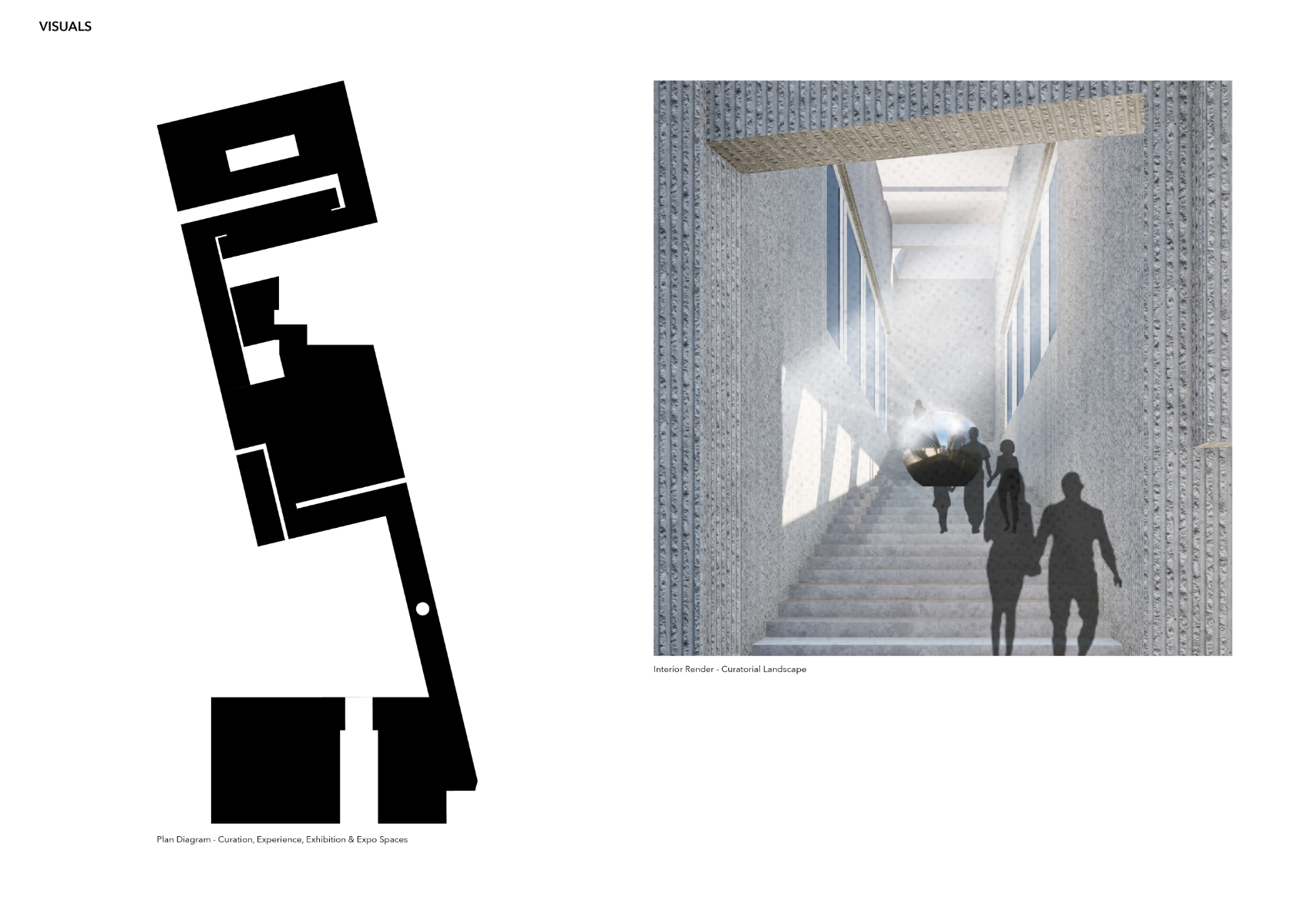
At the centre of the scheme stands the worlds most powerful supercomputer, conceived not a technological relic but as a civic and epistemological engine. It operates as both infrastructure and institution, a new civic institution within Copenhagen, a tangible manifestation of data and intelligence within the public domain. The proposal becomes a spatial investigation into the intersection of education, laboratory, leisure, energy and intelligence. By integrating pedagogical principles with advanced computational infrastructure, it redefines the civic role of architecture in the age of seemingly endless information. Its computational power is used for advanced research aligned with Denmark’s emerging goals in AI agriculture and bioscience. Ethically the proposal seeks to curate, deploy and democratise this knowledge. Understanding these typologies consumption and using energy-recovery technologies to convert offcut energy into cultural, recreational and social spaces, aligning with Denmark’s sustainable energy aspirations.
Competitions