Dalma Göncz
Graduate Diploma Art & Design
Royal College of Art
Specialisms: Fine Art / Painting / Textiles - Mixed Media
Location: London, United Kingdom
Dalma Göncz
First Name: Dalma
Last Name: Göncz
Specialisms: Fine Art / Painting / Textiles - Mixed Media
Sectors:
My Location: London, United Kingdom
University / College: Royal College of Art
Course / Program Title: Graduate Diploma Art & Design
About
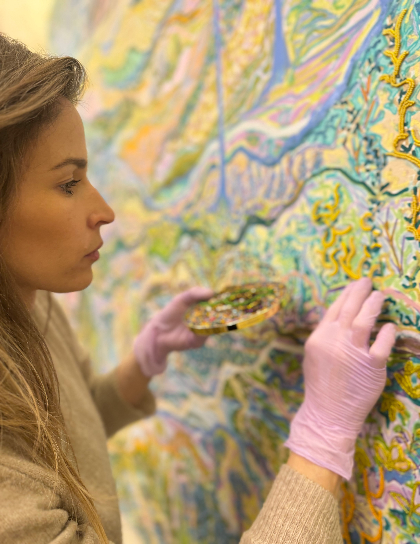
Dalma Göncz is a Hungarian contemporary visual artist based between Budapest and London. She studied Fine Art at the Royal College of Art in London and will continue her studies in MA Sculpture at the RCA.
Her multidisciplinary practice moves between painting, sculpture and traditional craft techniques, exploring the interconnectedness of nature, memory and human presence. Her recent works combine painting with intricate bead embroidery and recycled materials, transforming slow, repetitive handwork into a contemporary visual language.
Göncz’s work has been presented in a growing number of international exhibitions, with several exhibitions and projects in London in 2026, including during London Design Festival. Her work has also received international recognition through the Liberty Art Award. Drawing on natural forms, imagined landscapes and the heritage of traditional handcraft, her practice examines the relationship between the natural and the human-made, while questioning how material, memory and time can remain visible in an increasingly accelerated world.
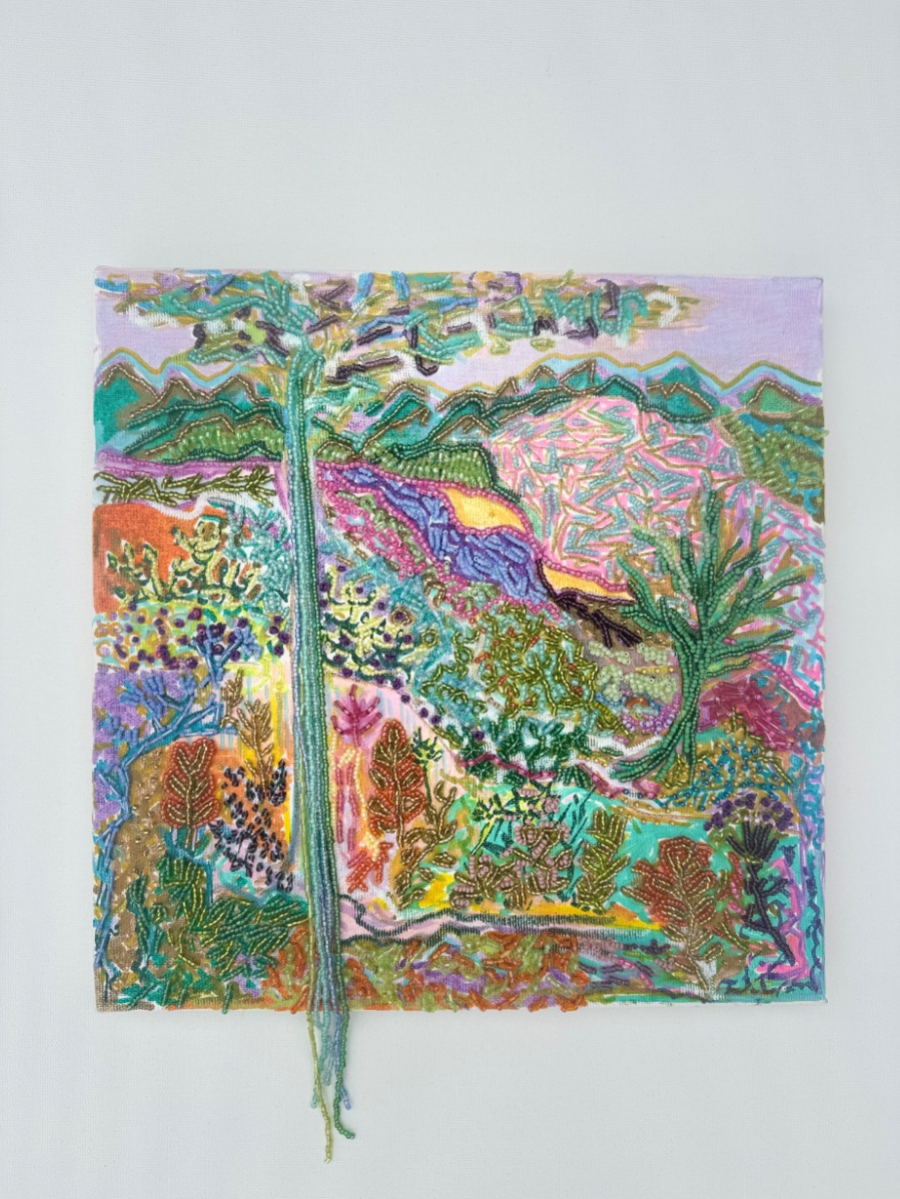
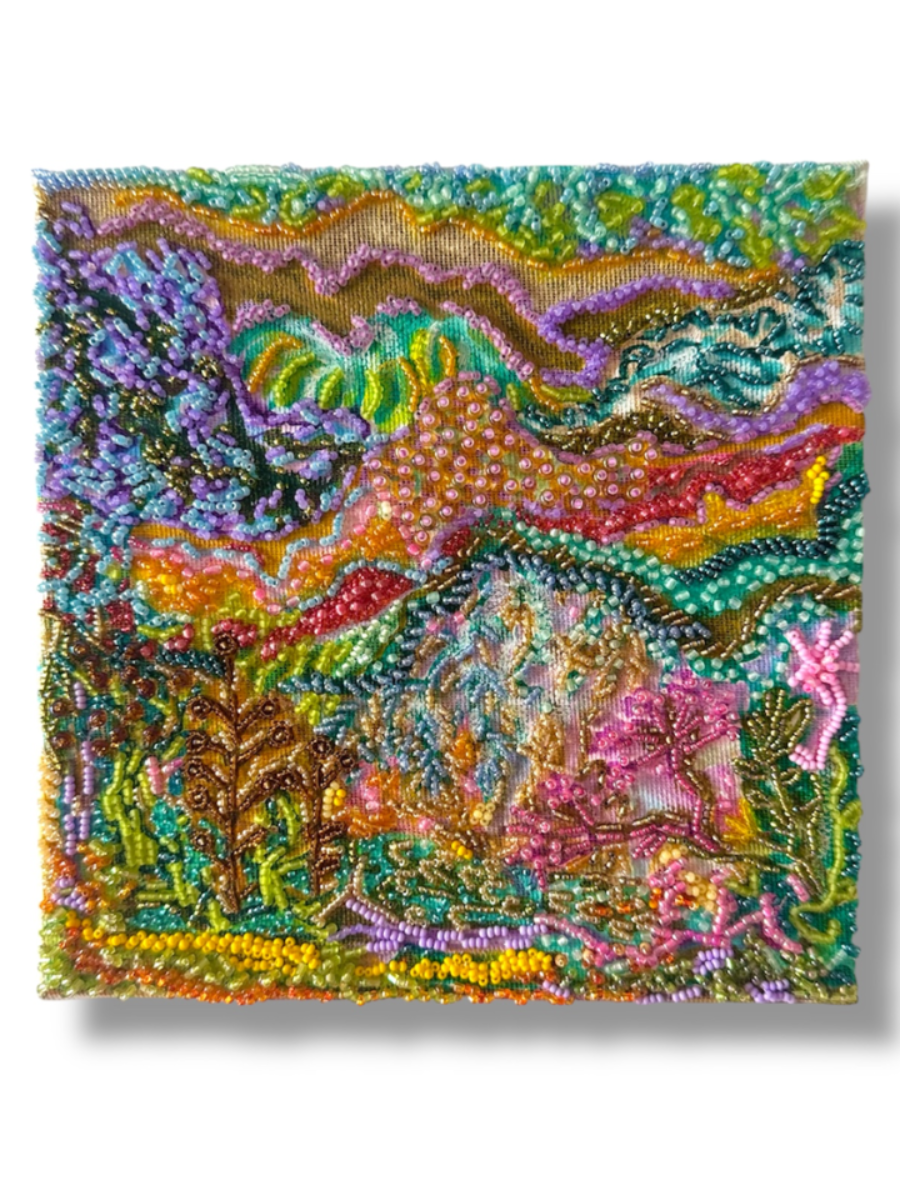
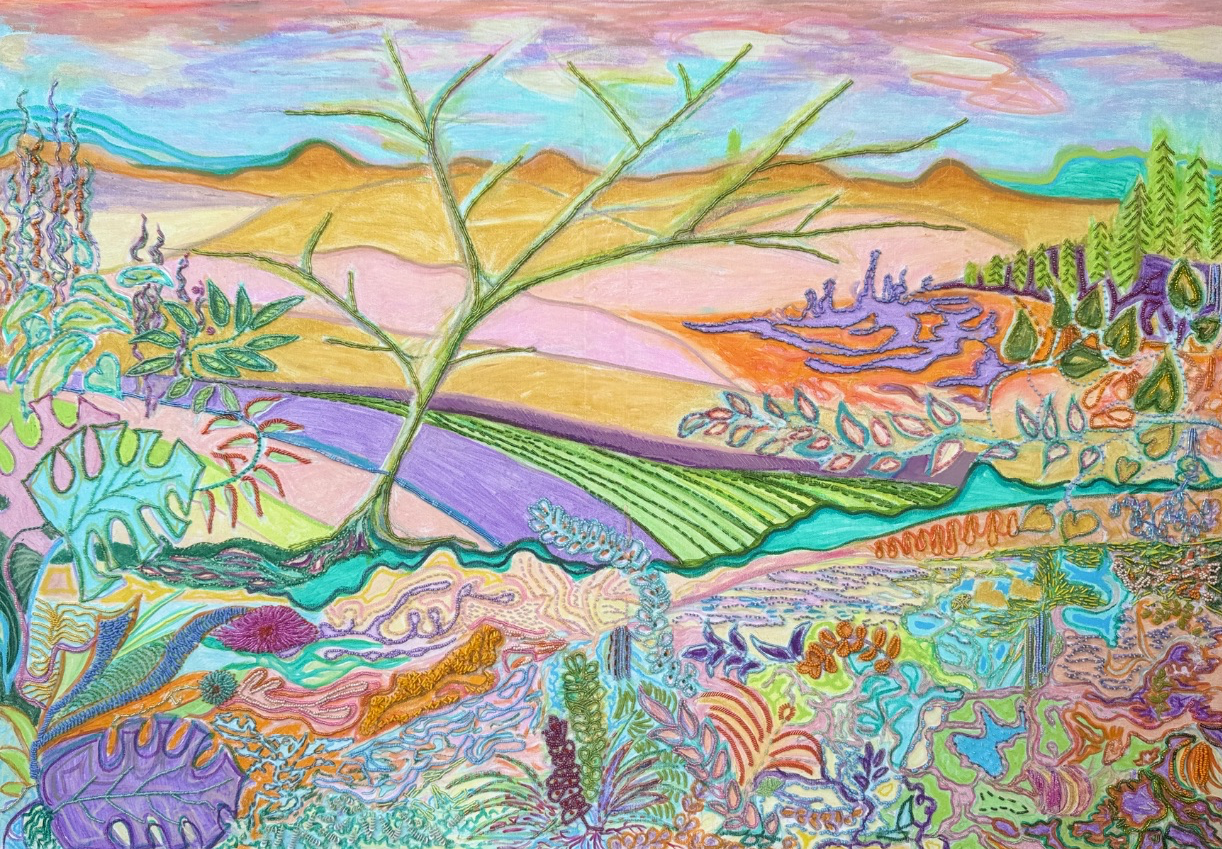
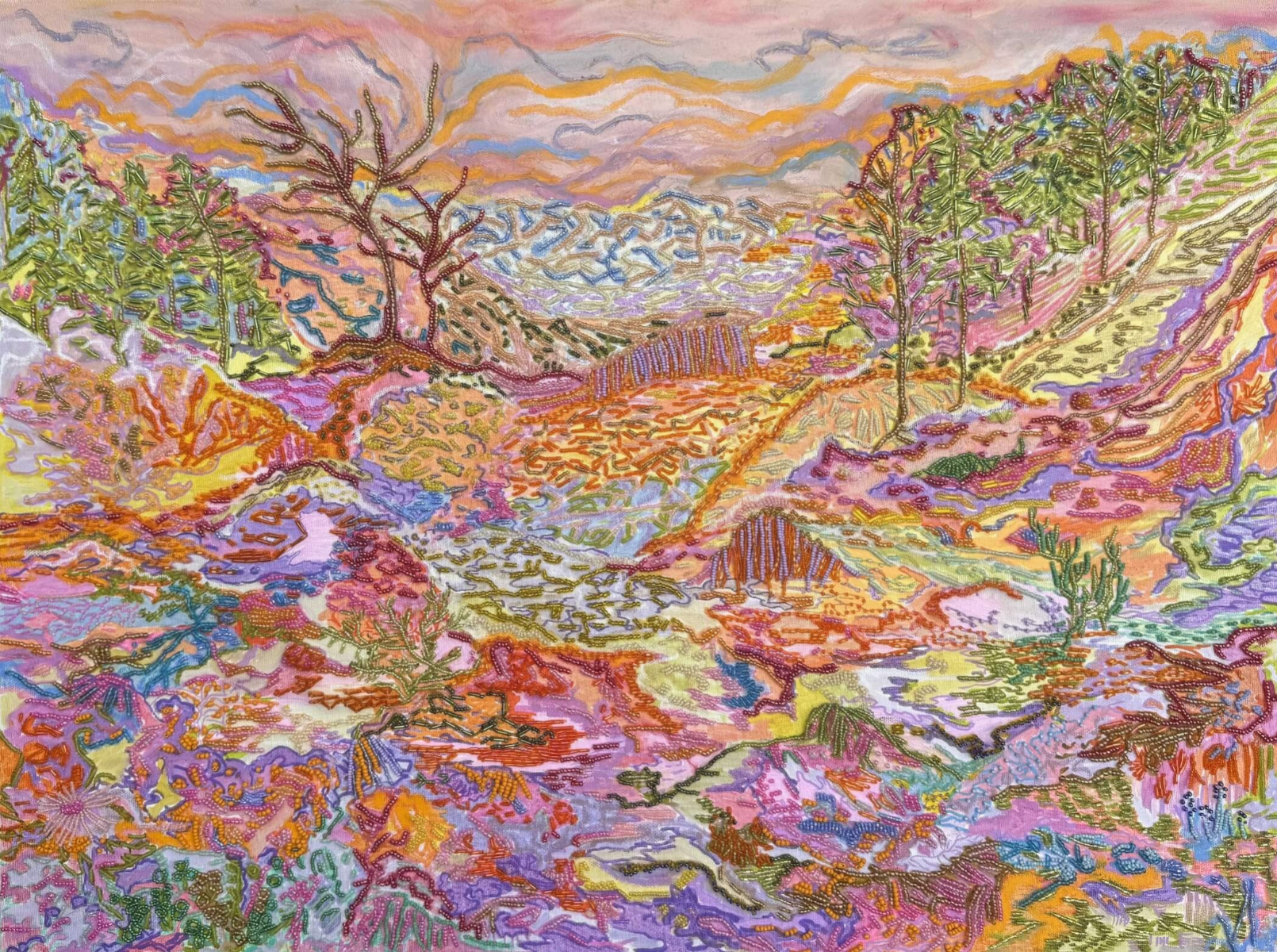
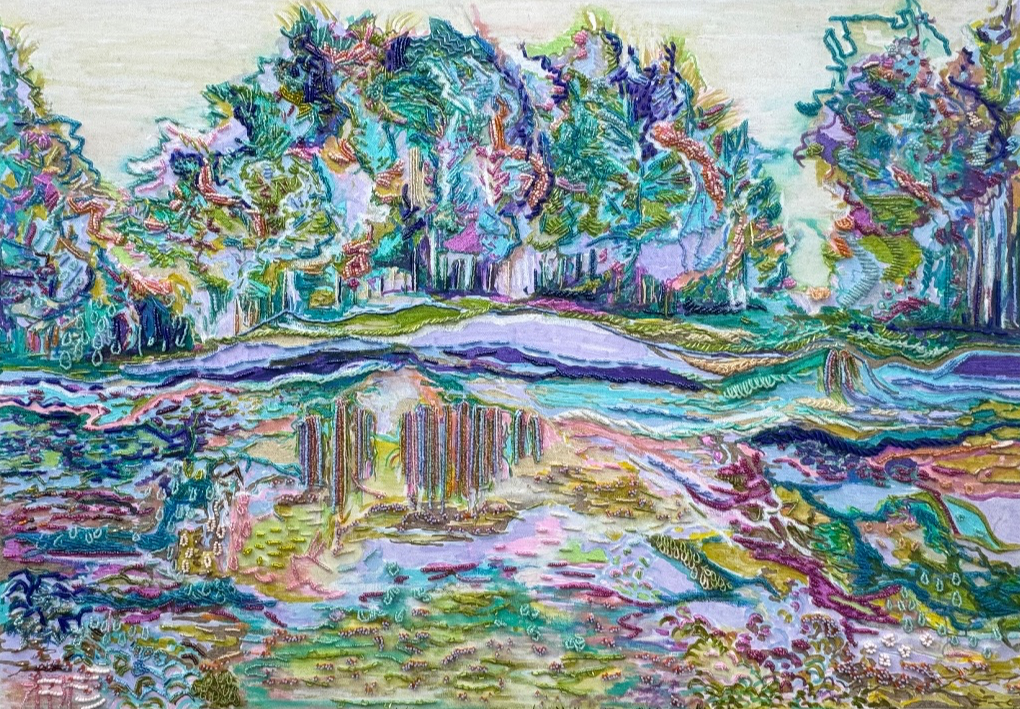
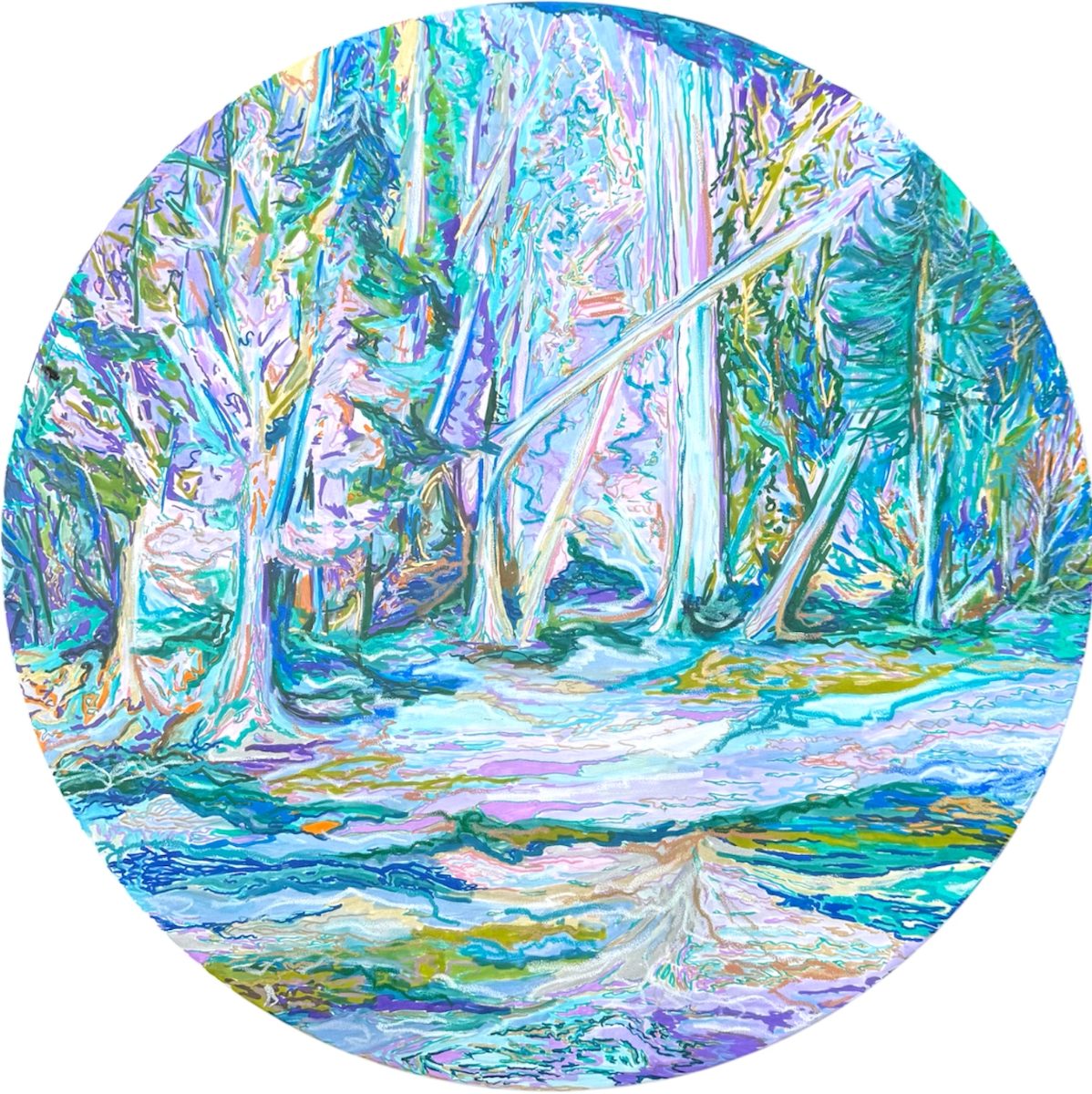
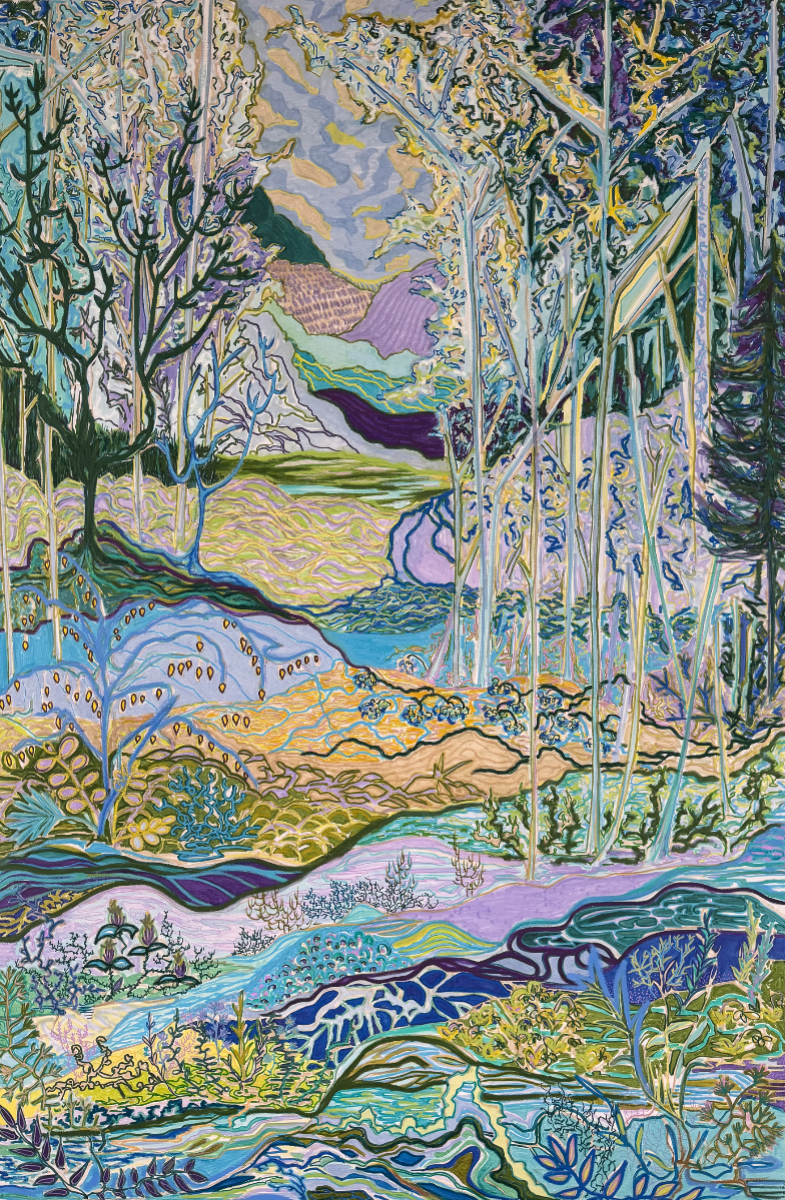
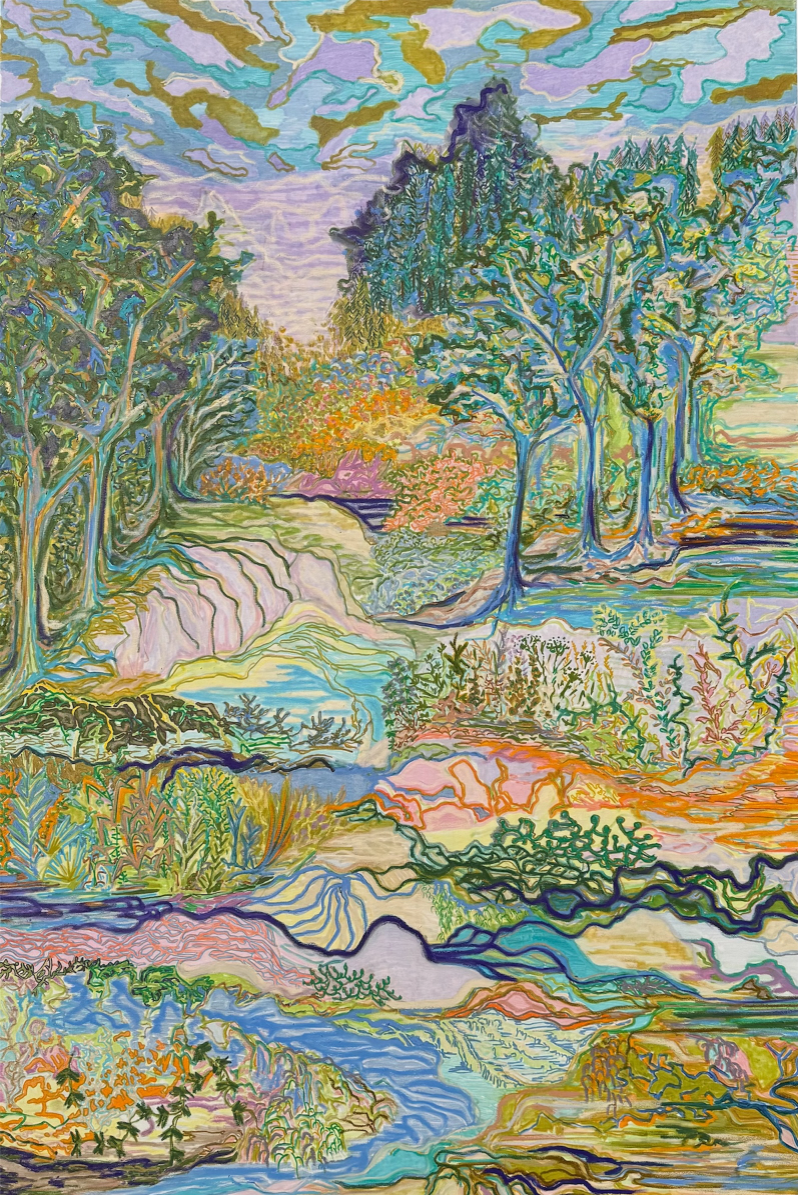
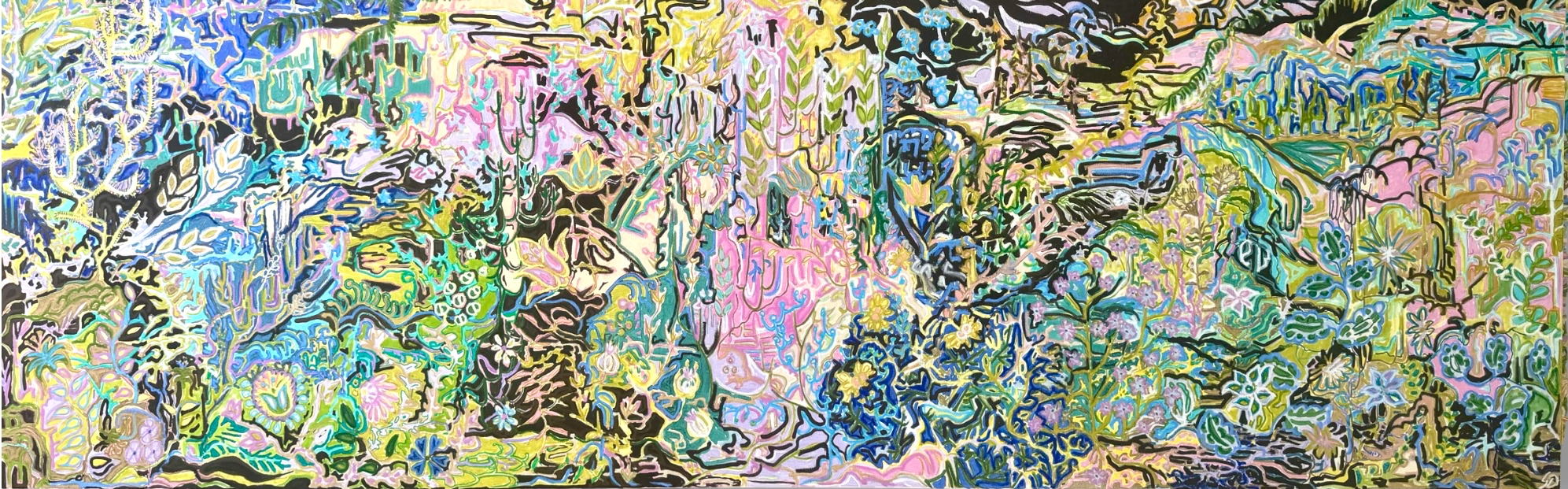
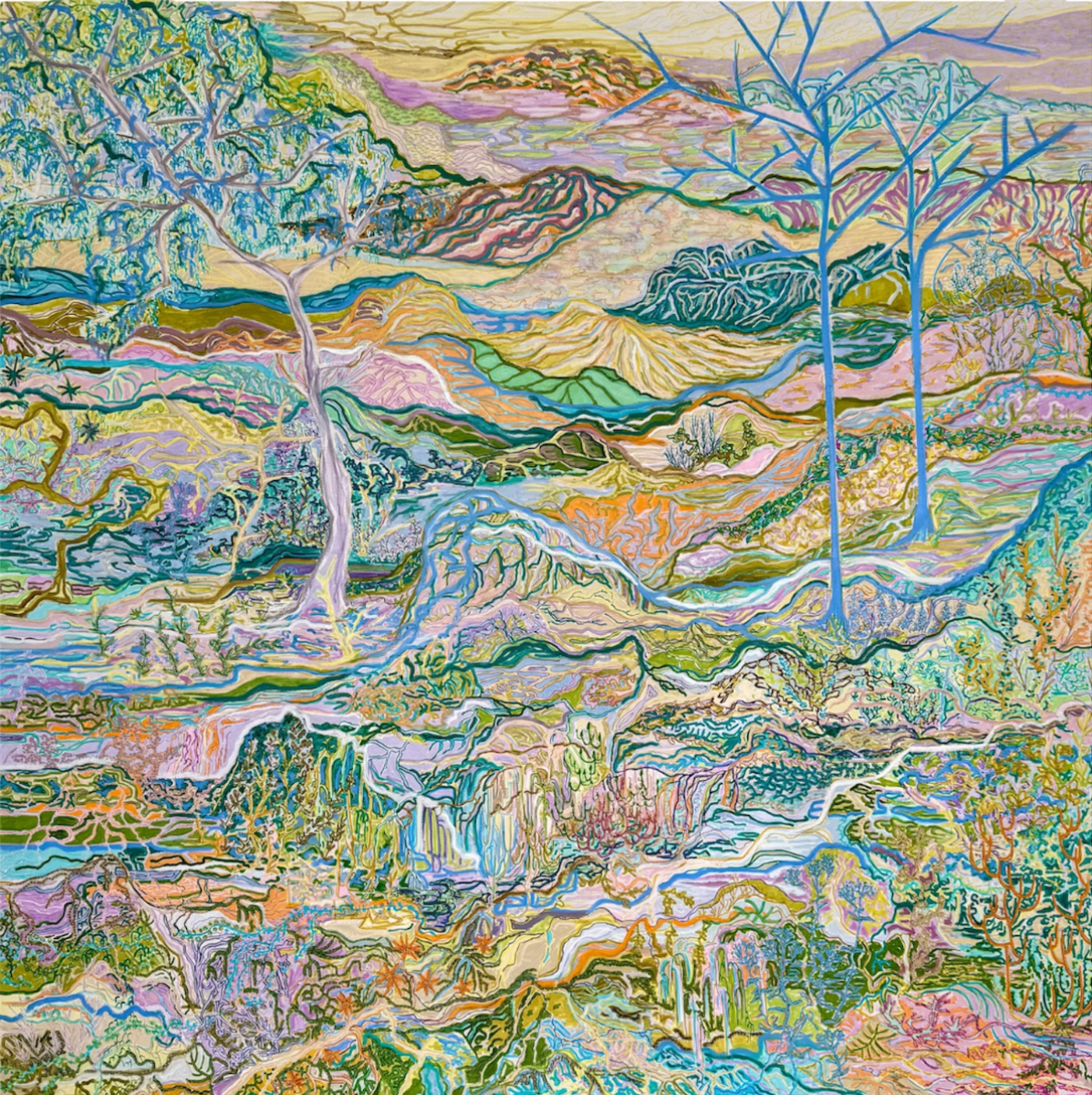
INTERCONNECTEDNESS explores the relationship between nature, memory and human presence through painting and thousands of individually applied glass beads. Drawing on organic structures and inherited traditions of handwork, the series examines repetition as a physical expression of time, care and often overlooked labour. Historically associated with women’s domestic work, embroidery becomes a contemporary artistic language that questions the boundaries between art and craft. Each gesture carries traces of knowledge passed between generations, connecting personal and collective memory. Through material transformation, the works reflect on interconnectedness not only within nature, but also between people, histories and inherited practices.
Competitions