Avis Dou
Ceramics & Glass MA
Royal College of Art
Specialisms: Glass / Contemporary Craft /
Location: London, United Kingdom

Avis Dou
First Name: Avis
Last Name: Dou
Specialisms: Glass / Contemporary Craft
Sectors:
My Location: London, United Kingdom
University / College: Royal College of Art
Course / Program Title: Ceramics & Glass MA
About
Avis uses kilnformed glass as a painterly medium, embracing its versatility and unpredictability. Through layering, reusing fragments, and adding materials like metal and decals, she explores narrative and emotion. Her practice reflects on memory, transforming fragility and pain into strength, humor, and visual intimacy.


Bad Blood questions family identity and blood ties. In China, home and family are often blurred, but for me this home means horror and hidden pain. Using pâte de verre, I create thin, fragile glass sheets—fuzzy, hole-filled, like my memories. By varying temperatures, grains, and adding materials, I evoke impressions of softness, burning, or stitched scars. Needles and threads pierce holes, violent yet binding, representing blood ties. Ceramic pigments form blurred patterns of the five poisons: toad, centipede, scorpion, gecko, snake — symbols of toxic, alienated kinship. I reveal trauma with playful, sarcastic resistance.
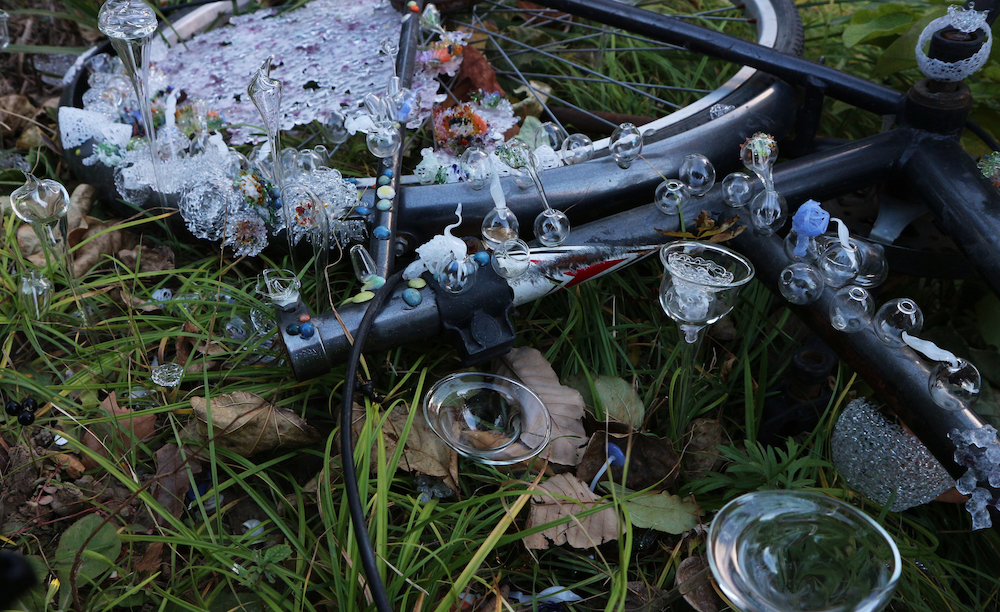
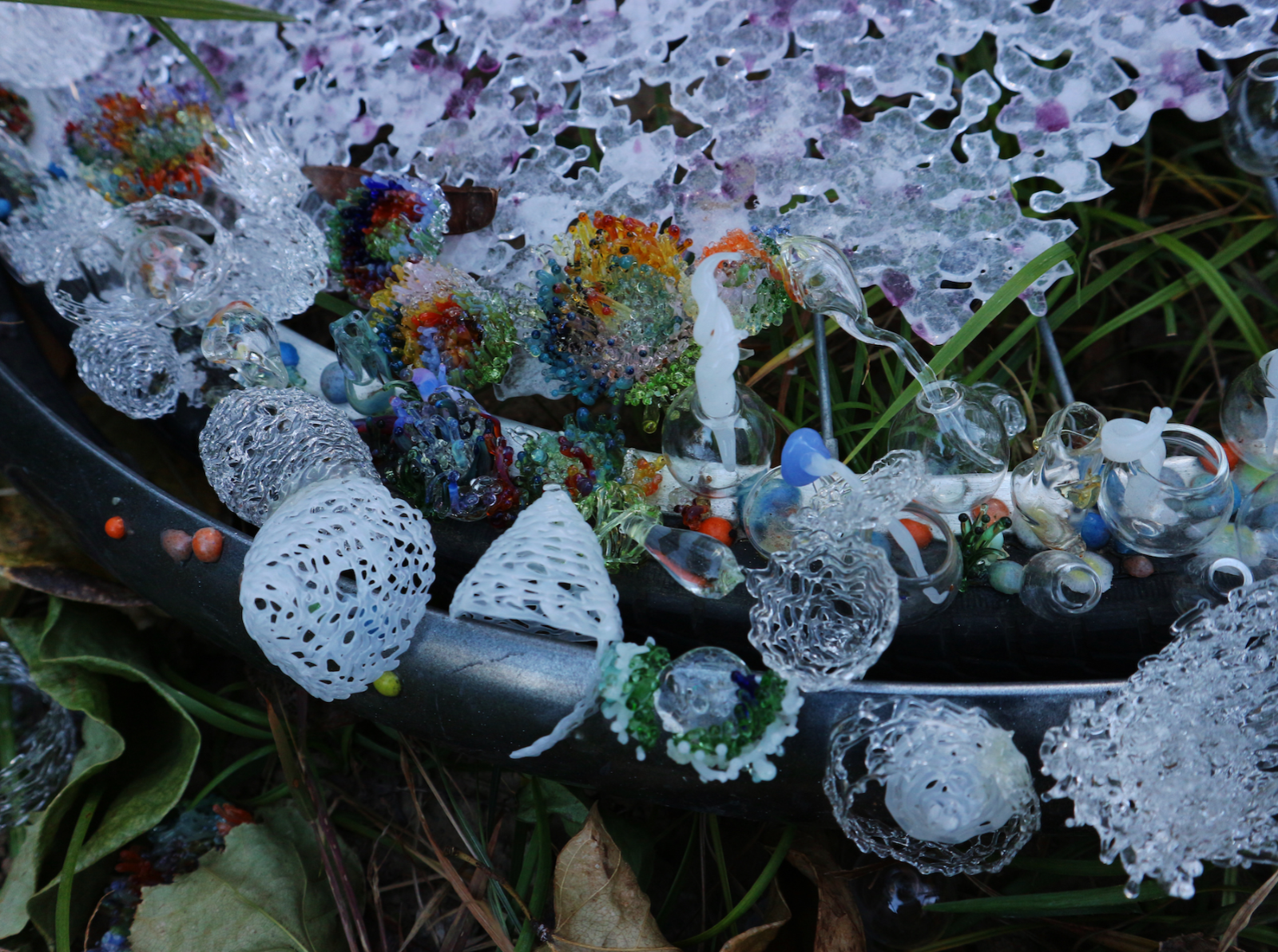
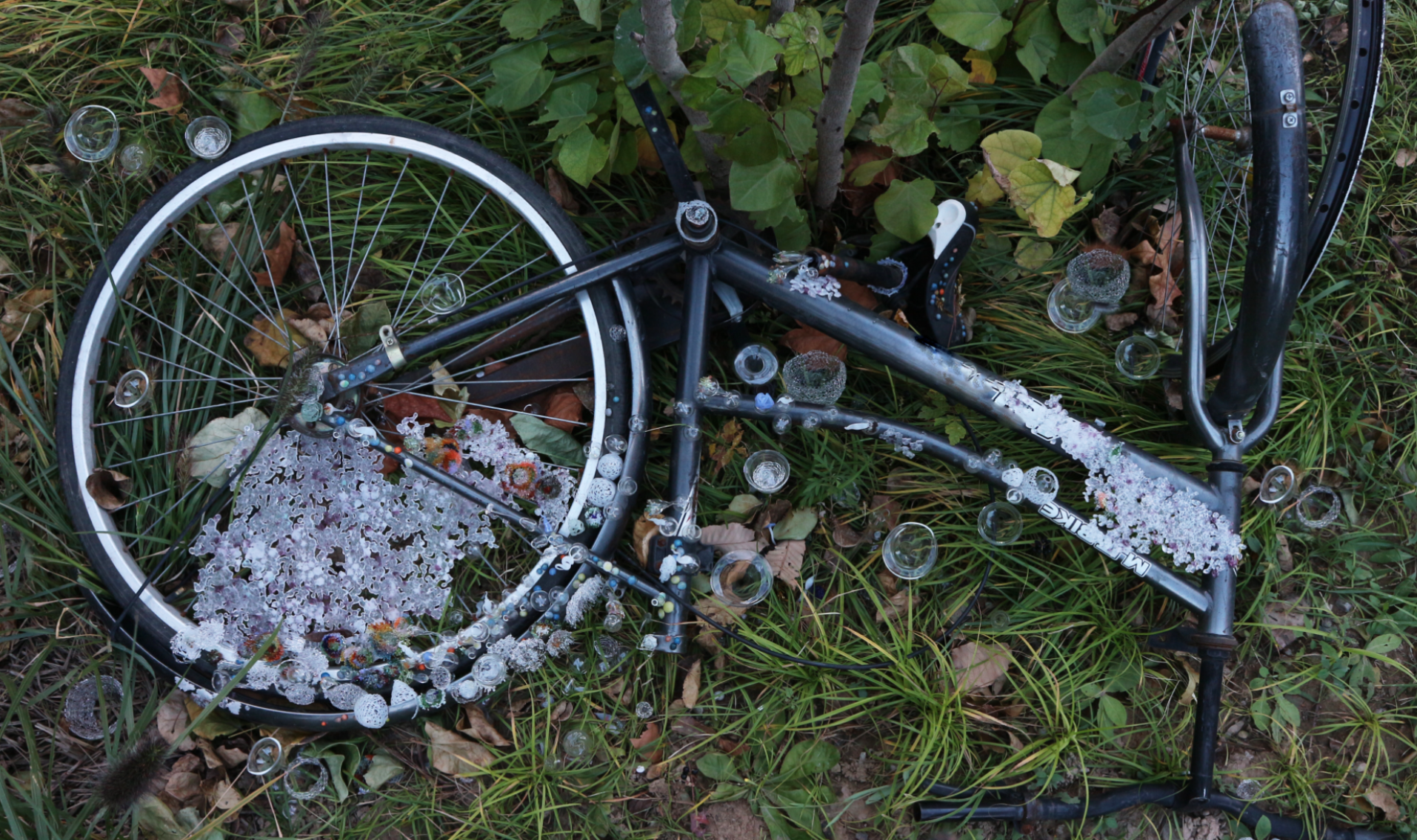
Taking the mushroom fungus in nature as a reference, the glass mycelium grows and spreads on the grass and the old bicycle, occupying and expanding its own territory, creating a great contrast with the surrounding environment. The use of glass as a medium demonstrates the lushness of life and erosion. Nature's decomposers turn the remains of animals and plants into dust and return them to the cycle of life. Often, however, man-made industrial materials are absent from this process, unable to be properly housed and reused, achieving a worthless demise. Abandoned bicycles can be found everywhere in the campus, and they are discarded and forgotten with the departure of their owners. Therefore, I chose the bicycle as a symbol, and used the glass material, which is also an artificial product, to cover it, showing a kind of false disintegration and burial, and restoring the inevitable process of the natural environment to the industrial product, embodying a kind of introspection and reflection on the collision of industry and nature.
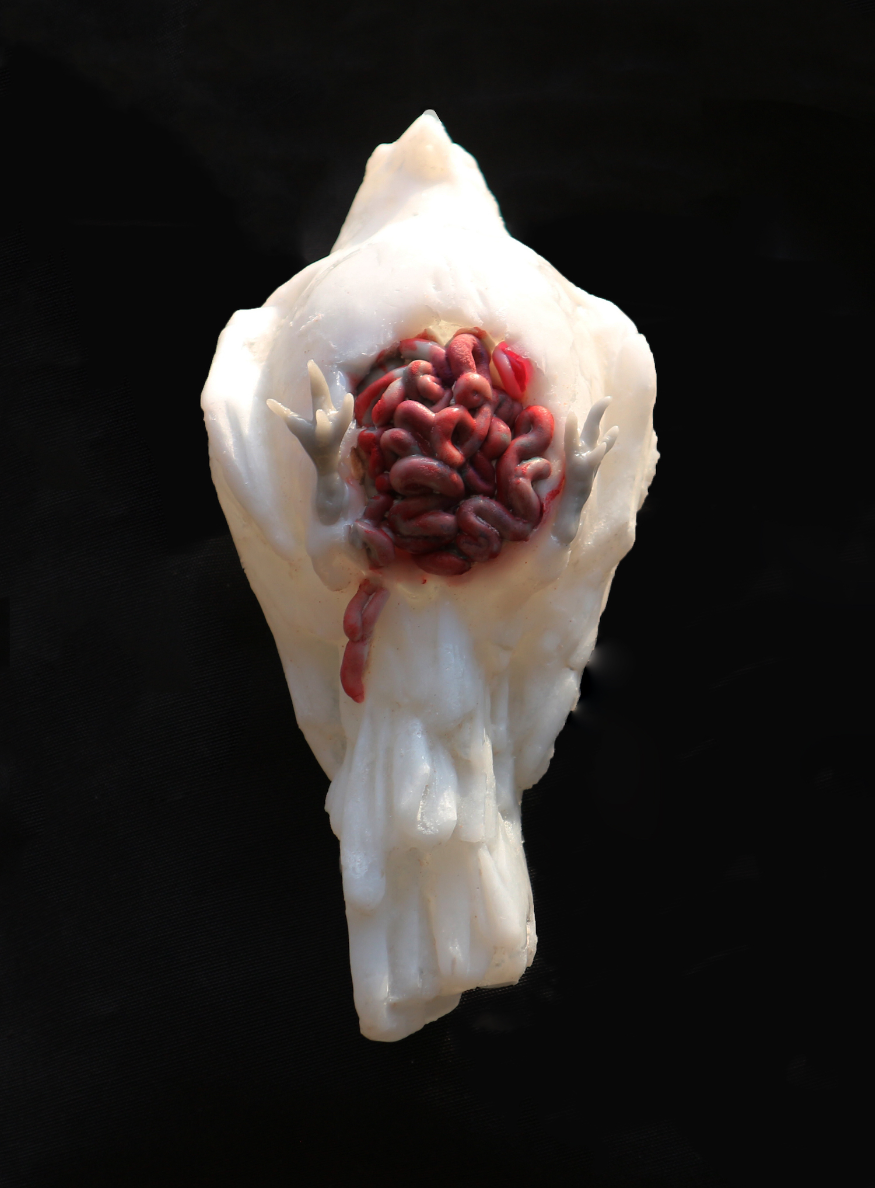
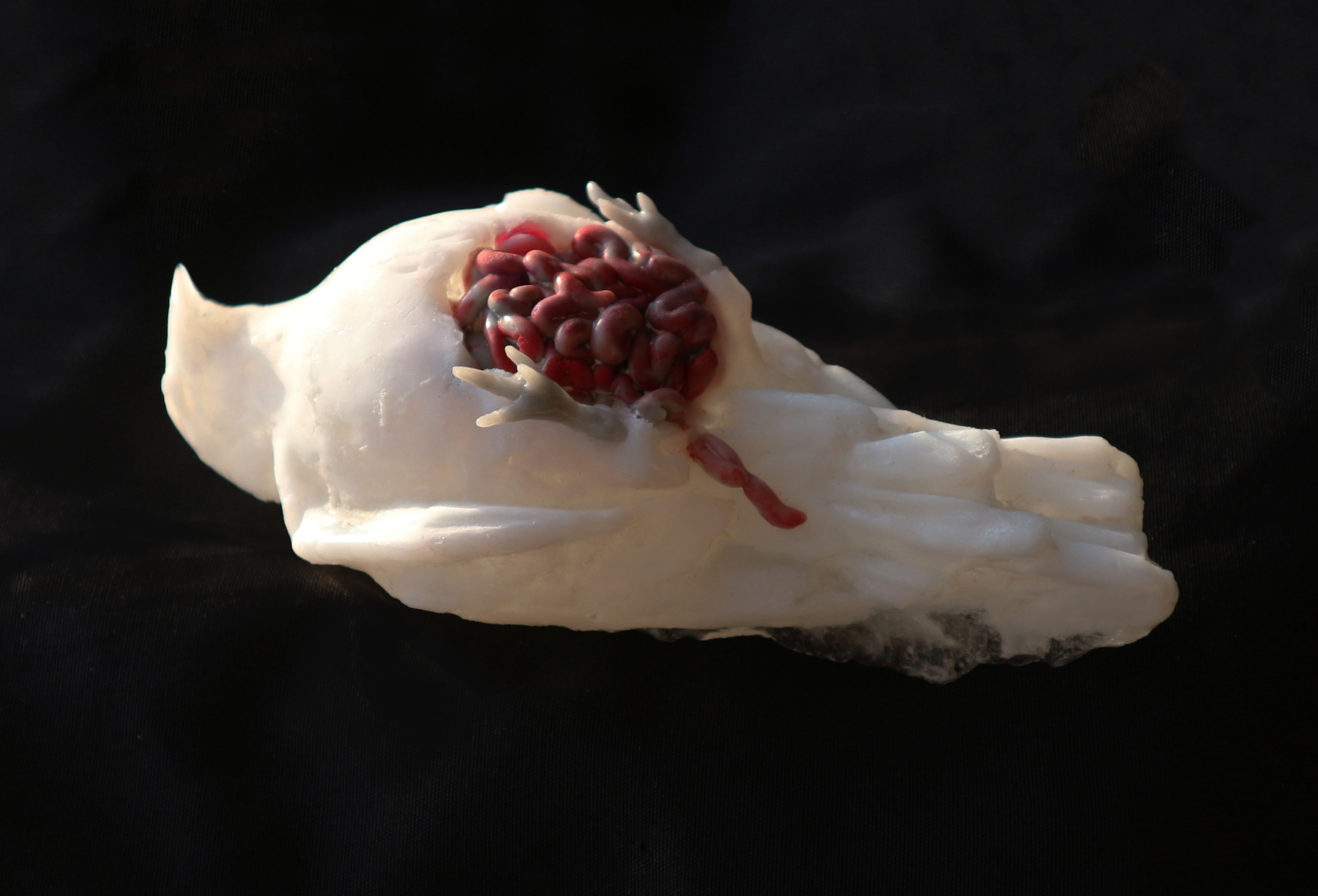
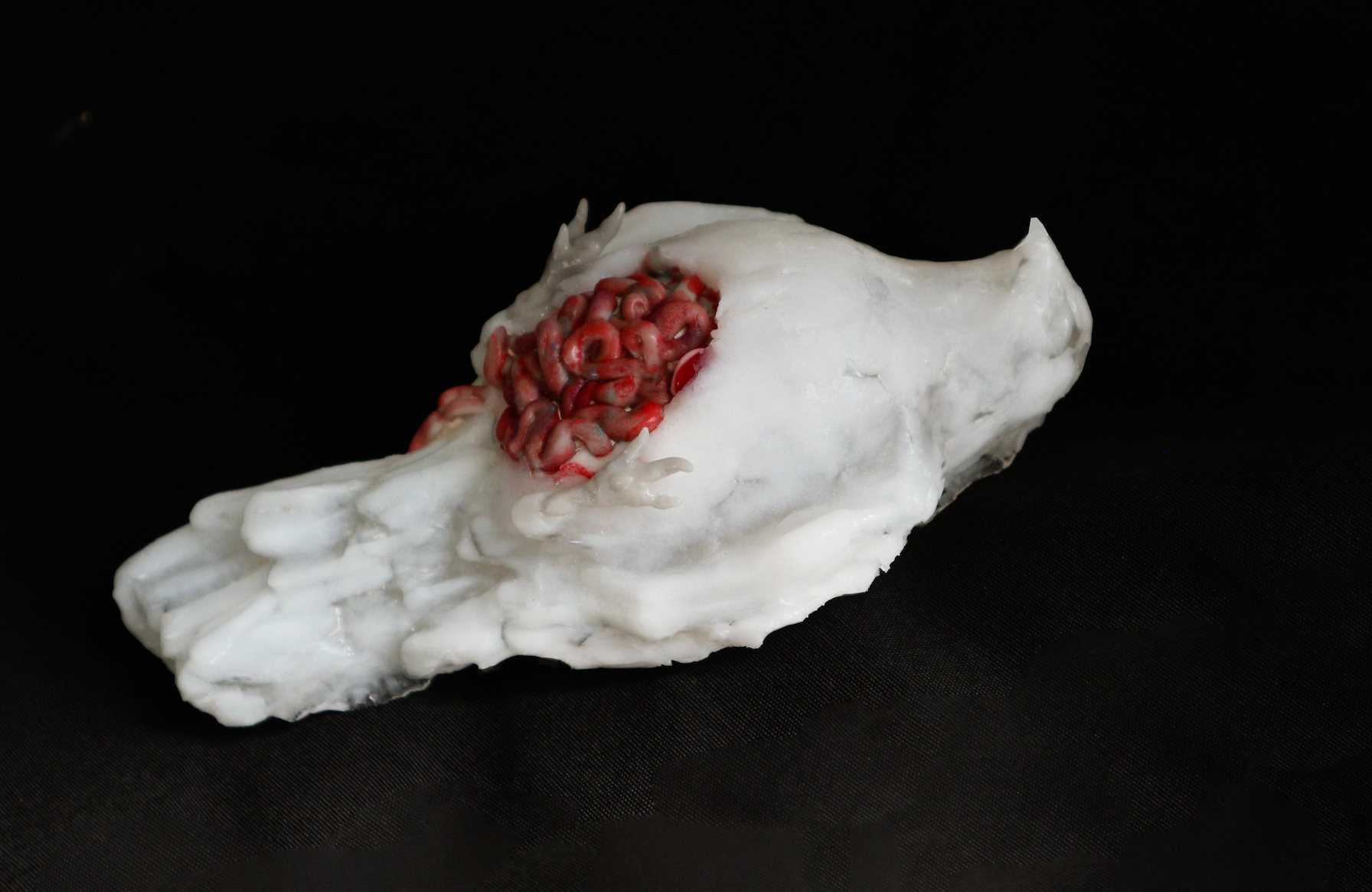
A white glass bird lies lifeless, its body split to reveal glossy, flesh-like intestines. The work contrasts fragility and viscosity through material manipulation and controlled firing processes.
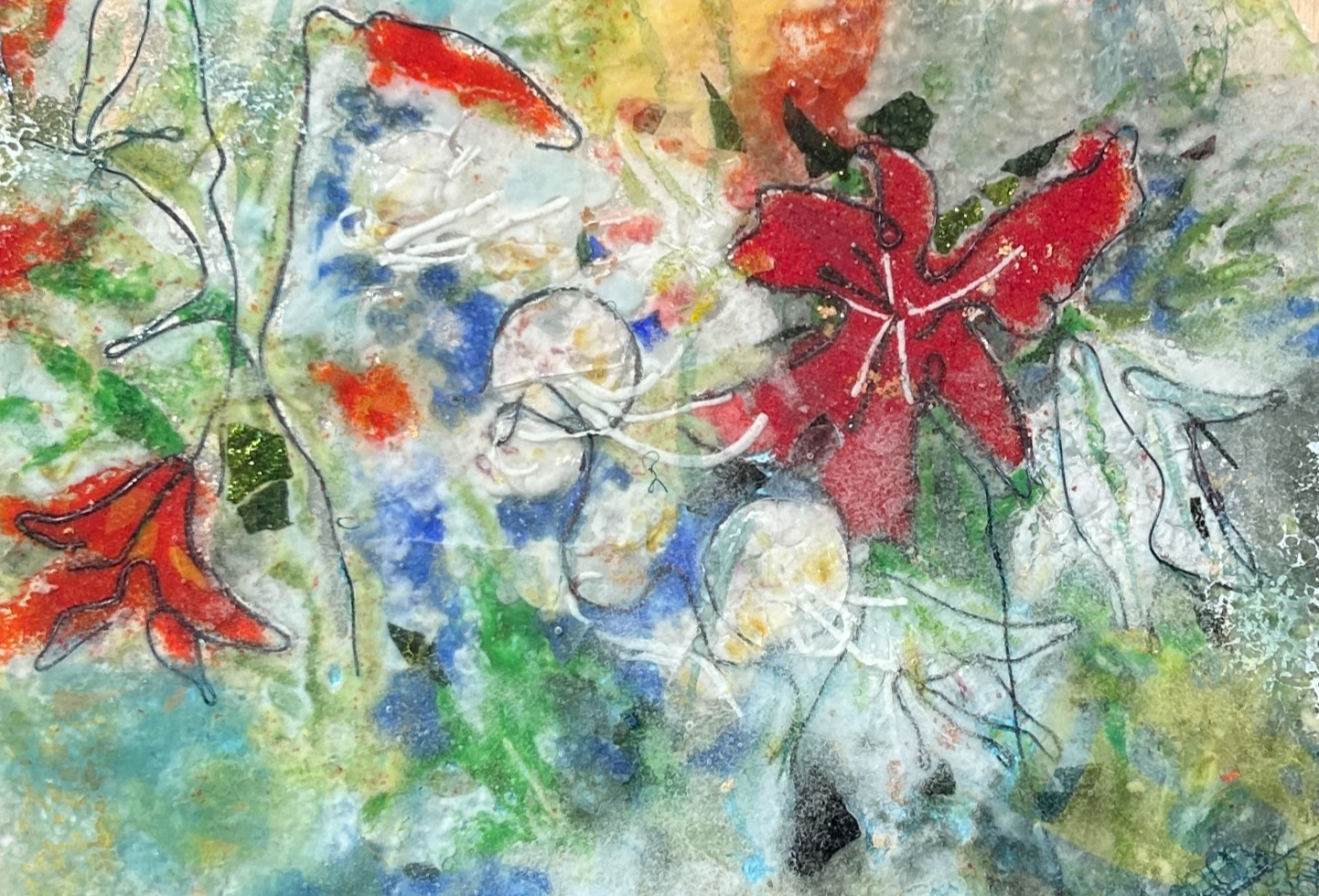
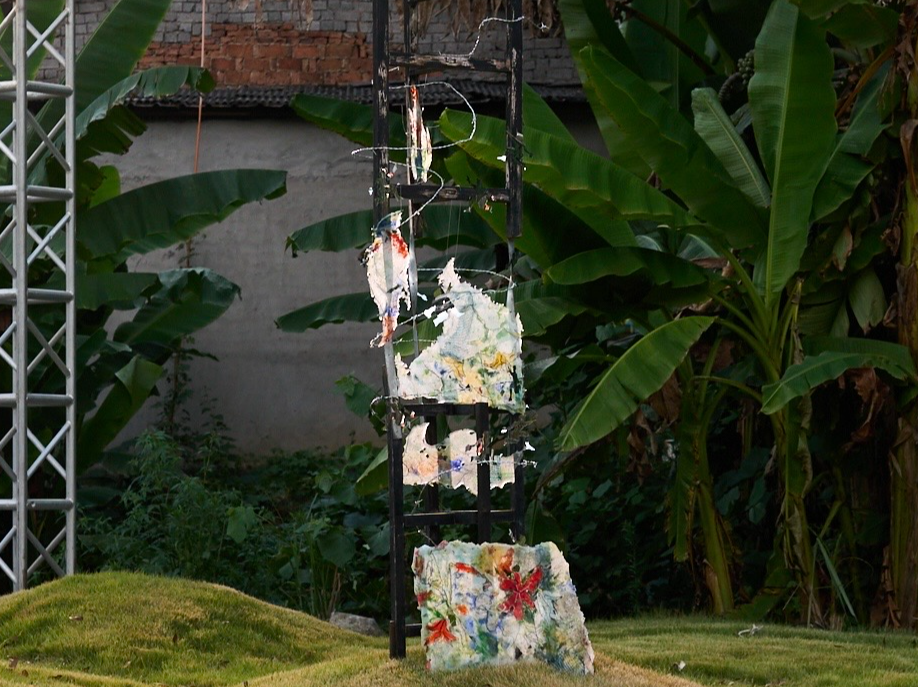
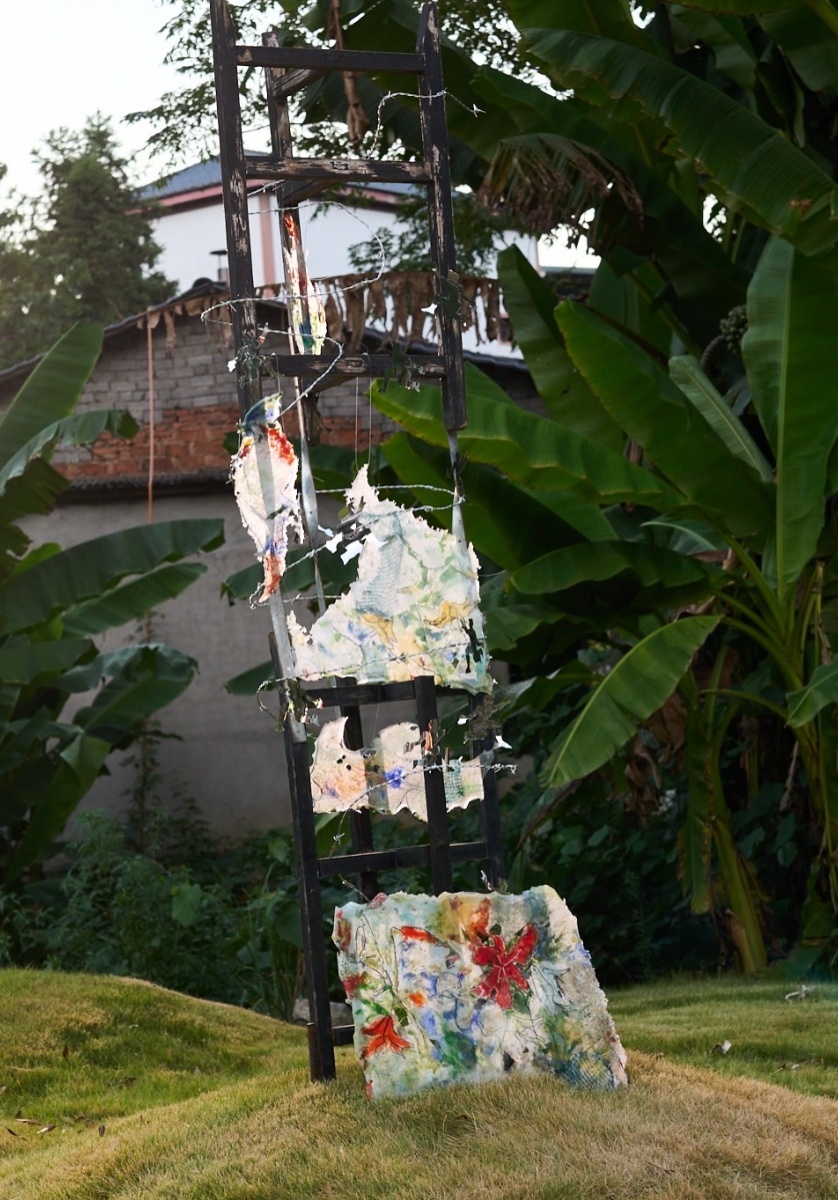
This work is primarily composed of wooden frames and kiln-formed glass panels, integrated with a surrounding structure of iron thorns. The largest glass panels, bearing the richest imagery and decoration, are safely positioned at the bottom, while smaller fragments extend upward, suspended to form an abstract flame-like shape, reminiscent also of growing plant branches. The kiln-forming process, combined with diverse decorative techniques, allows each glass piece to maintain surface transparency while displaying painterly qualities, producing dynamic shifts of color and shadow under light. In its conception, I drew inspiration from the lilies I cultivate on my balcony. They grow so vigorously that they create the illusion of being free and wild, yet in reality, they depend entirely on my care and cultivation. This illusory freedom is translated into forms frozen within glass, assembled into flame-like shapes that rise and seek a way out. This state evokes the flames and shadows of cave allegories, where humans are trapped in illusions yet continually approach the fire that represents truth. For me, this work is not only an exploration of craft but also a reflection of personal experience. The vibrant flowers, ascending flames, and entwined iron thorns intertwine to address my contemplation of freedom: it may not be a linear upward pursuit but a process of continual searching and approaching within constraint and illusion.
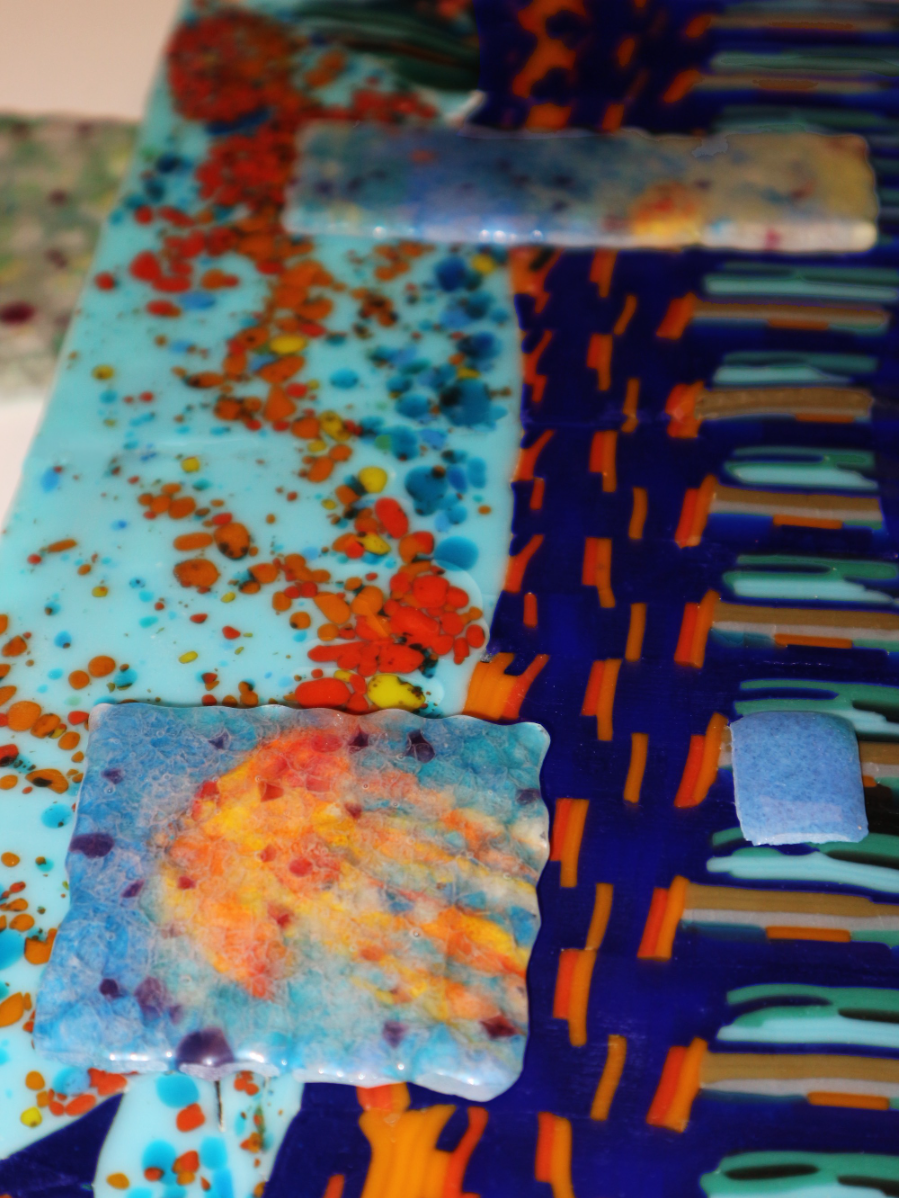
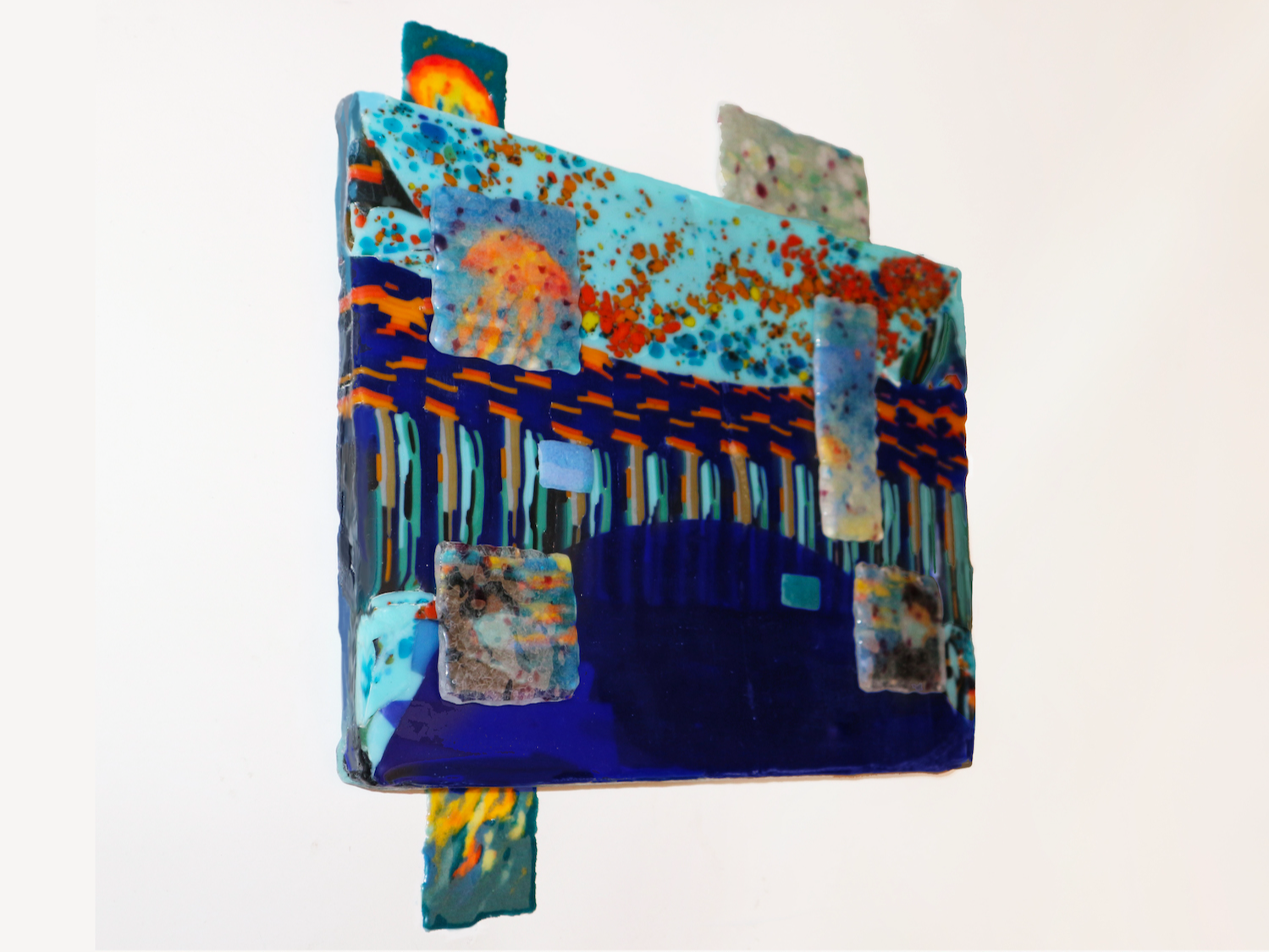
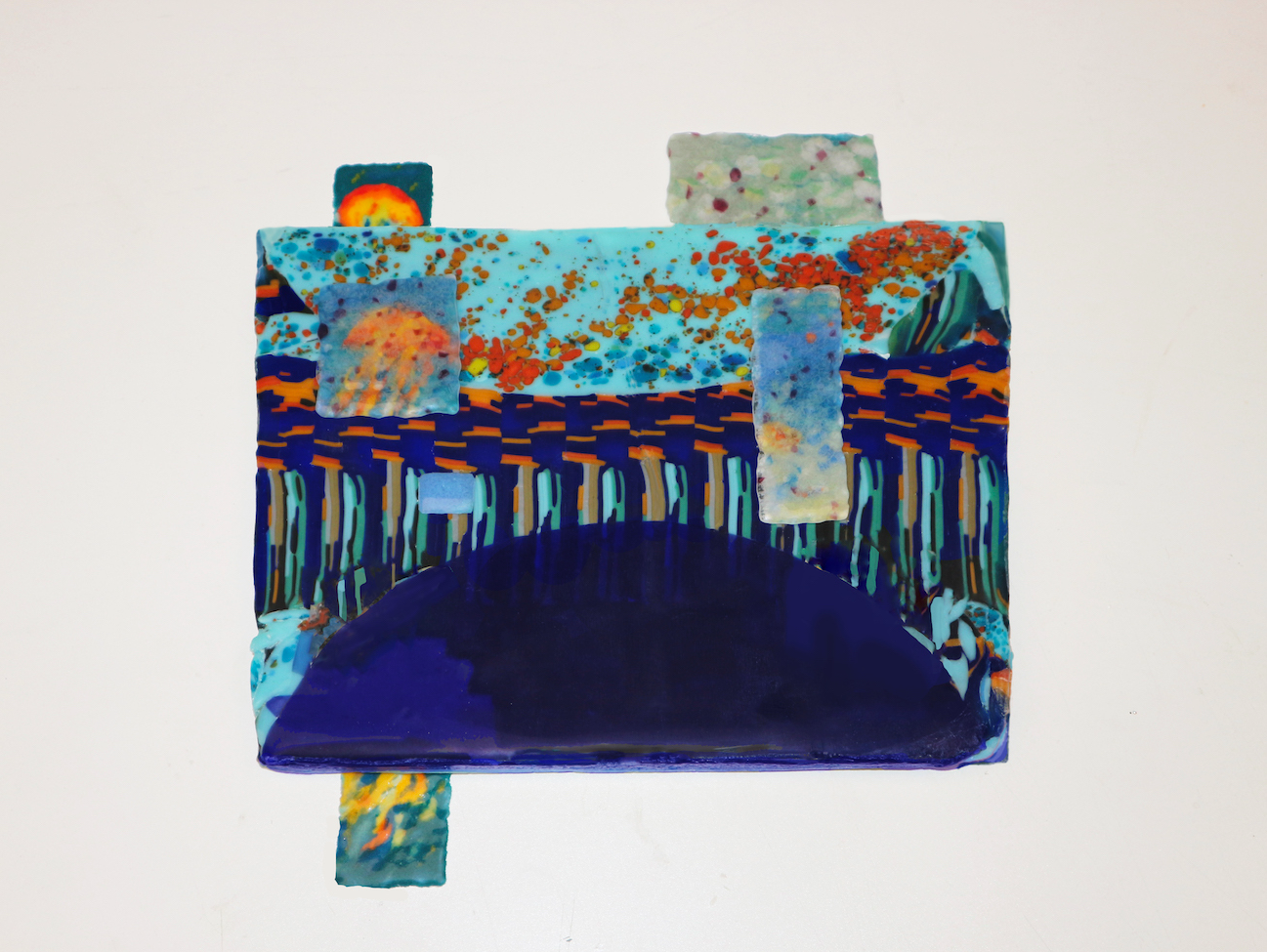
The orange-red jellyfish floating by, the delicate grey coral, the sea water colored by the dark blue and light cyan ornamental lights, the infinitely repeating mirror within a mirror, you and I looking at each other. It makes up the picture of the oceanarium that I remember. I used a hot-melt process to slice the glass and repeat the combination to form a flat, colorful picture. Interspersed with small subplots using the powder-firing process are elements of my embodiment of memory fragments. Memory is like a train, speeding along indefinitely. Repetitive, beautiful memory fragments are like carriages. And this is one of the carriages of my life's memory train called Oceanarium.


After-School Still Life revisits the repetitive structure of extracurricular art training in China, where still life subjects such as apples, bottles, and plaster busts functioned as symbols of discipline and conformity. Dou reinterprets these familiar forms through kiln-formed glass, layering texture and visual depth by manipulating thickness and transparency. Rather than painting or printing directly onto the surface, she allows patterns and colors to emerge from within the glass, creating images that appear suspended in space. This body of work explores the relationship between rigid educational systems and the expressive potential of glass. Dou integrates metal wire into the composition to form playful, irregular contours that echo hand-drawn lines, introducing both formal and whimsical qualities. Her practice combines precision with unpredictability, producing textures that range from rough and fragmented to fluid and luminous. Through this process, she challenges conventional perceptions of glass as cold and static, using the material as a medium to reflect on vulnerability, transformation, and resilience, as well as the complex relationship between memory, fear, and the act of learning.
Competitions
Global Creative Graduate Showcase 2025
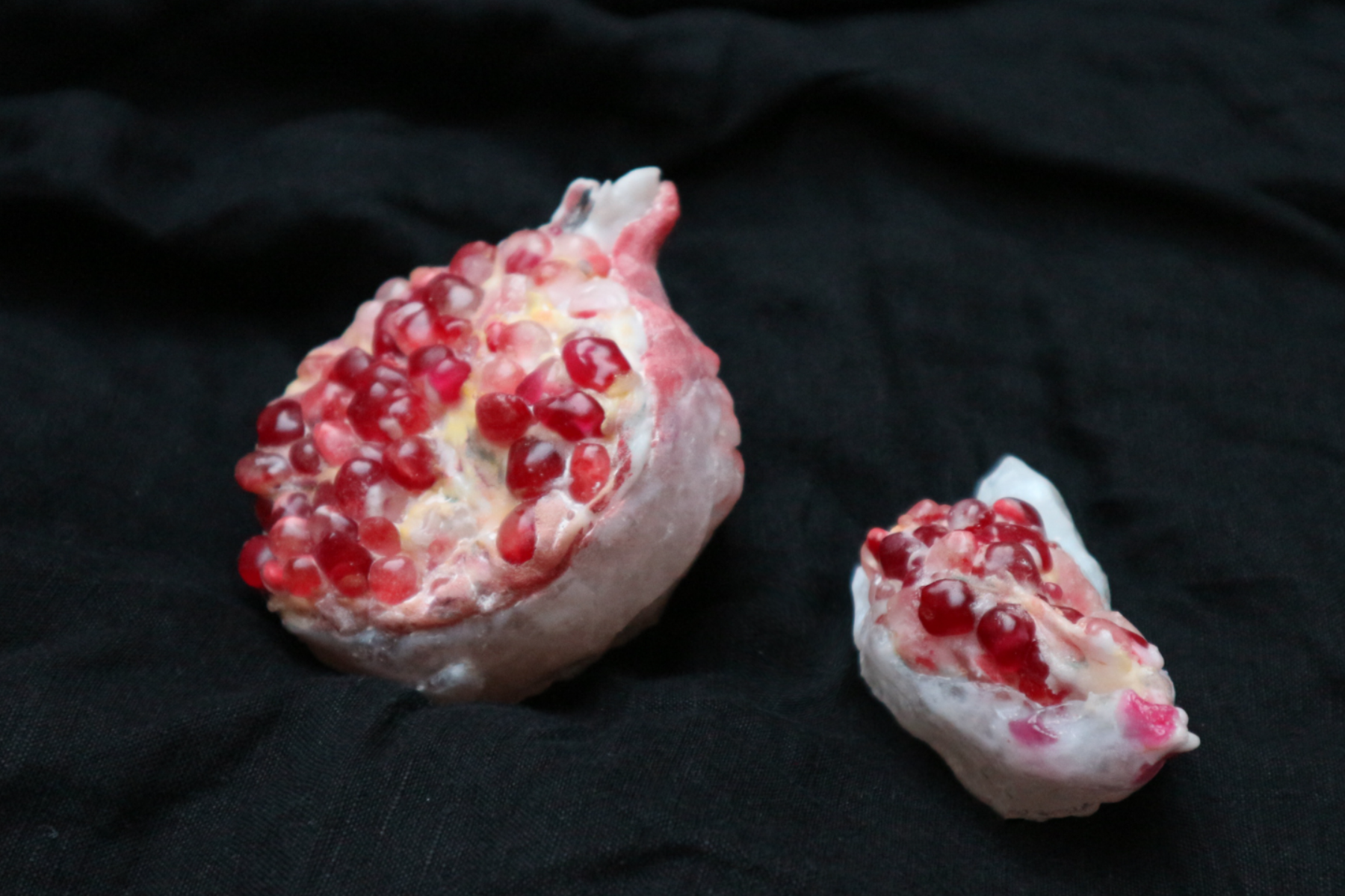
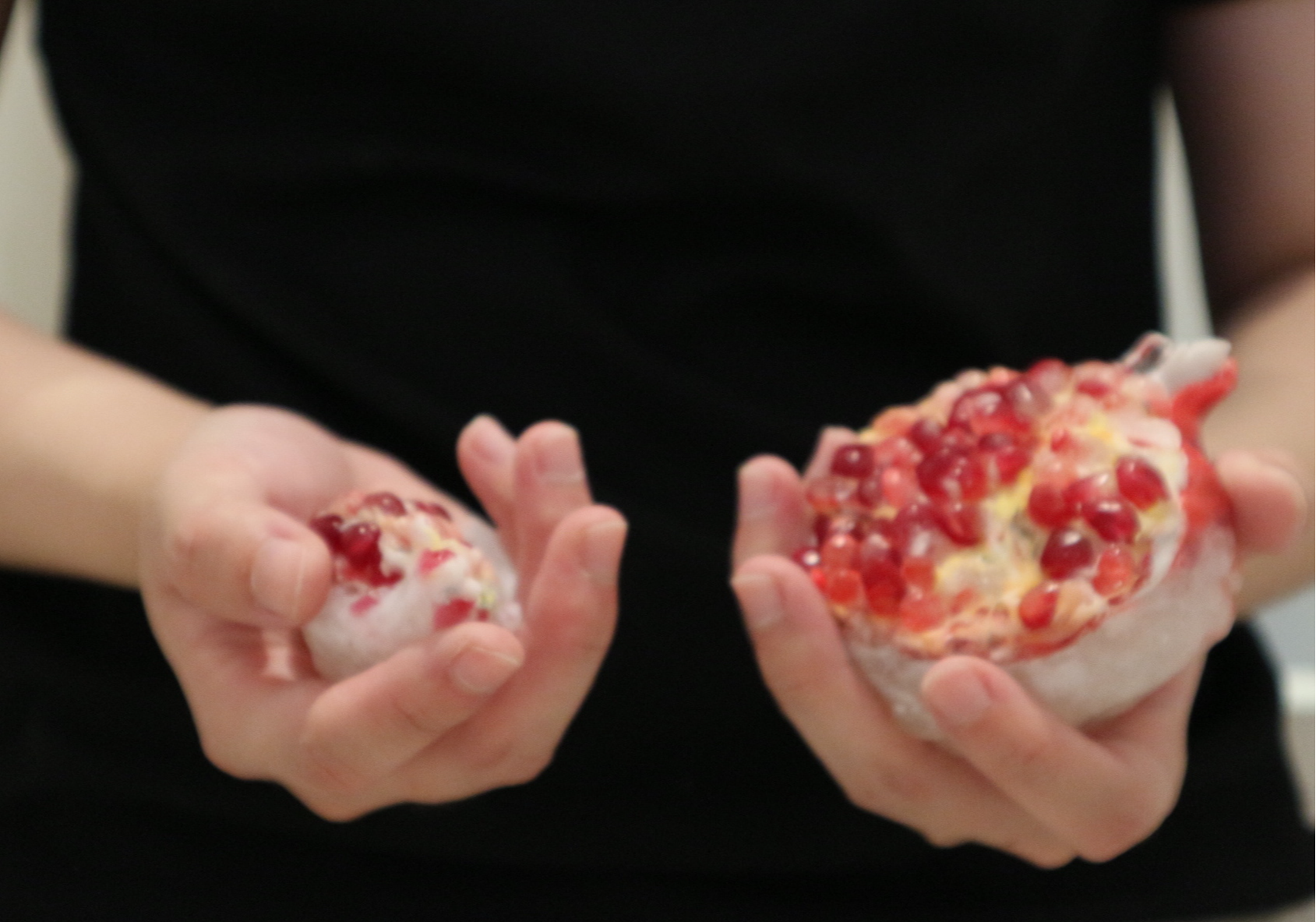
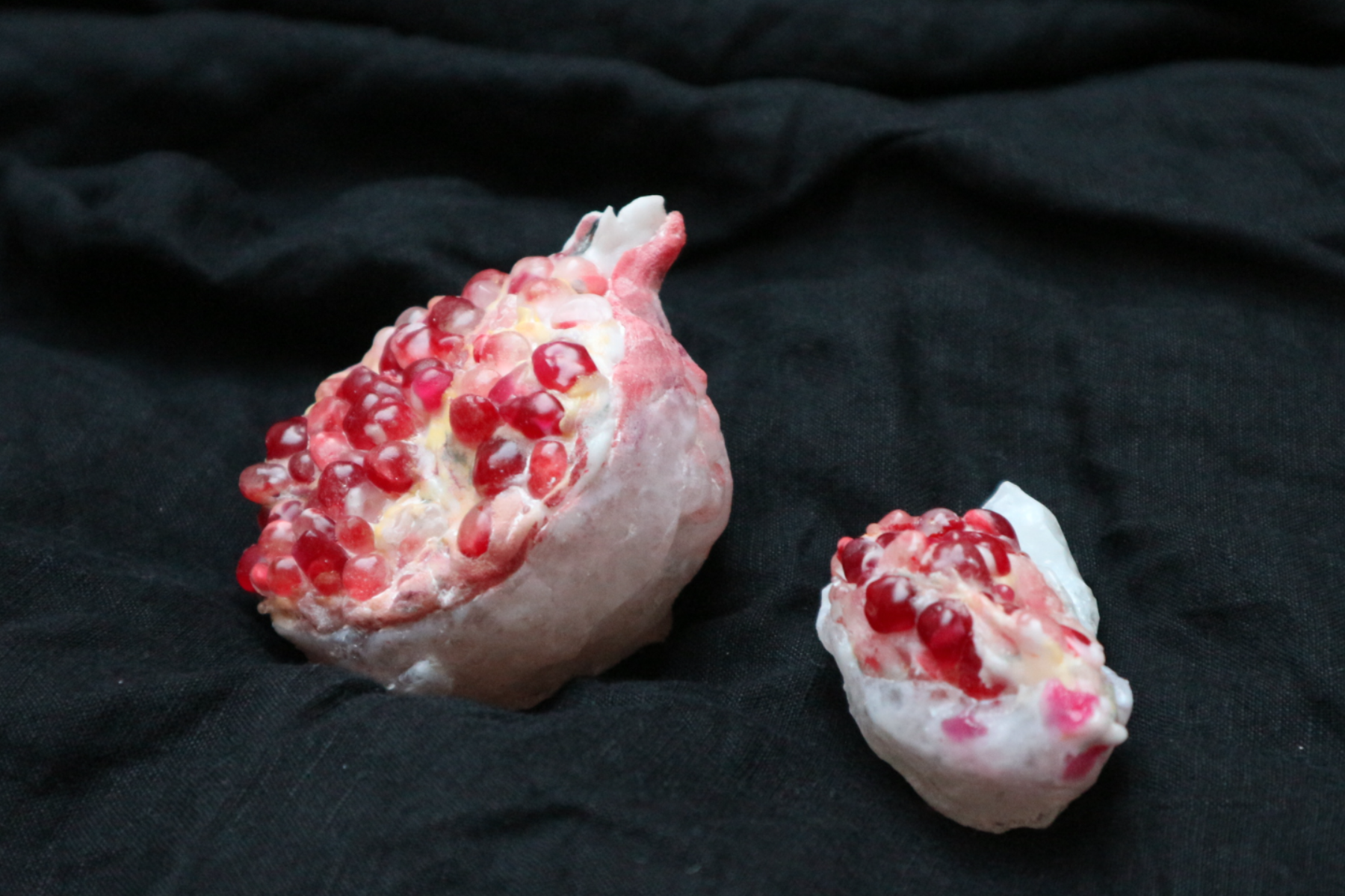
Precious Seed continues my interest in using glass to suggest both beauty and unease. I am drawn to how the same material can become rough, soft, wet or flesh-like through different temperatures and ways of making. For this work, I first made the pomegranate seeds with full fuse glass and cold working, so they look smooth and bright. Then I mixed glass powder with modelling glass medium to make a clay-like material. I shaped the pomegranate by hand and pressed the seeds into it one by one. This model was later used to make a plaster mould and fired again. The process lets me keep the rough shell, the handmade marks, and the glossy, bodily feeling of the seeds.