Alex baxter
MFA in Ceramics
Cranbrook Academy of Art
Specialisms: Ceramics / Furniture / Sculpture
Location: Bloomfield Hills, United States

Alex baxter
First Name: Alex
Last Name: baxter
Specialisms: Ceramics / Furniture / Sculpture
Sectors:
My Location: Bloomfield Hills, United States
University / College: Cranbrook Academy of Art
Course / Program Title: MFA in Ceramics
About
My happiest memories exist not in the world itself, but in imagined worlds where life felt more expansive and meaningful. Rather than offering escape, my ceramic work brings fantasy into the present, grounding it in material reality.
I create functional objects and sculptural forms that invite moments of wonder into ordinary life. Through repetition, interaction, and sustained contact with the material world, my work explores how the expansiveness of imagined worlds can emerge through attentiveness, risk, and engagement rather than escape from reality.
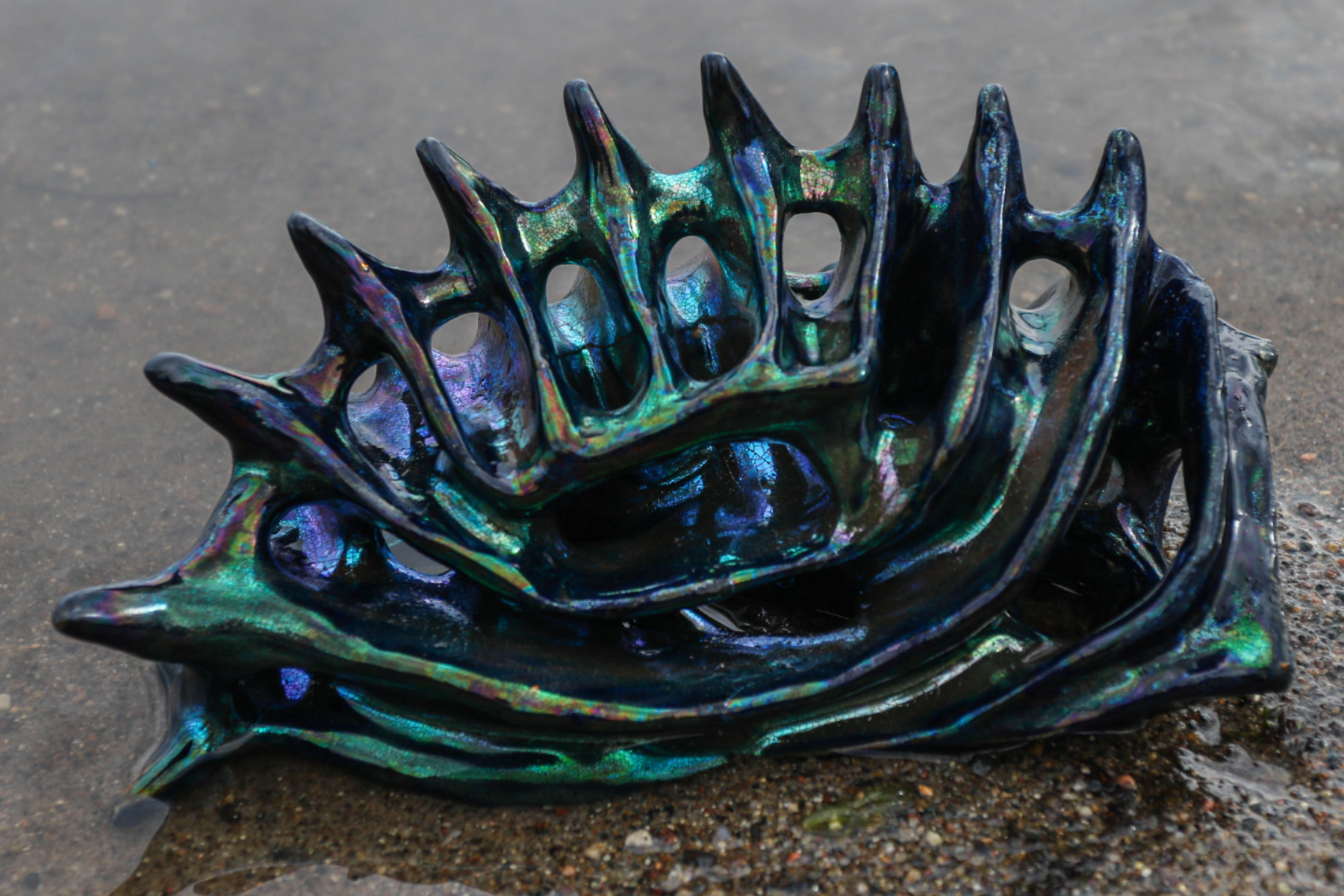
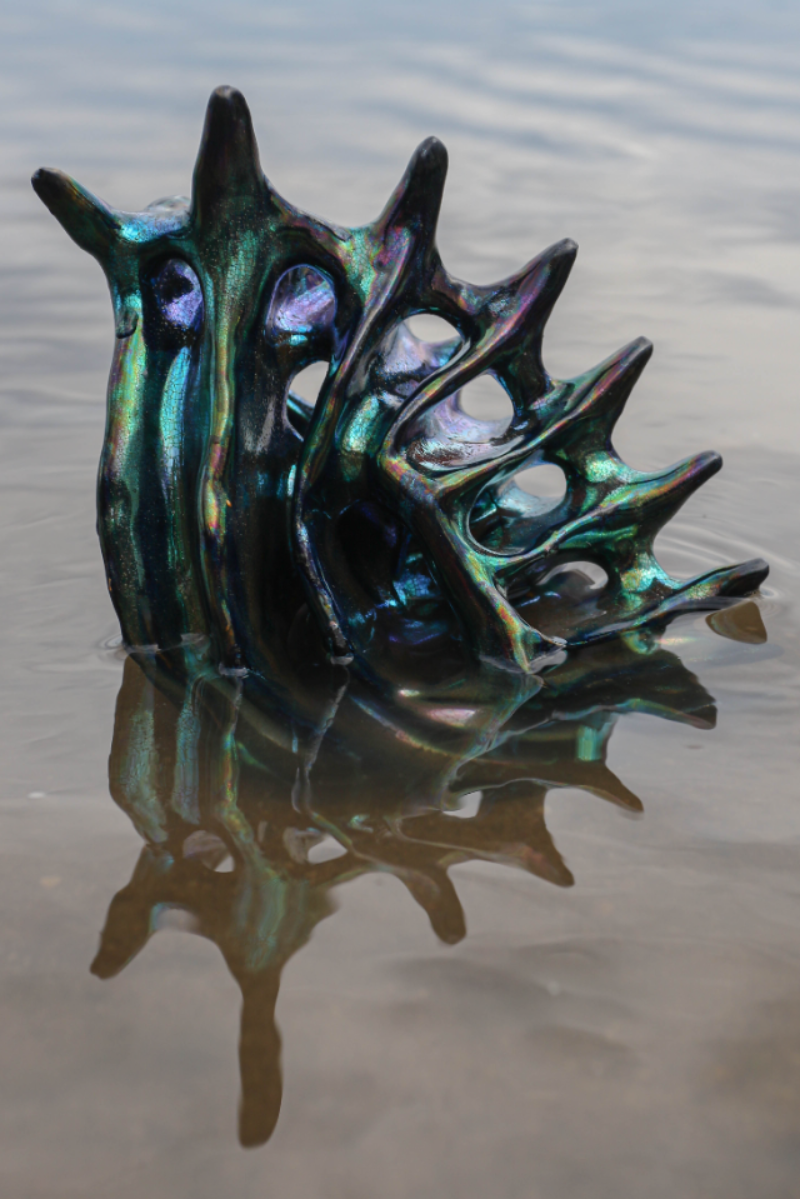
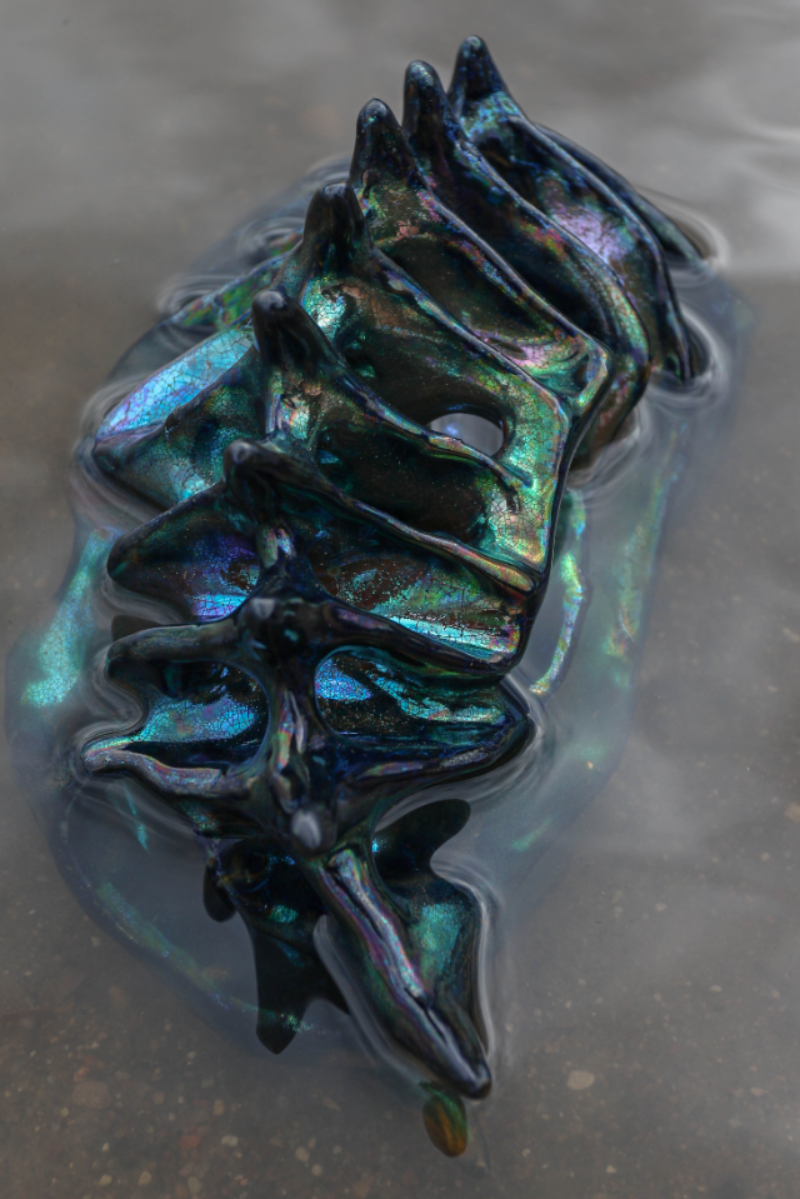
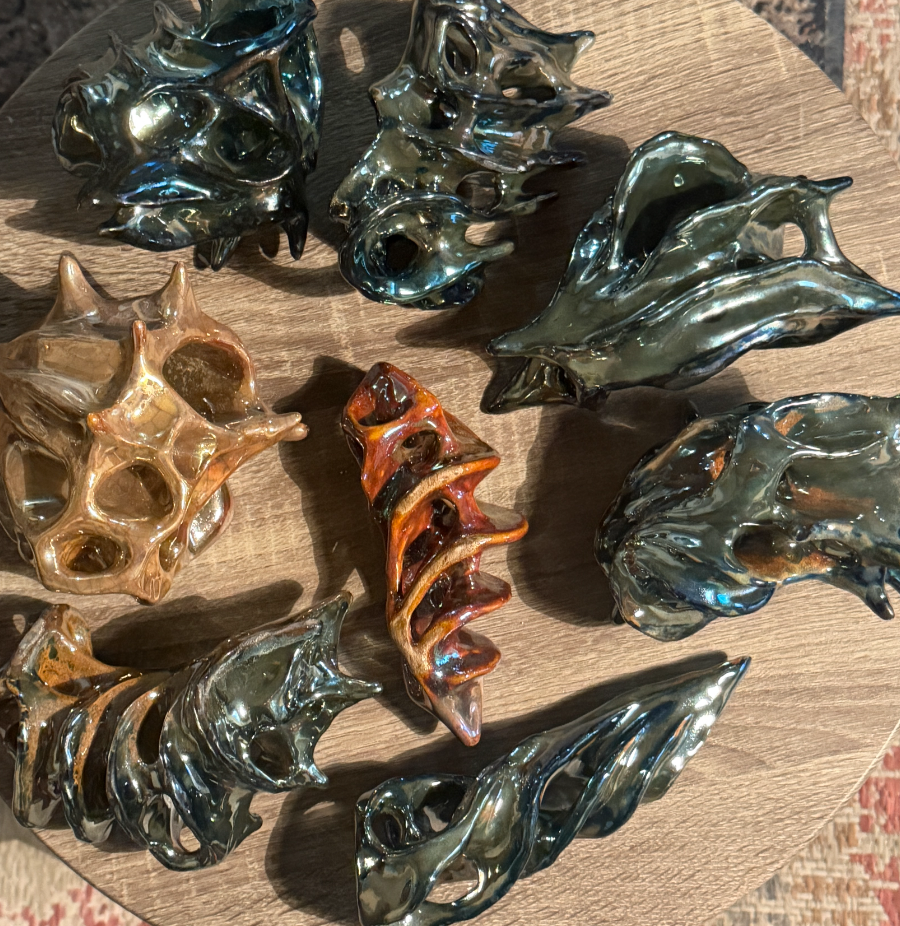
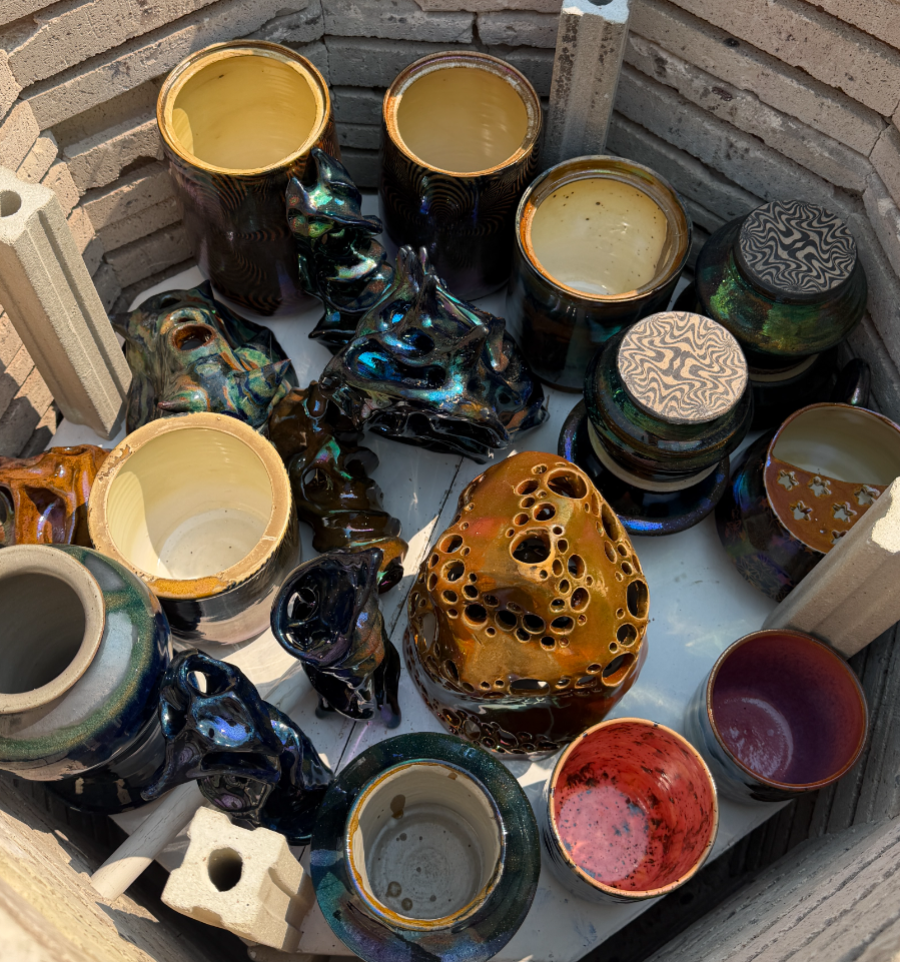
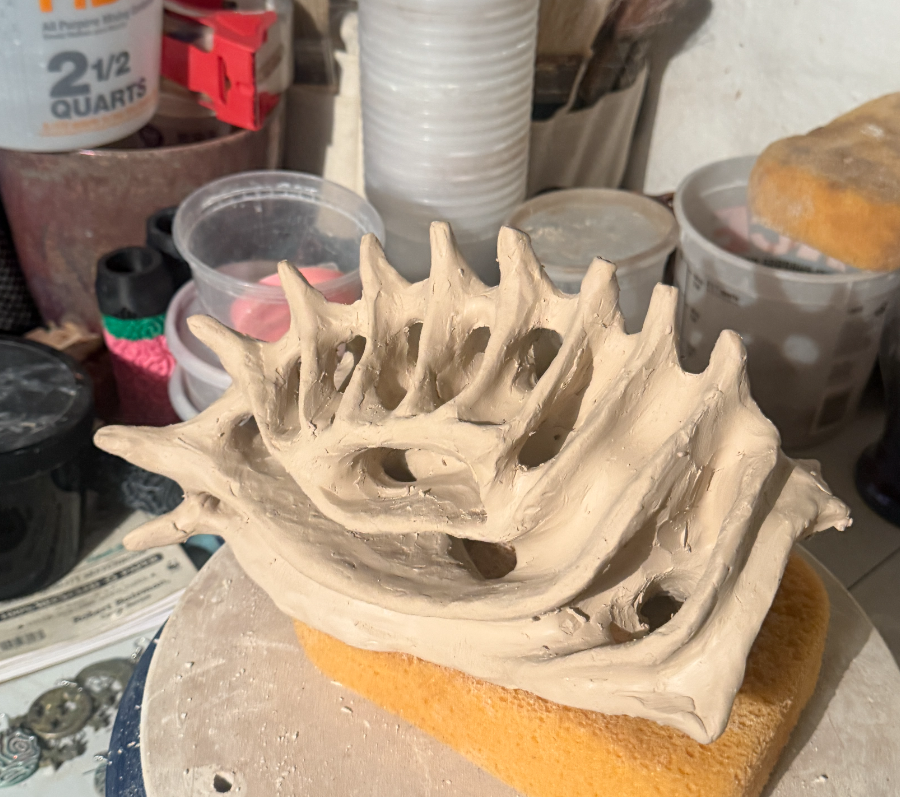
This stoneware sculpture evokes an otherworldly organism emerging from the earth, exploring the space between the aquatic, terrestrial, and imagined. Layered, sweeping forms curl and overlap like waves, shells, or tendrils, while a crown of sharp, irregular openings rises from the center, creating an architectural yet organic silhouette. The sculpture developed through an exploration of rhythm, repetition, and the tension between delicate and formidable forms. Its surface is finished with in-glaze luster, creating an intensely reflective skin that shifts between deep blue, green, violet, and flashes of iridescent color as light moves across it. Set against wet sand, the sculpture's rhythmic contours, dramatic peaks, and luminous surface invite close looking, suggesting a mysterious living presence emerging from an unfamiliar landscape.
Competitions
Global Creative Graduate Showcase 2026
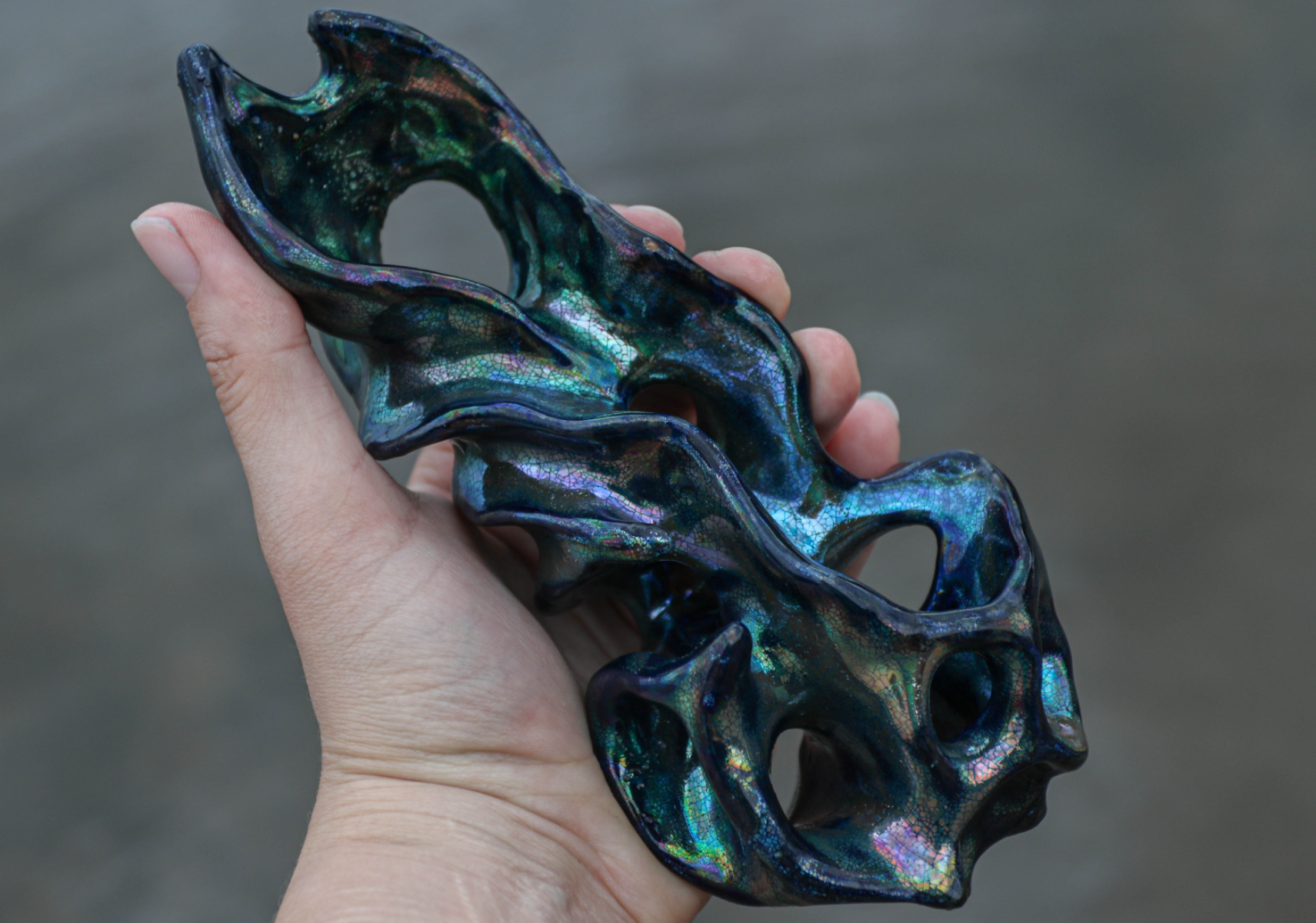
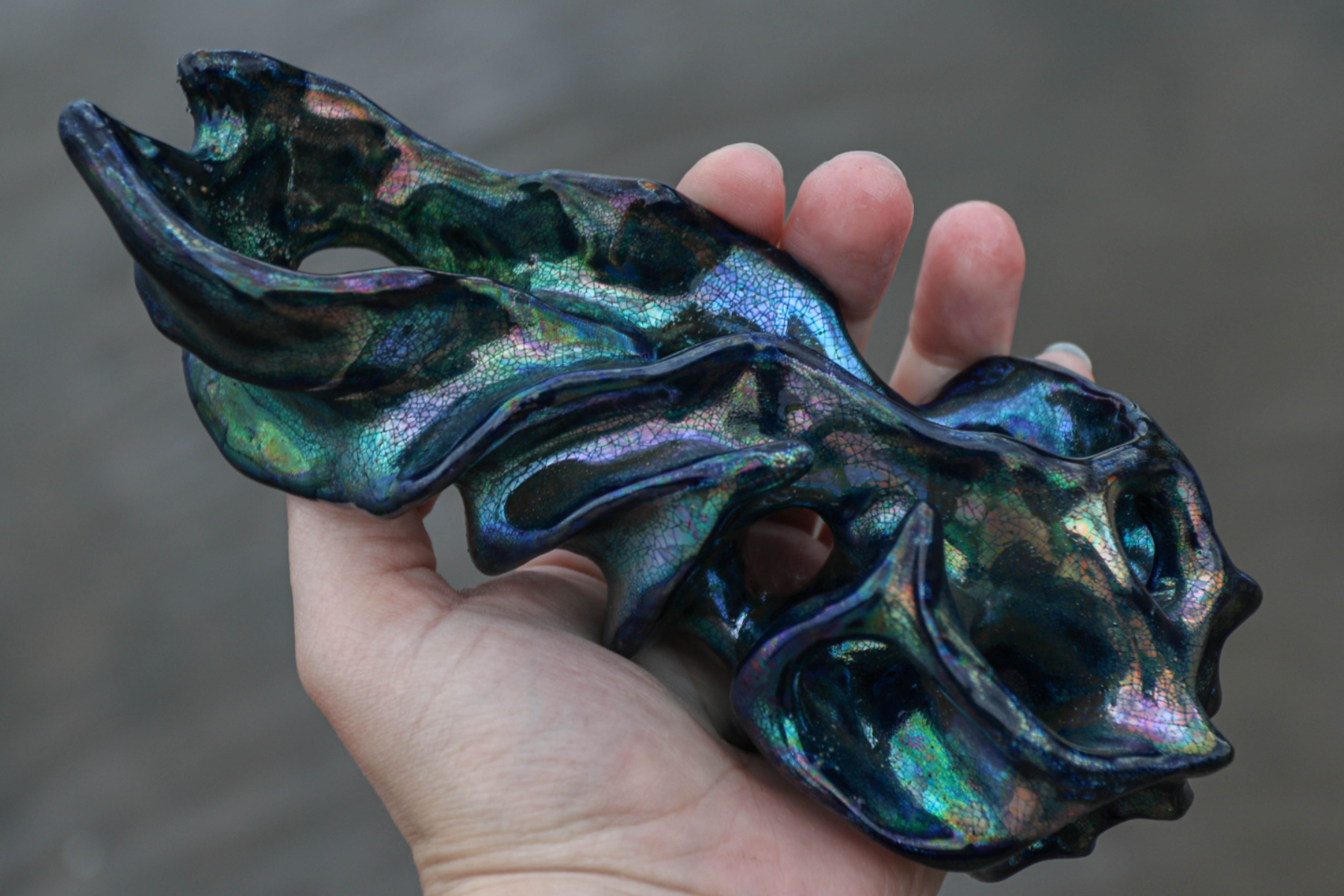
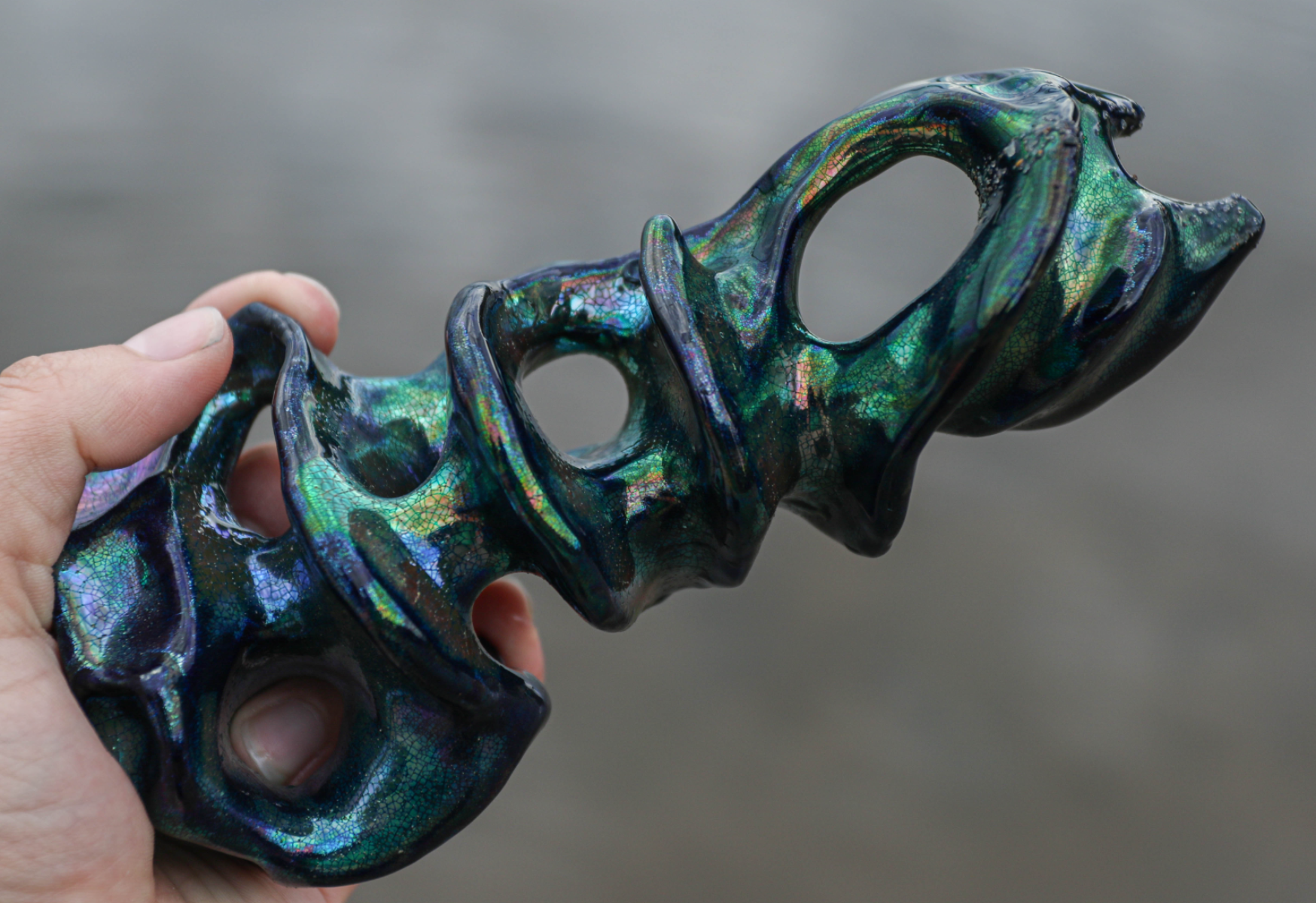
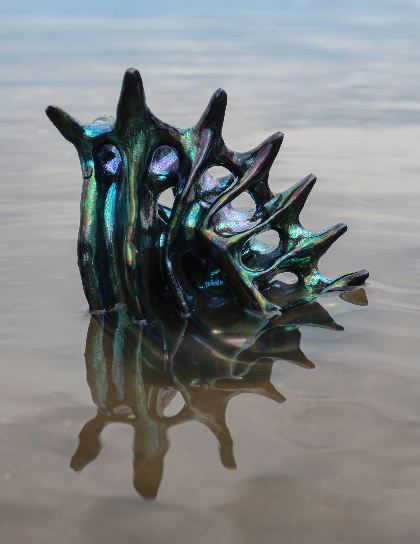
This stoneware sculpture explores an organic nearly skeletal form through a series of interconnected curves, openings, and protruding surfaces. Its vertical composition feels simultaneously architectural and bodily, suggesting a fragment of an unfamiliar organism or an artifact shaped by natural forces. Large openings punctuate the structure, creating shifting spaces between solid and void and inviting the viewer to look through rather than simply at the object. In-glaze luster gives the surface a deep, reflective quality, shifting between blue, green, violet, and iridescent tones.
Competitions