minjun Shin
Contemporary Art Practice MA
Royal College of Art
Graduates: 2026
Specialisms: Fine Art
My location: London, United Kingdom
minjun Shin
First Name: minjun
Last Name: Shin
University / College: Royal College of Art
Course / Program: Contemporary Art Practice MA
Graduates: 2026
Specialisms: Fine Art
My Location: London, United Kingdom
Website: Click To See Website
About
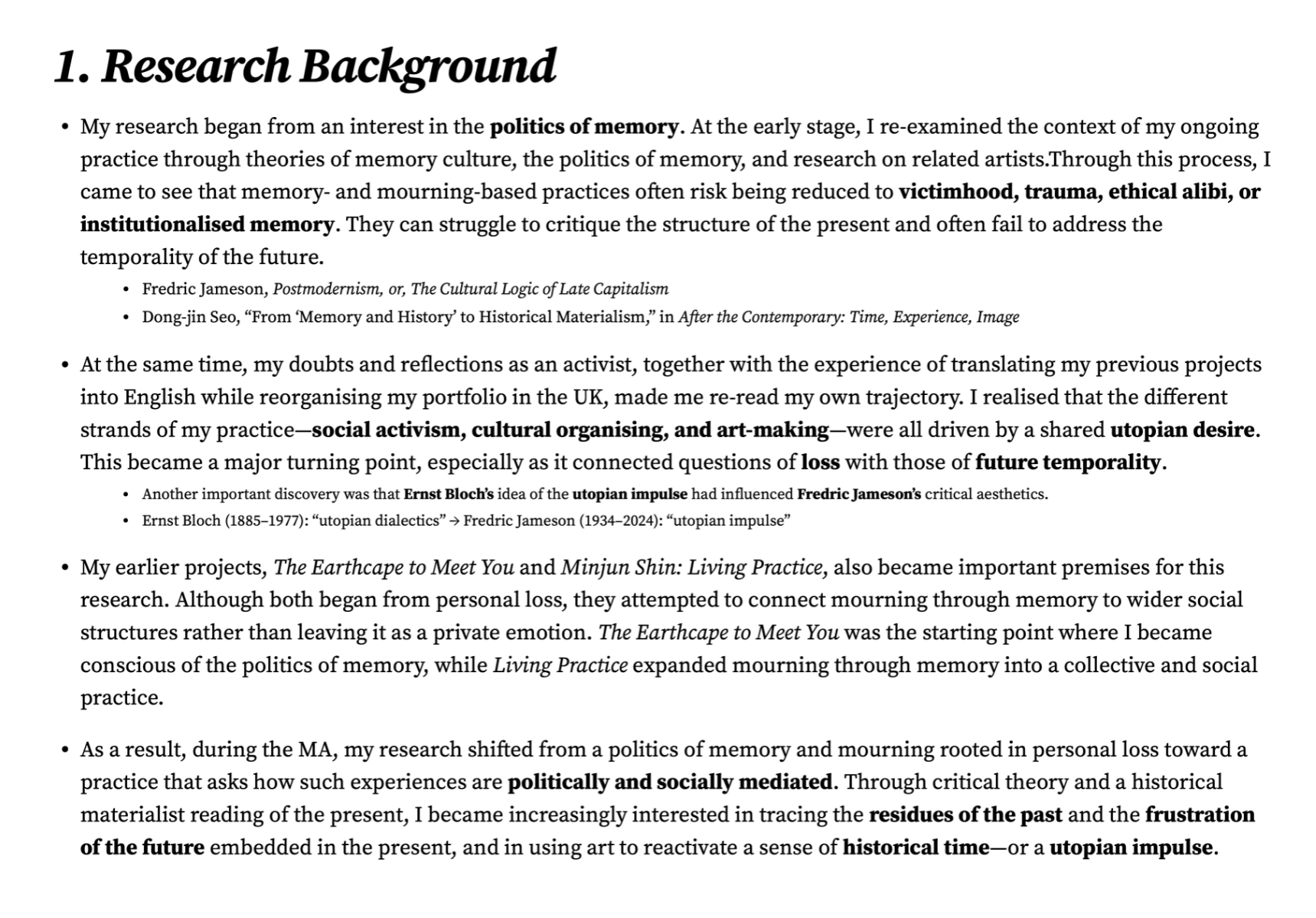
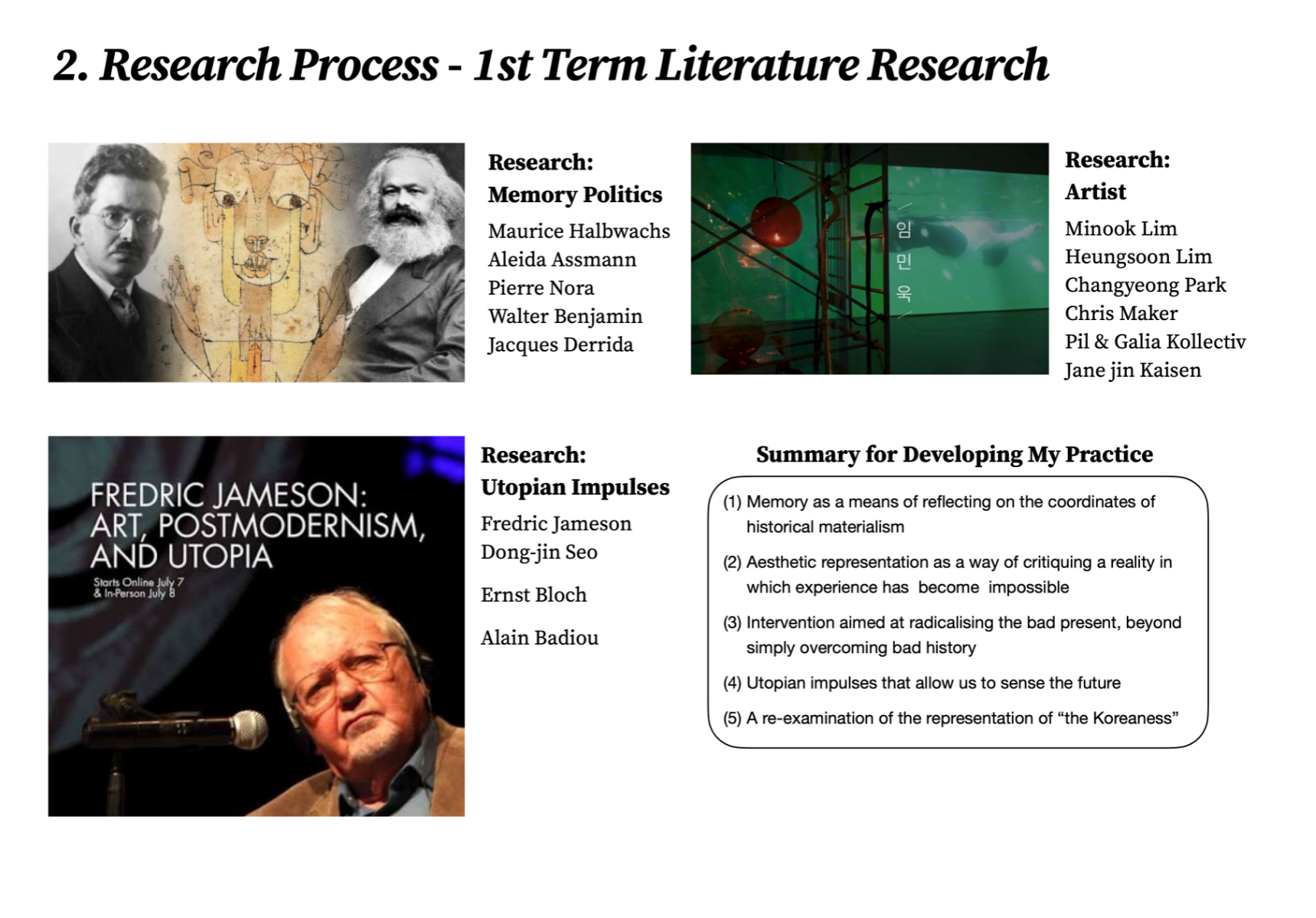
Minjun Shin (b. 1992, Busan) is a Korean artist and cultural activist based in Seoul and London. Working across moving image, installation, sculpture, archival practice, and community-based projects, he explores how personal memory is shaped by political and economic conditions and historical time. His practice approaches the present as a time in which residues of the past and unrealised futures overlap, tracing the utopian impulses latent within it.
Alongside his artistic practice, experiences he has lived through led him to engage in cultural policy research, public cultural projects, and advocacy movements led by directly affected communities in Korea. These forms of practice have shaped his perspective on the relationships between individuals, communities, and institutions.
He studied painting with a minor in sculpture at Hongik University and completed the MA Contemporary Art Practice programme at the Royal College of Art. His solo exhibitions include The Earthcape to Meet You at Tsushima Museum, Japan, and Minjun Shin: Living Practice at NothingIsReal, Seoul, supported by Arts Council Korea. His work has also been presented at Kettle’s Yard and Art Chiyoda 3331, and screened at programmes including the 12th FeKK – Ljubljana Short Film Festival. He is a selected artist for a forthcoming exhibition at Suwon Museum of Art in 2026.
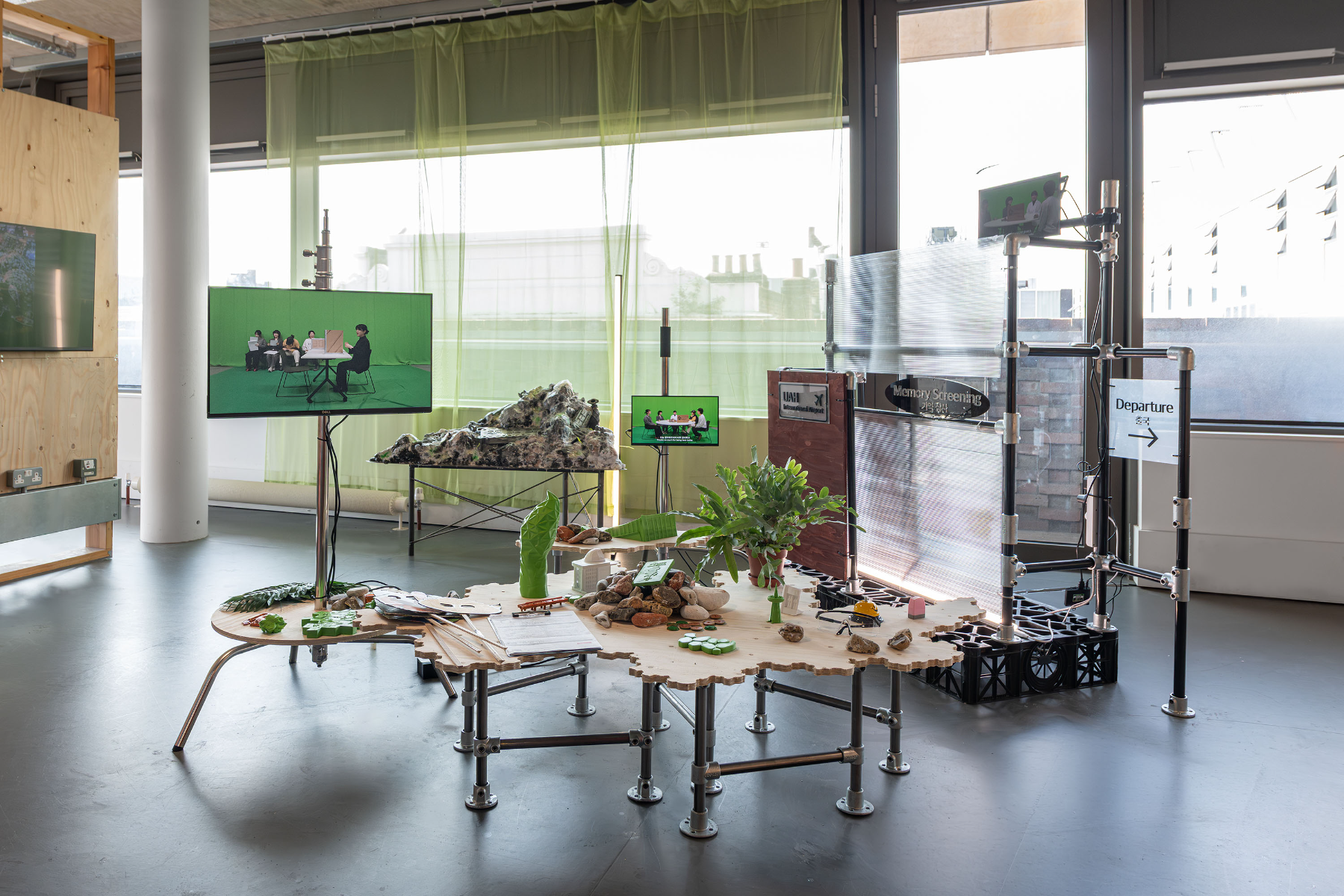
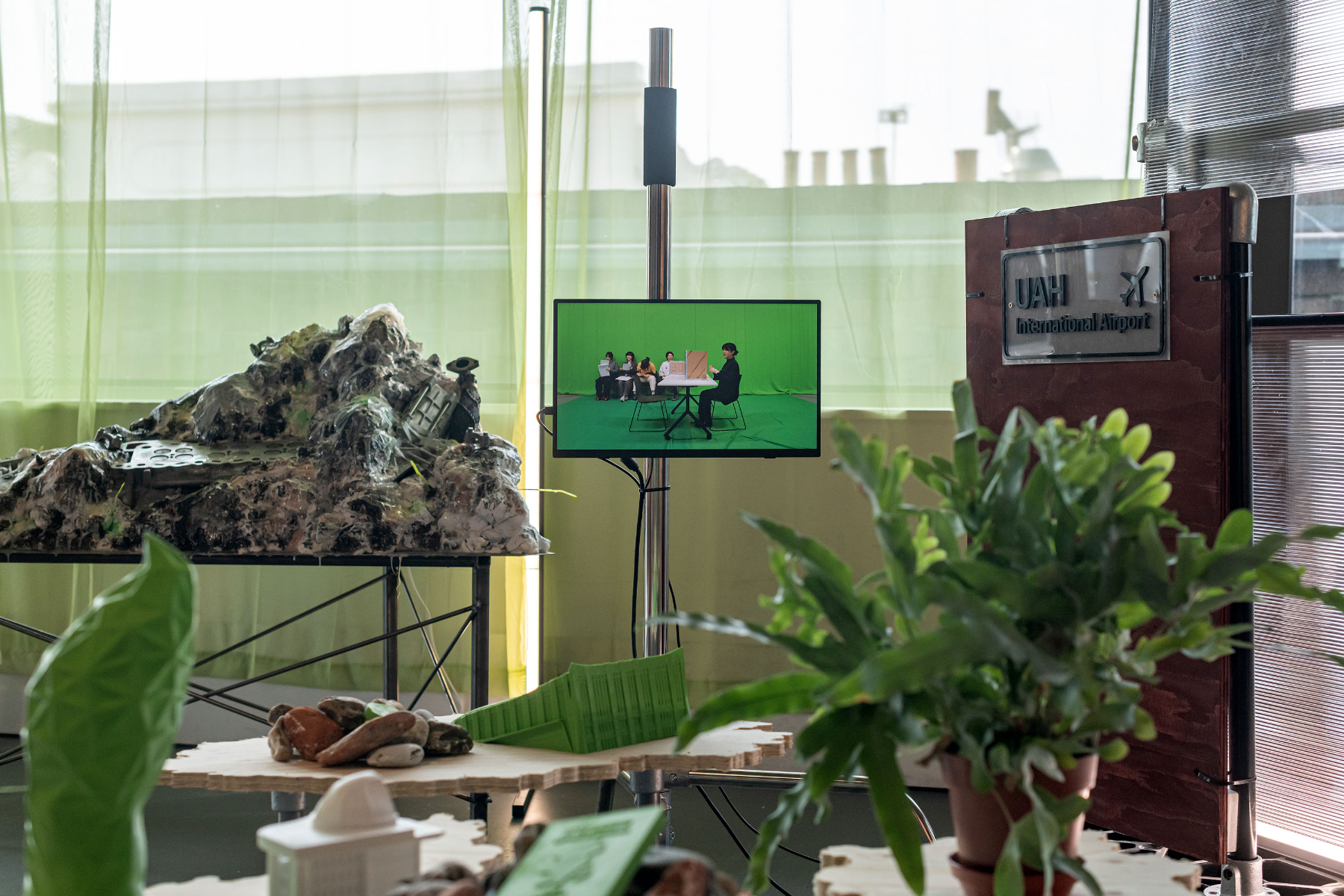
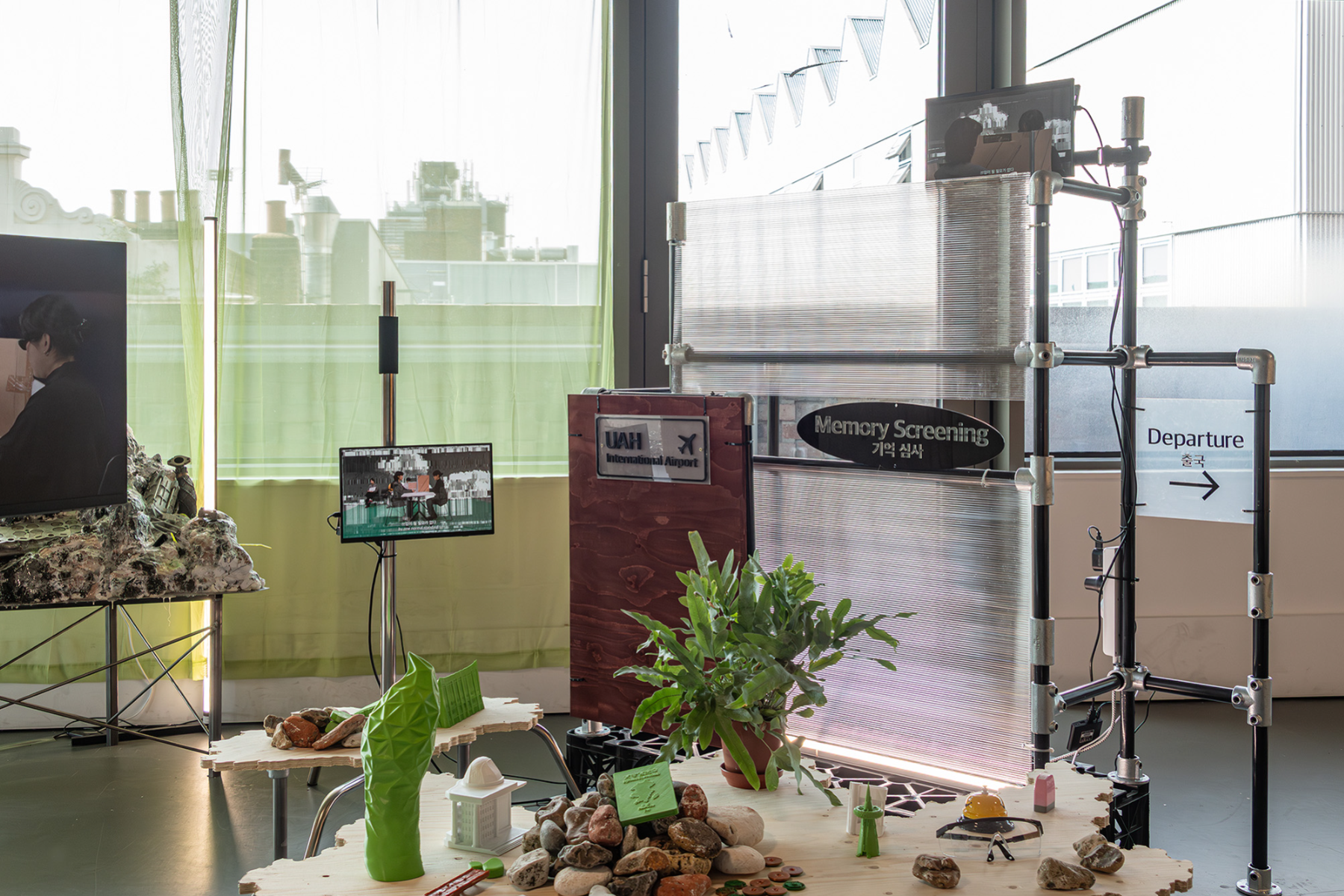
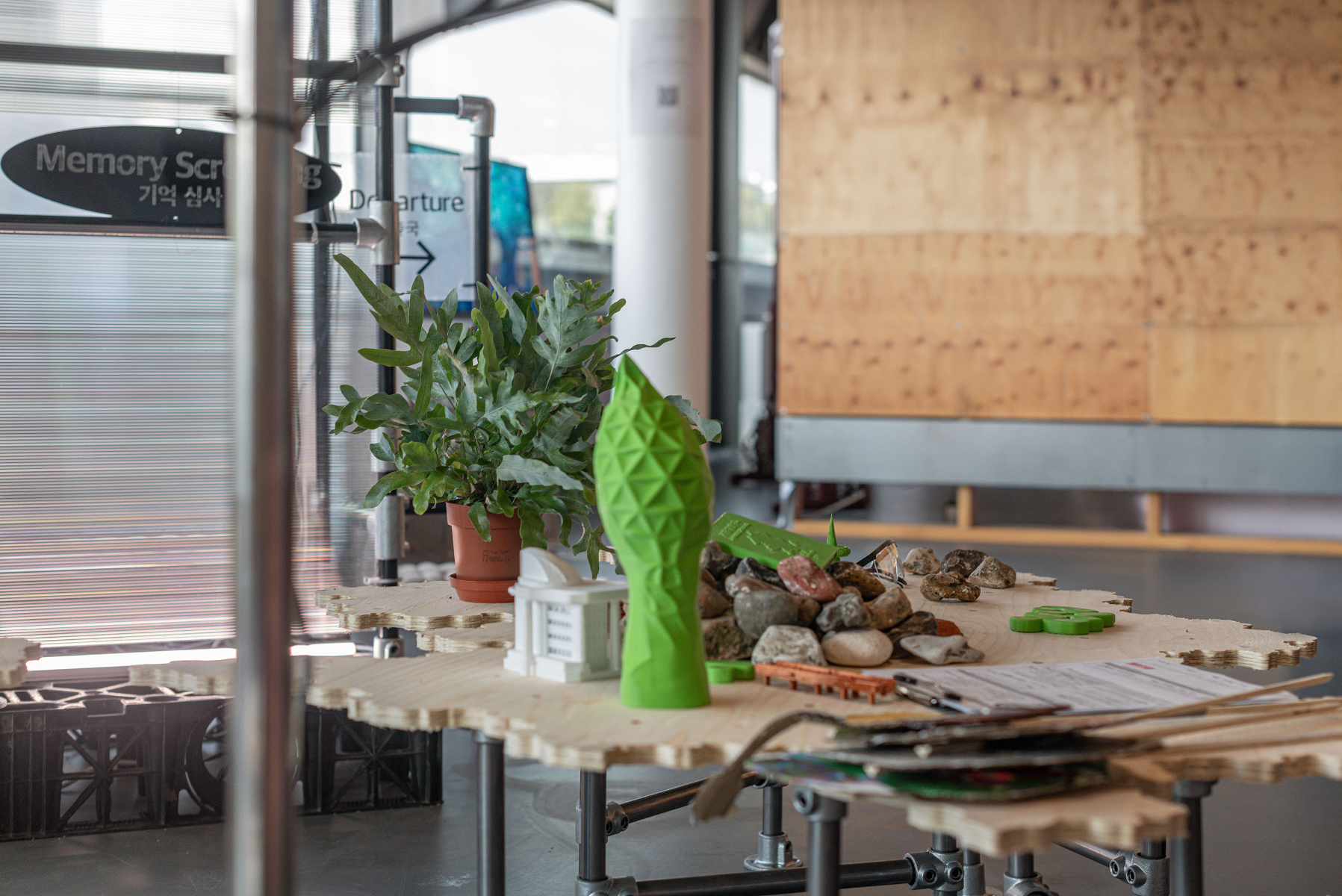
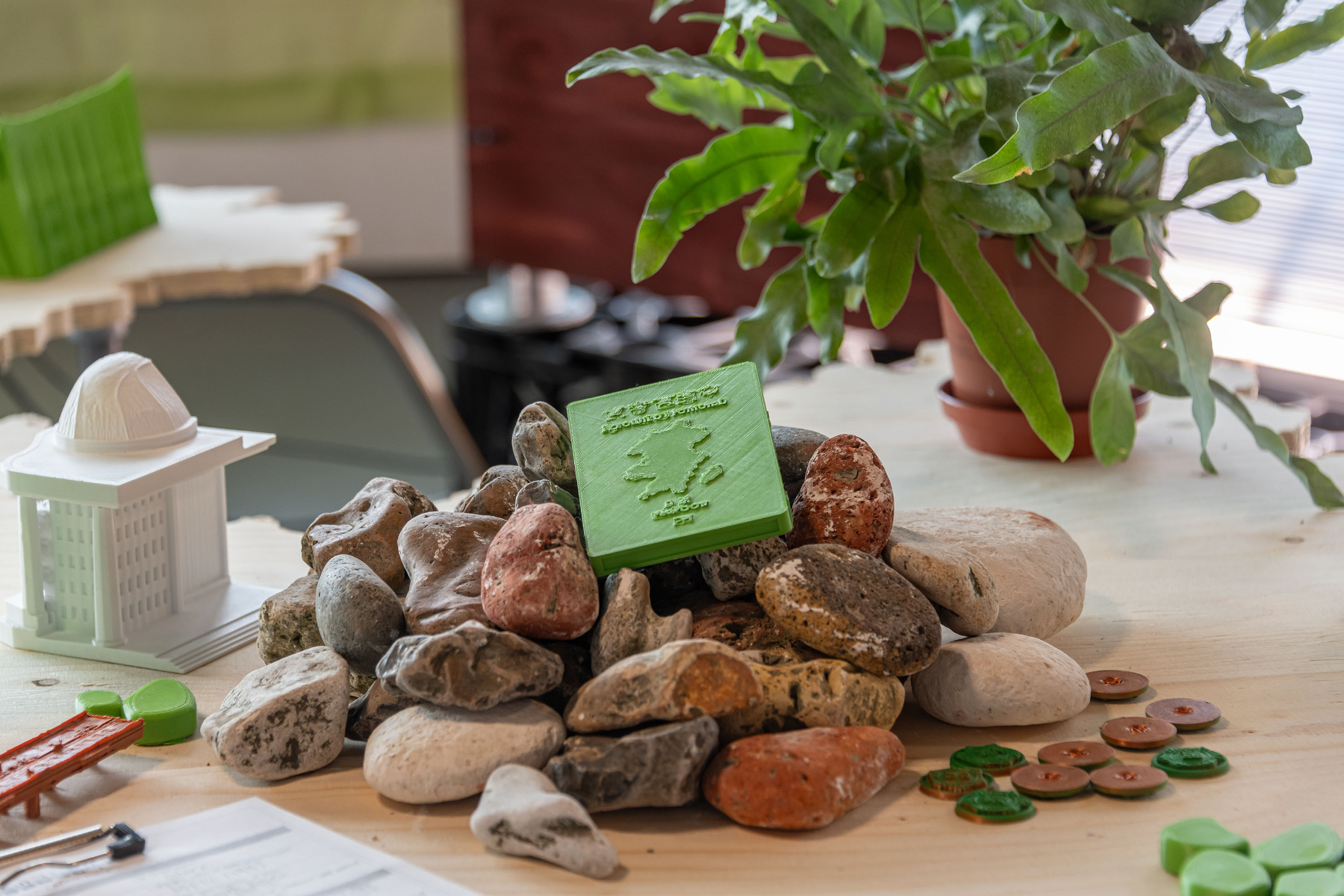
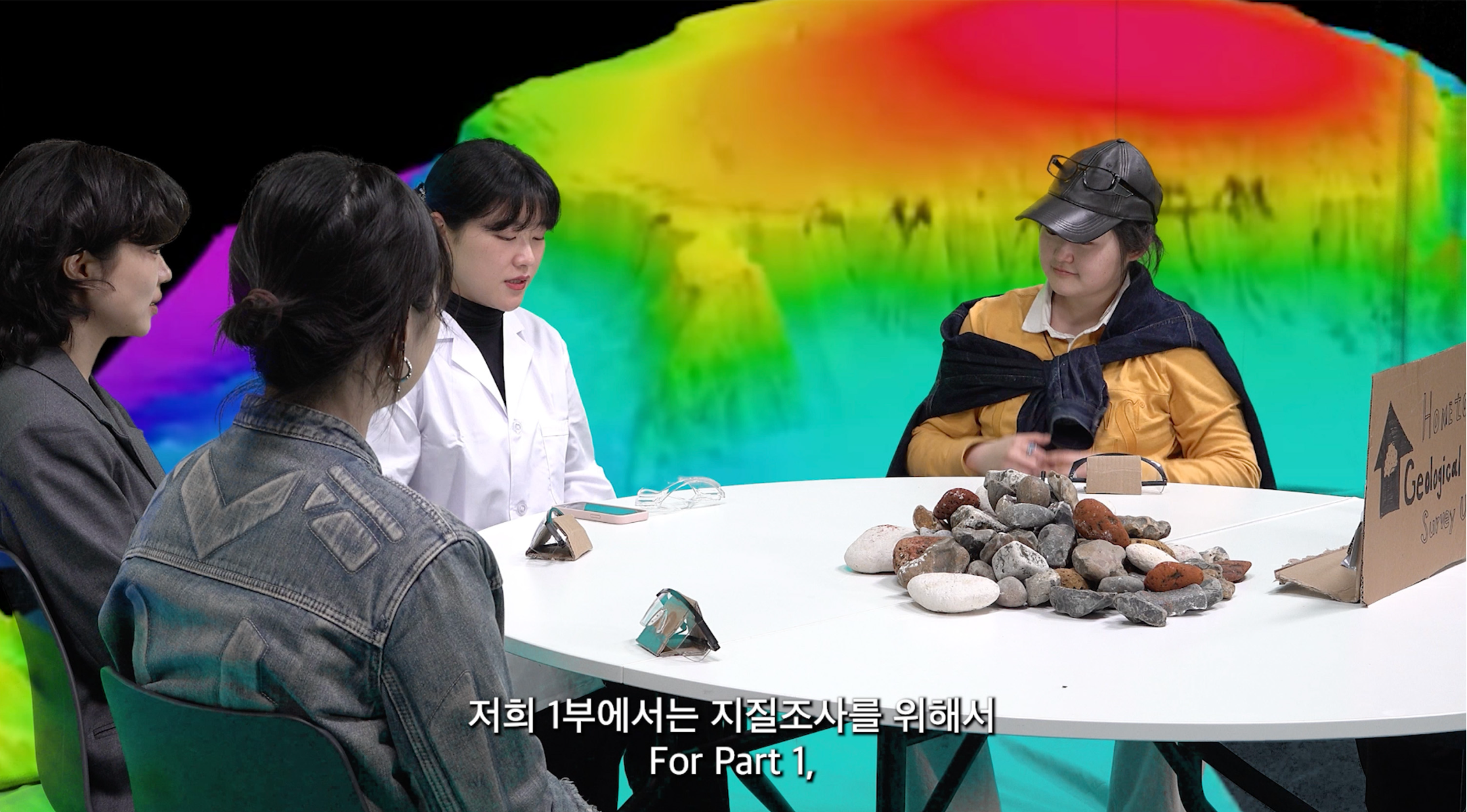
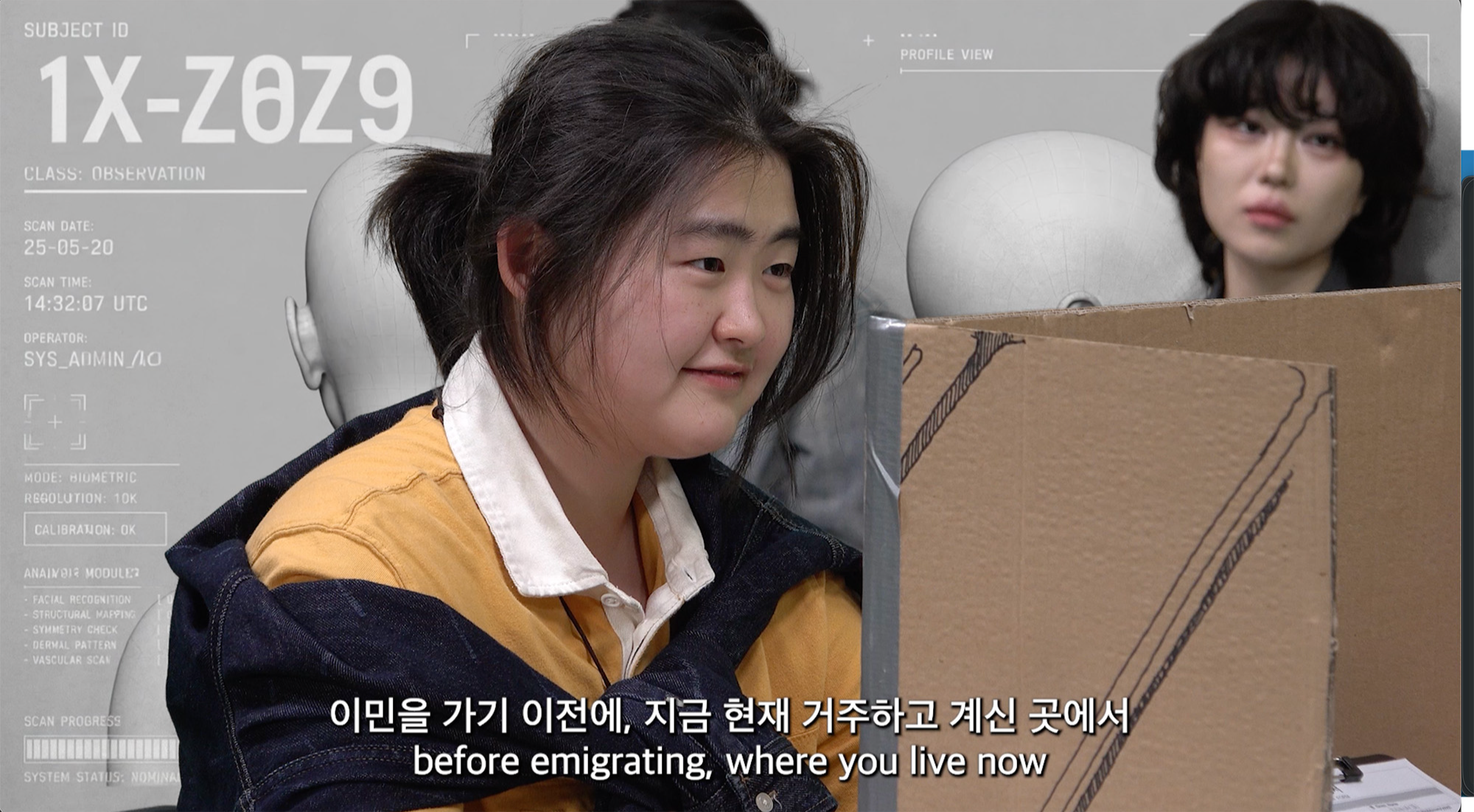
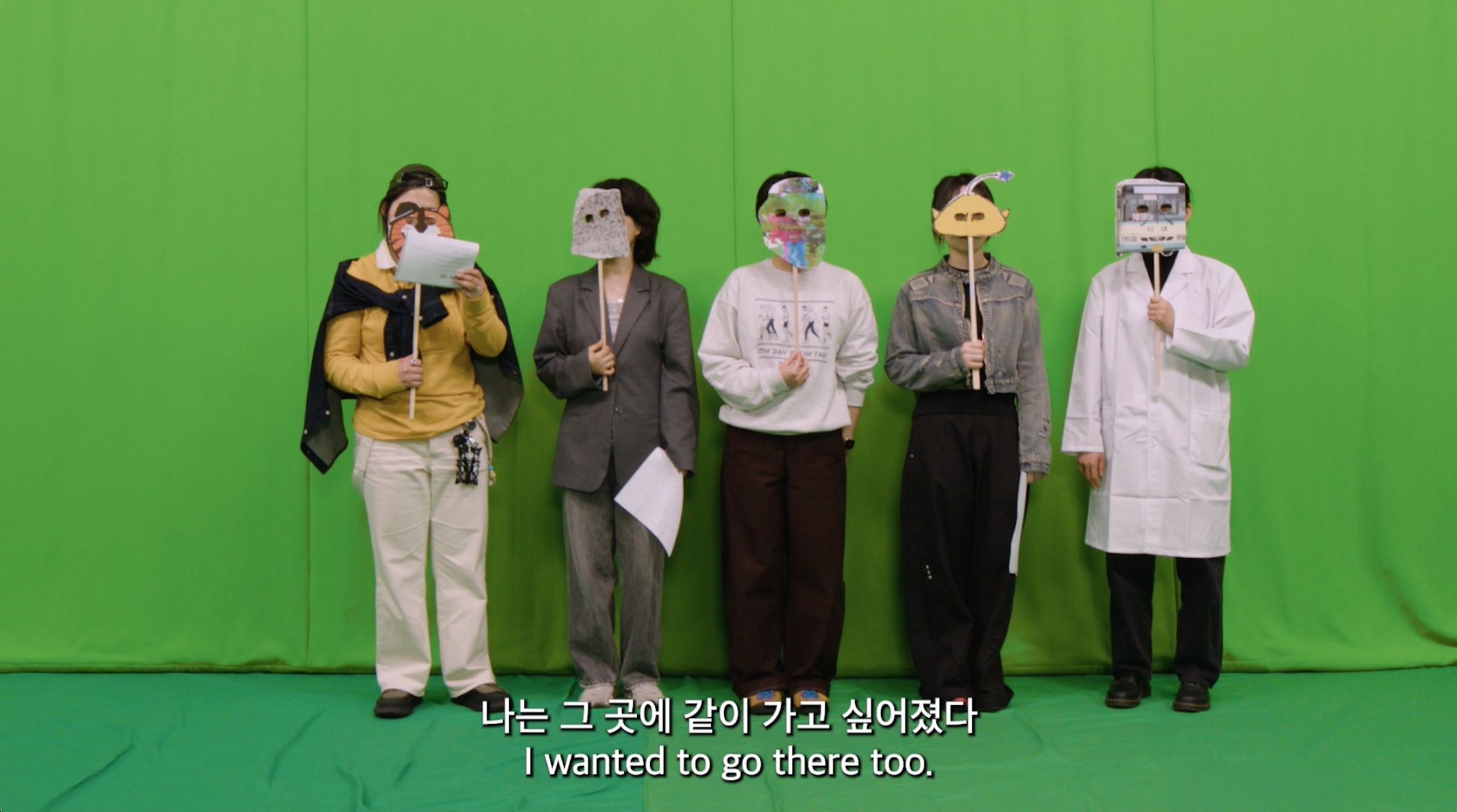
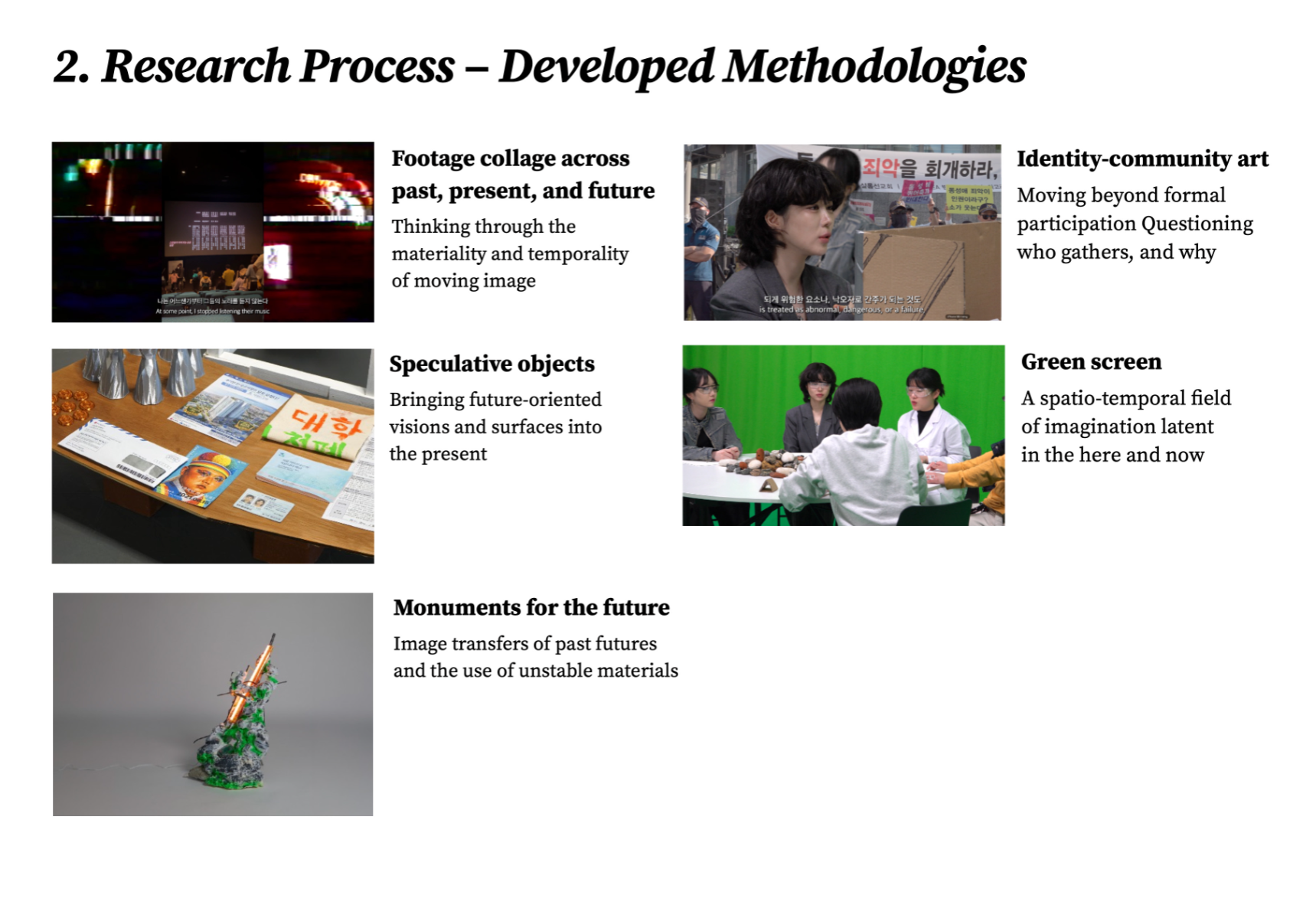
The Un-arrived Homeland is a three-channel video installation developed through workshops with Korean participants living in the UK. Through fictional immigration tasks, participants reflect on memory, migration, present life, and the society they wish to reach. Documentary footage, found clips, and generative images are combined with green-screen performances that place their experiences within remembered and imagined spaces. Here, the green screen becomes a provisional border between present reality and another possible society. Extending the participatory methodology of Living Practice, the work uses memory as a cinematic device to estrange the present and imagine a homeland that has not yet arrived.
Competitions