Agata Wala
Visual Arts
KASK School of Arts Ghent
Graduates: 2026
Specialisms: Installation/Sculpture / Art Performance / Fine Art
My location: Warsaw, Poland
Agata Wala
First Name: Agata
Last Name: Wala
University / College: KASK School of Arts Ghent
Course / Program: Visual Arts
Graduates: 2026
Specialisms: Installation/Sculpture / Art Performance / Fine Art
My Location: Warsaw, Poland
About
Agata Wala graduated from KASK School of Arts in Ghent in 2026, after moving from Poland to Belgium. She previously studied architecture that forms a fundamental framework for her practice, shaping both her creative methods and her approach to constructing spatial environments. She is currently interested in choreography based on systems and instructions, investigating how space is shaped by rules, movement and the organisation of time. Her collaboration with LAb[au] - Laboratory for Art and Urbanism in Brussels - had a significant impact on the development of her practice, introduced her to binary logic and computational languages as tools for translating abstract structures into spatial and material forms. This exchange deepened her interest in generative and rule-based processes. These ideas were reflected in her master’s project, Ribbon Dance Notation, in which coded instructions organise bodies in motion, producing changing spatial configurations through collective action.
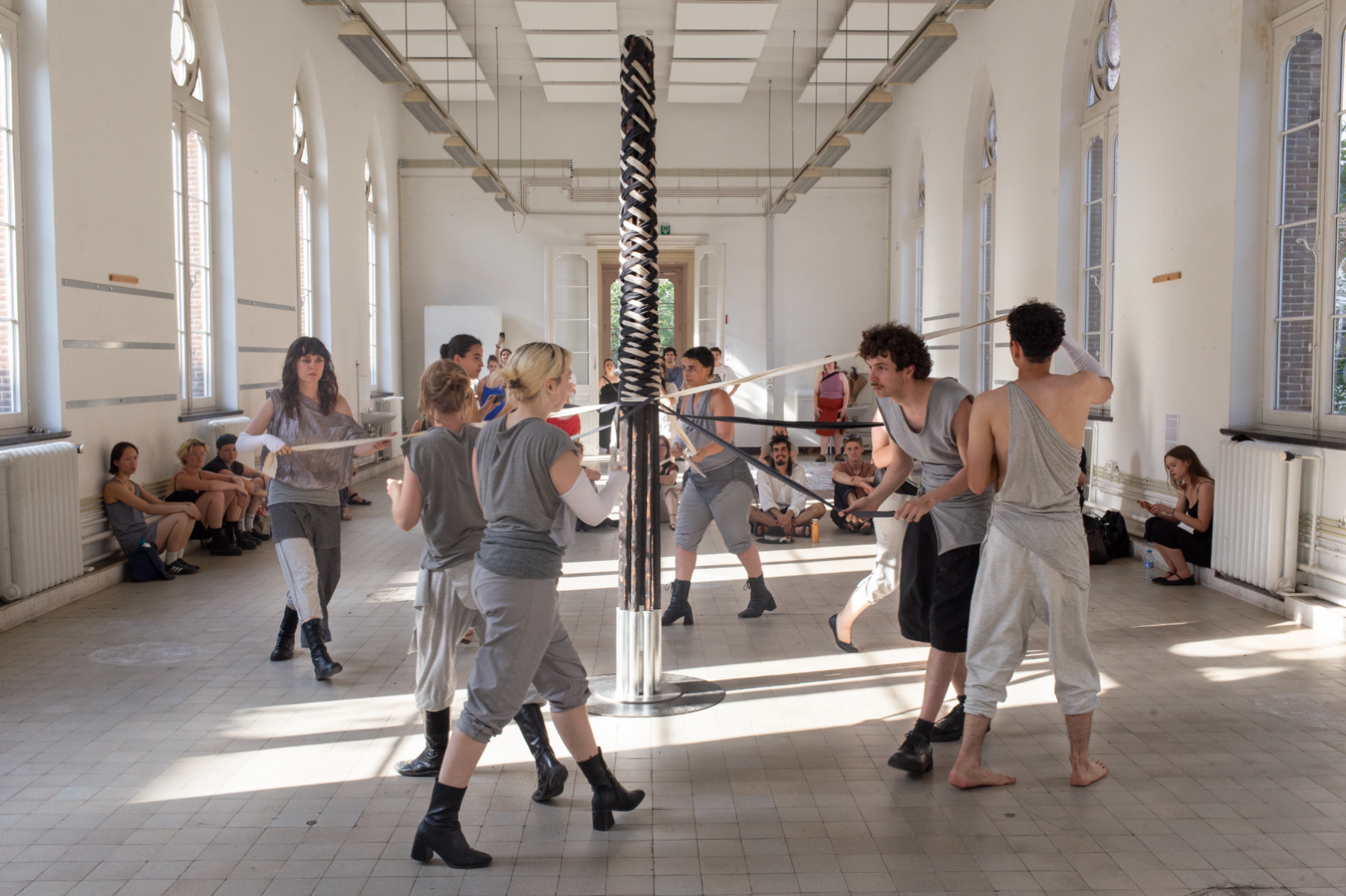
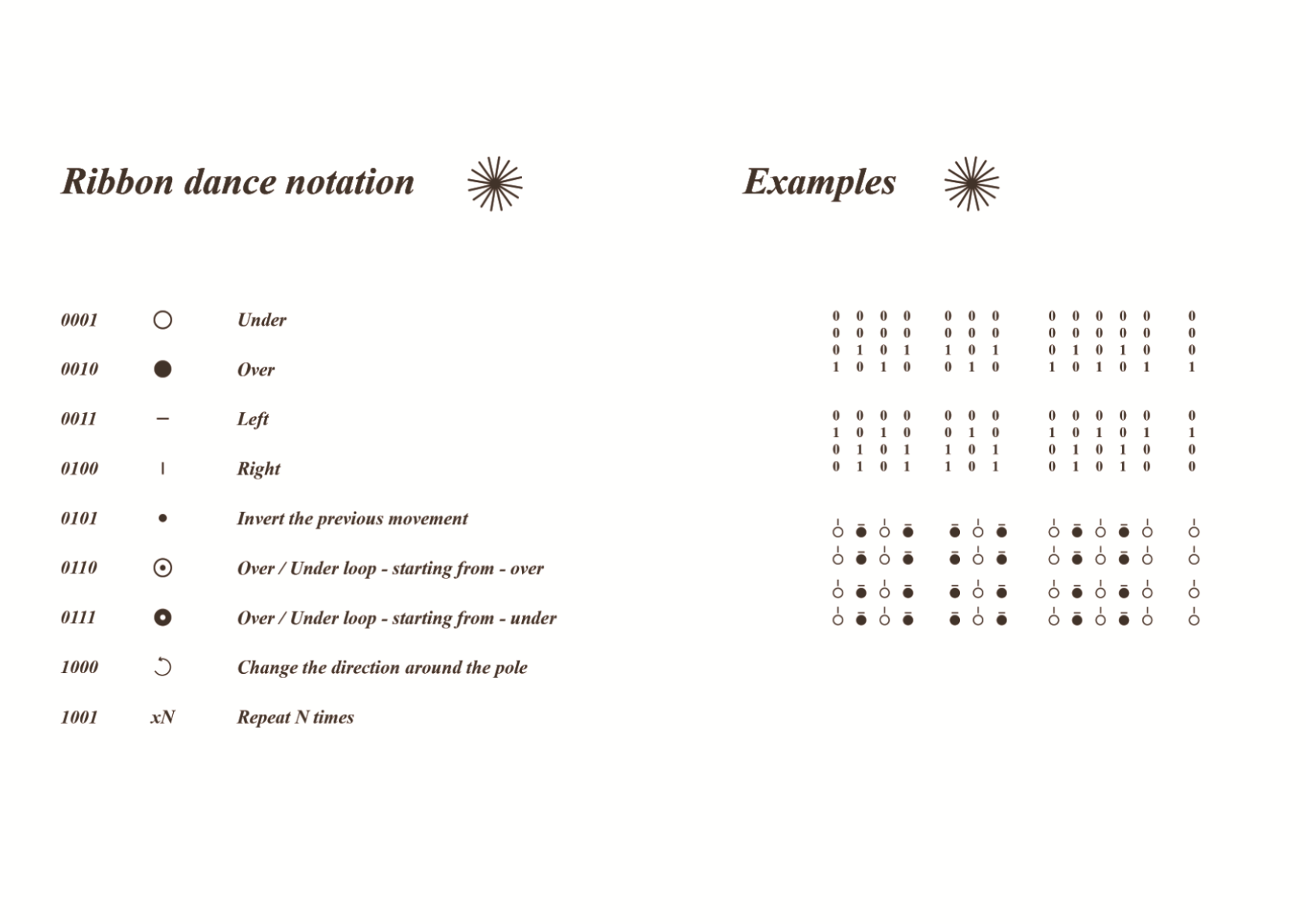
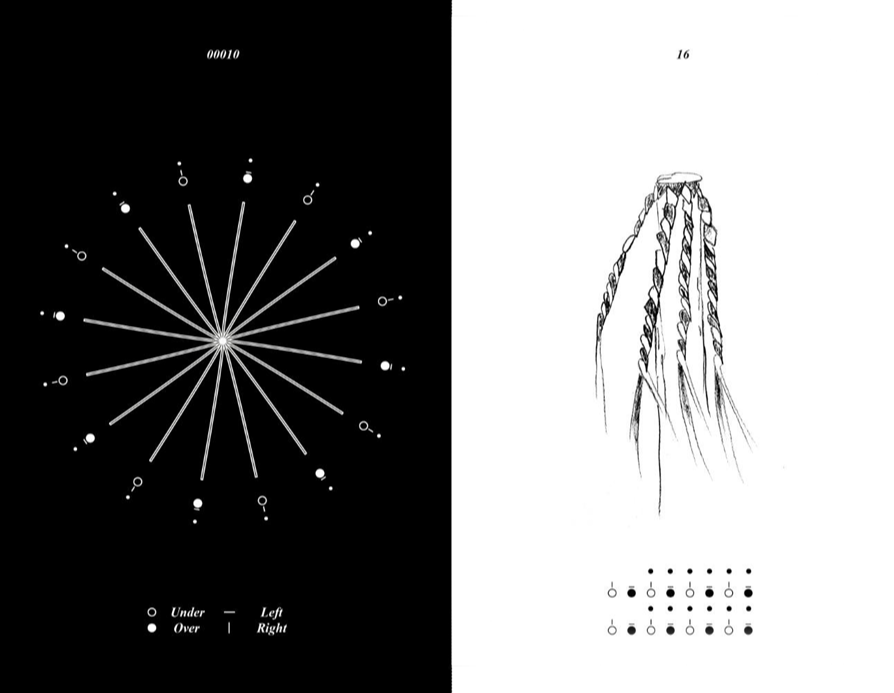
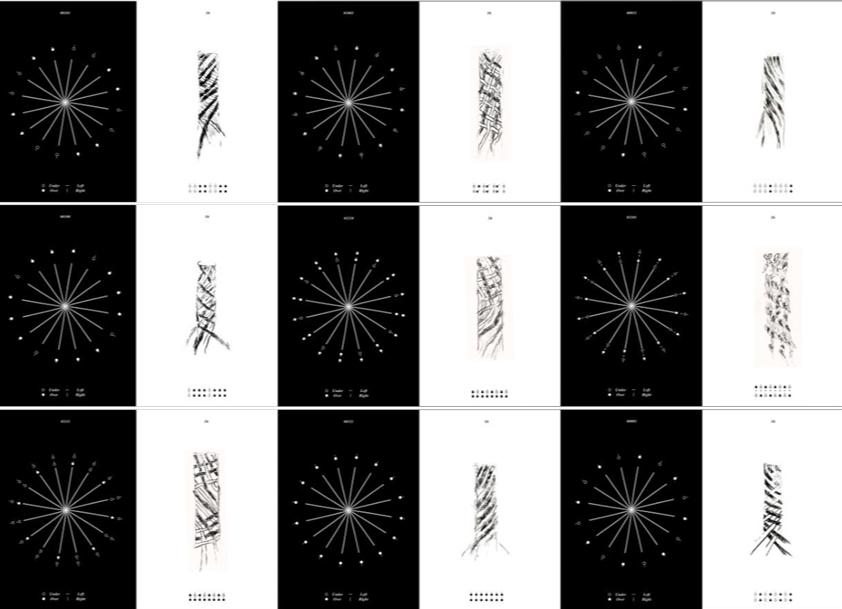
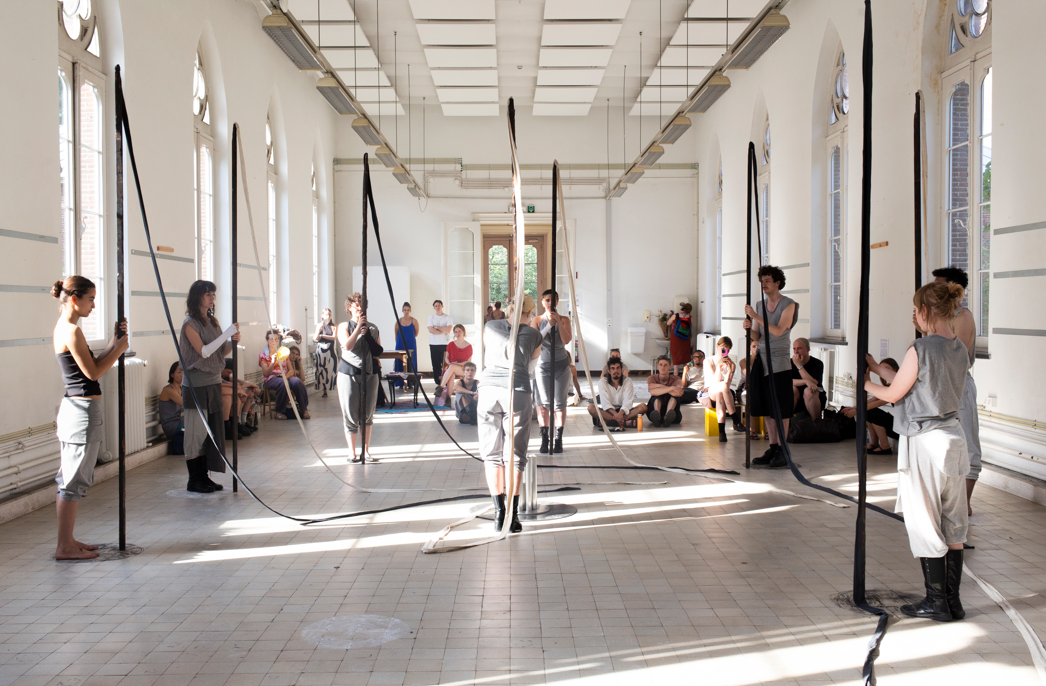
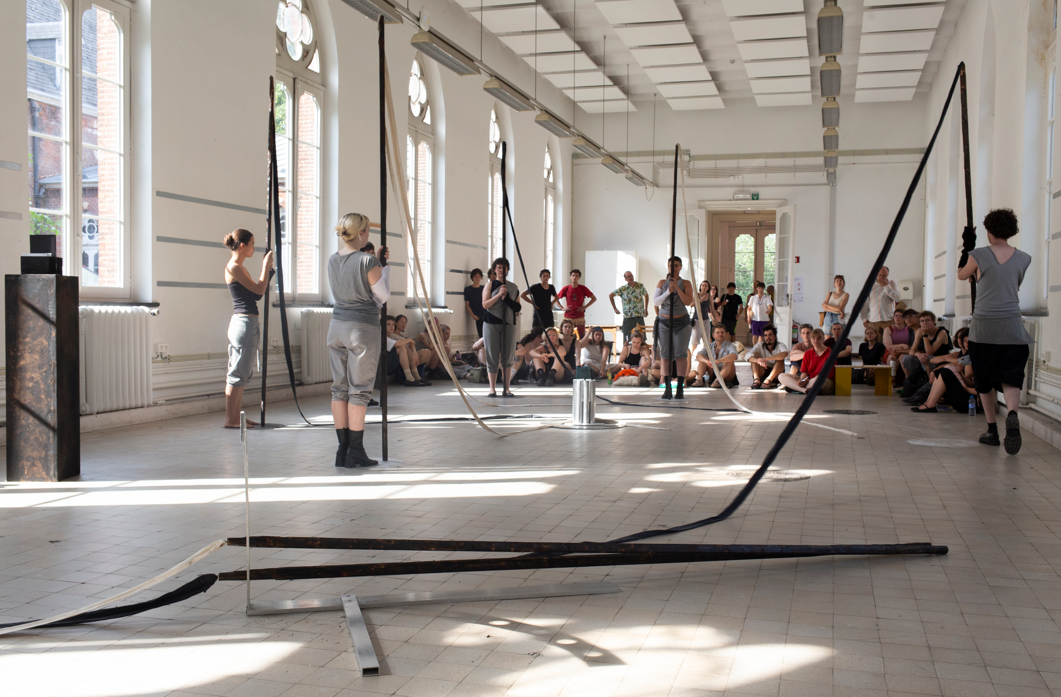
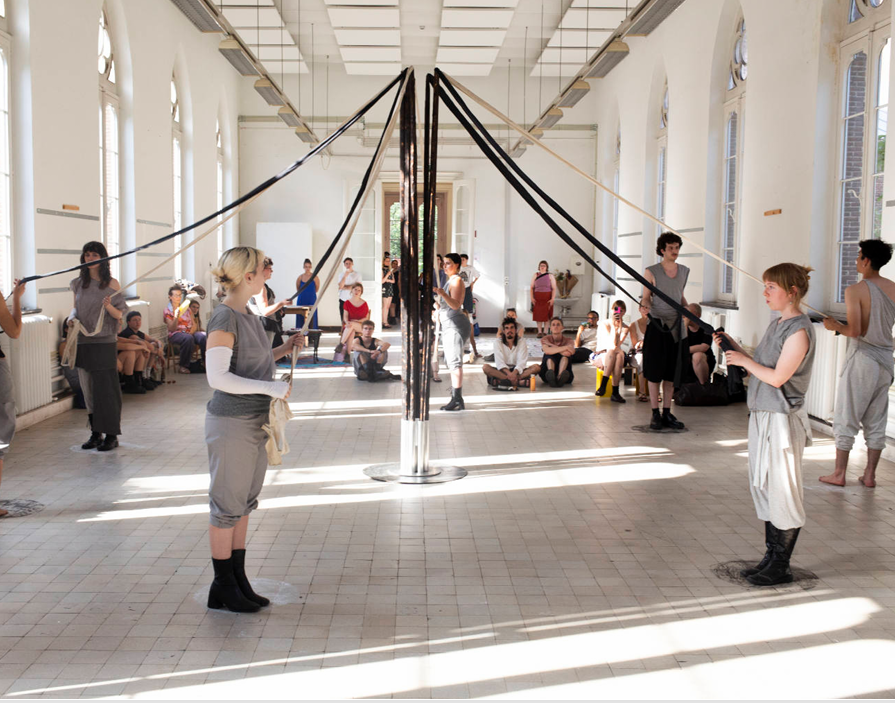
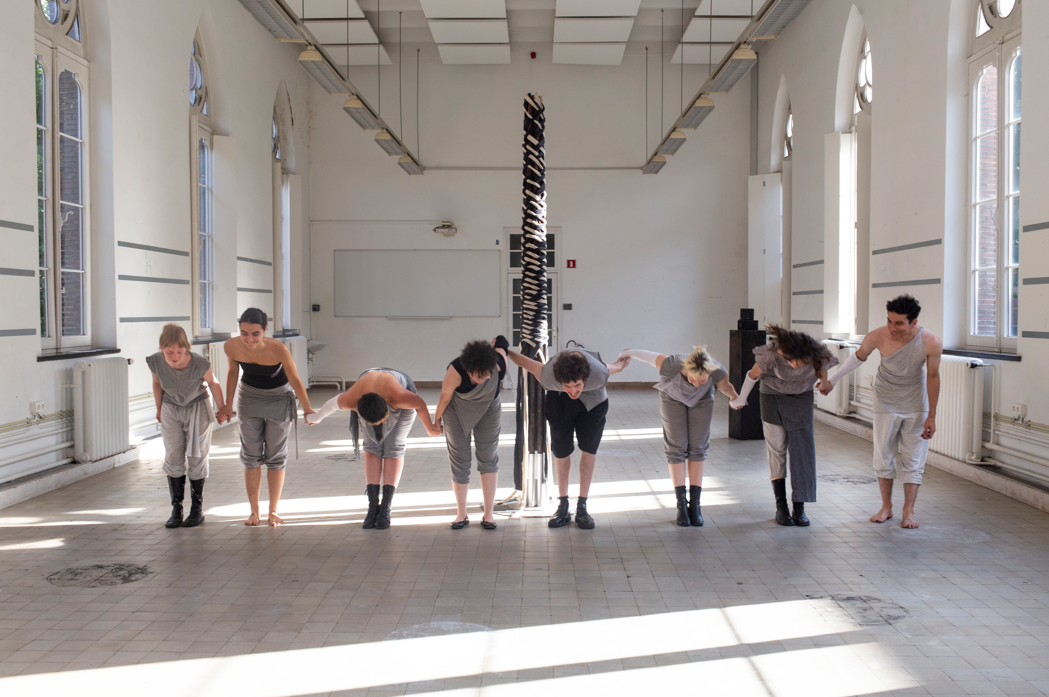
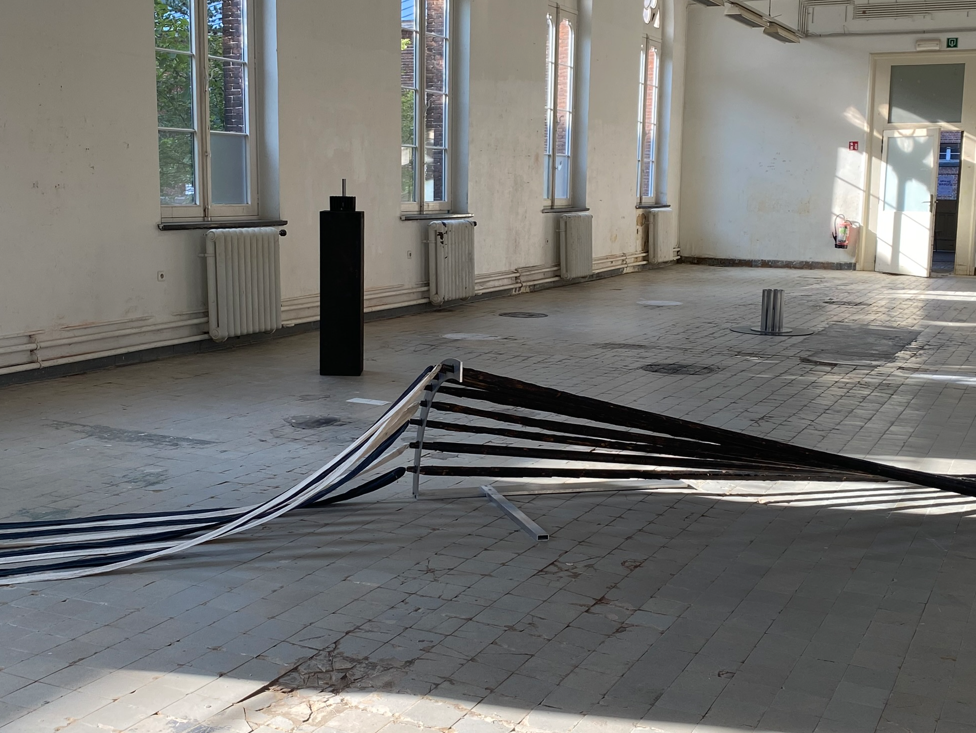
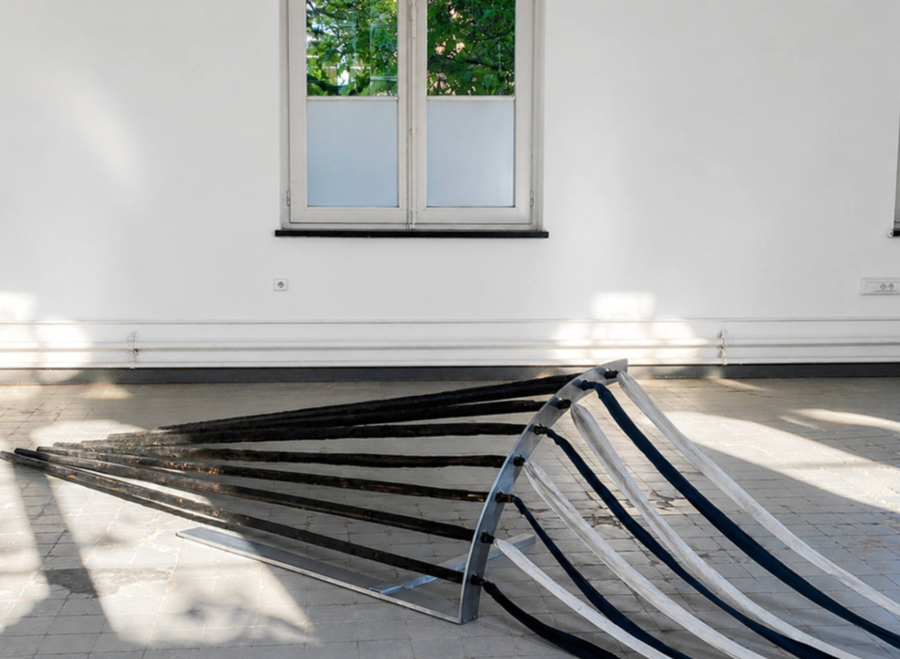
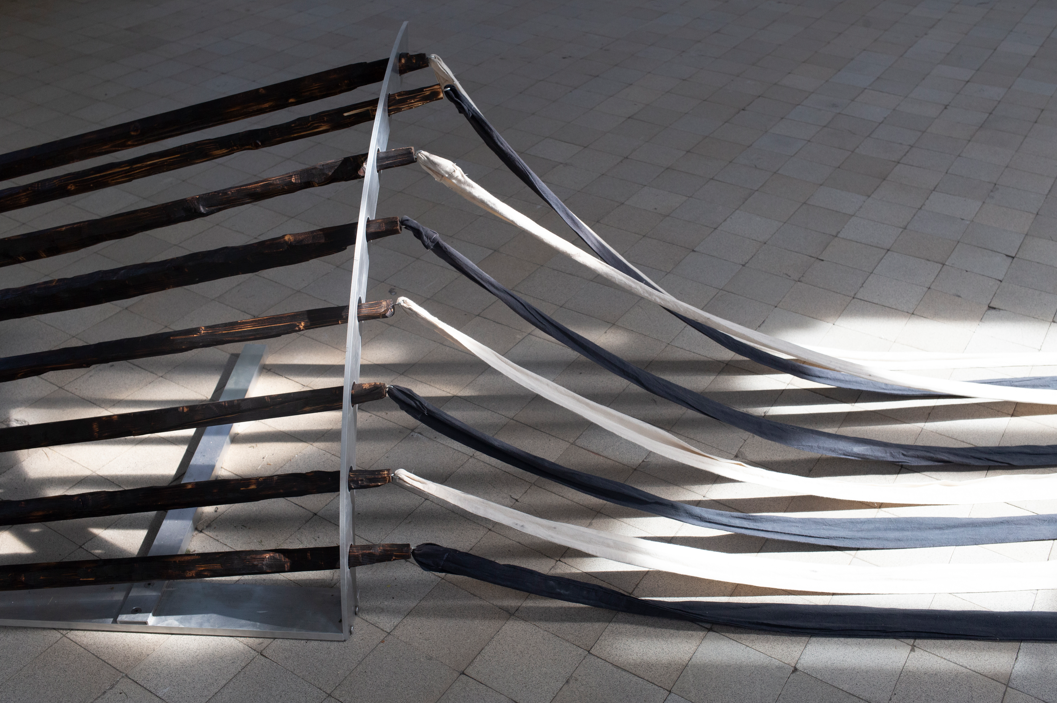
Ribbon Dance Notation is a rule-based choreographic system that explores how instructions can organise bodies, movement, space and time. Taking the traditional maypole dance - folk tradition, and the logic of weaving as its starting points, the work translates a sequence of movements into a binary notation. Each code corresponds to a specific action - passing over or under, moving left or right, changing direction, repeating or reversing a movement. The work is based on a continuous process of translation - from numbers into instructions, from instructions into bodily movements, and from movements into a woven spatial structure. In this way, code becomes choreography, and choreography produces weaving. The project investigates different forms of language, including mathematical code, choreographic notation, bodily communication and material form. It brings mathematics and art together through a generative system in which simple rules can produce numerous configurations. Its key references include Anni Albers and the experimental weaving practices of the Bauhaus workshops, as well as Franz Erhard Walther’s use of fabric, bodily action and collective participation.
Competitions