Sahra Bukhari
Fashion buying and merchandising
Fashion Institute of Technology FIT
Graduates: 2026
Specialisms: Apparel / Textiles - Print / Womenswear
My location: Houston, United States


Sahra Bukhari
First Name: Sahra
Last Name: Bukhari
University / College: Fashion Institute of Technology FIT
Course / Program: Fashion buying and merchandising
Graduates: 2026
Specialisms: Apparel / Textiles - Print / Womenswear
My Location: Houston, United States
Website: Click To See Website
About
Textile surface design and fashion accessories design is the way I translate the world around me into visual form. I find inspiration everywhere, in architecture, movement, nature, color, and the subtle patterns that exist in everyday life. These observations constantly influence my creative process. When I design, I try to capture these moments and transform them into surfaces that feel dynamic, expressive, and meaningful.For me, textile design is both an artistic exploration and a thoughtful process. I enjoy experimenting with color relationships, geometric structures, and organic forms to build patterns that communicate energy and rhythm. Each design begins with observation and curiosity. From there, I develop ideas through sketches, pattern studies, and surface explorations until the design evolves into a cohesive textile concept.Currently I am enrolled in the Fashion Business Management Program at Houston City College for a secondary A.A.S Degree. I have a Bachelors degree from F.I.T in textile Surface Design. I am aiming for masters in fashion business. I am also doing short courses at university of arts London online and parson school of design one year online program.
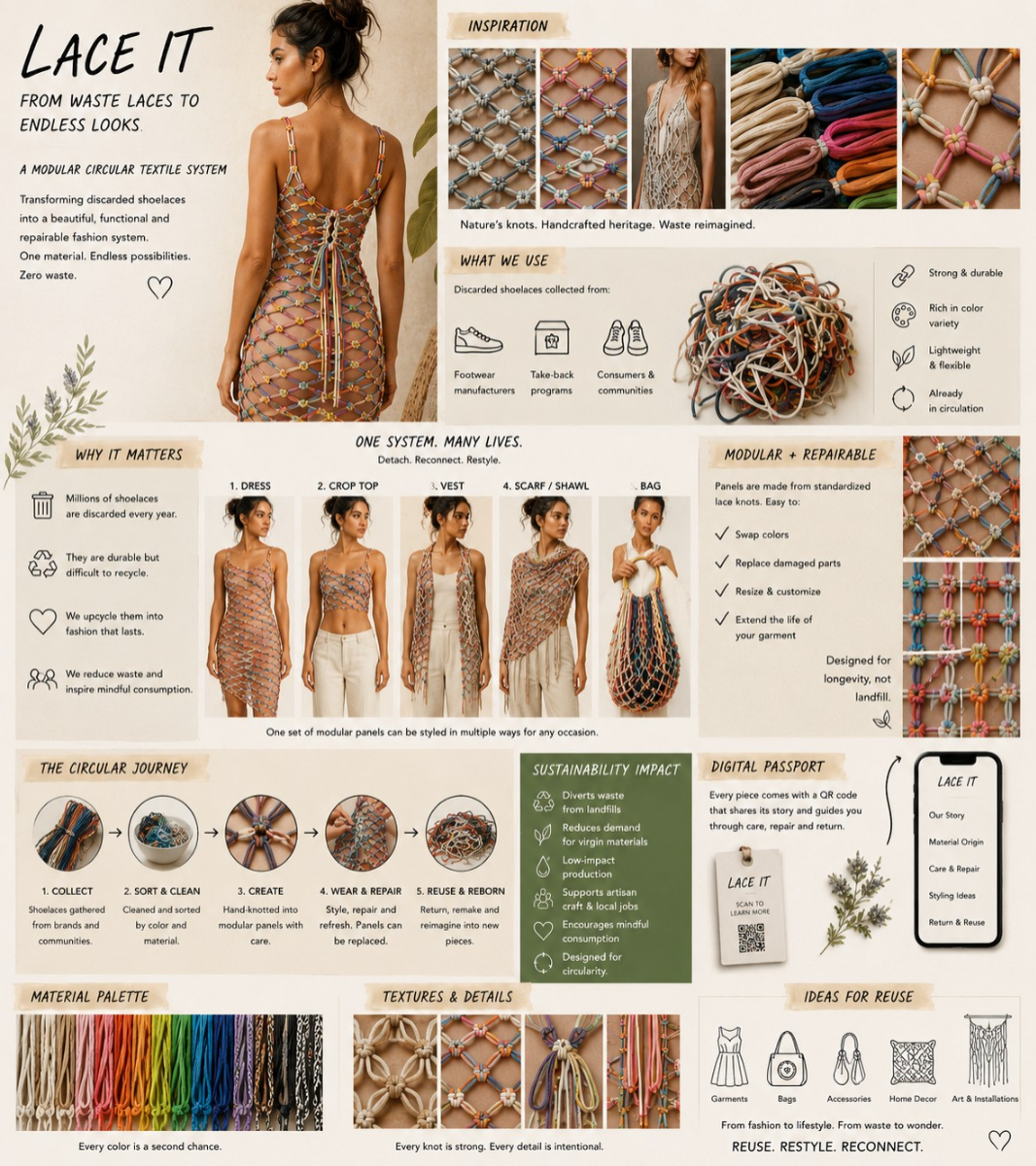
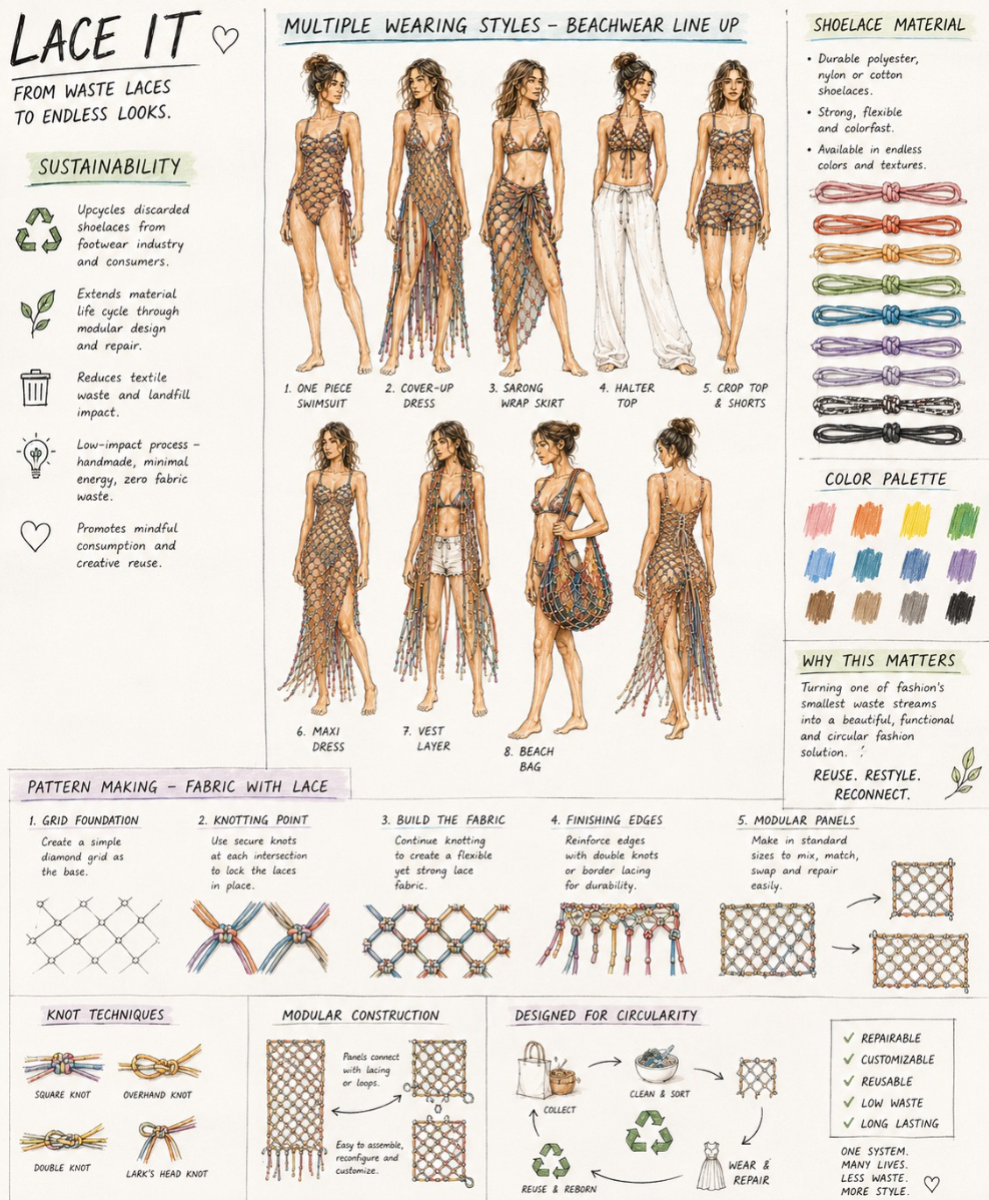
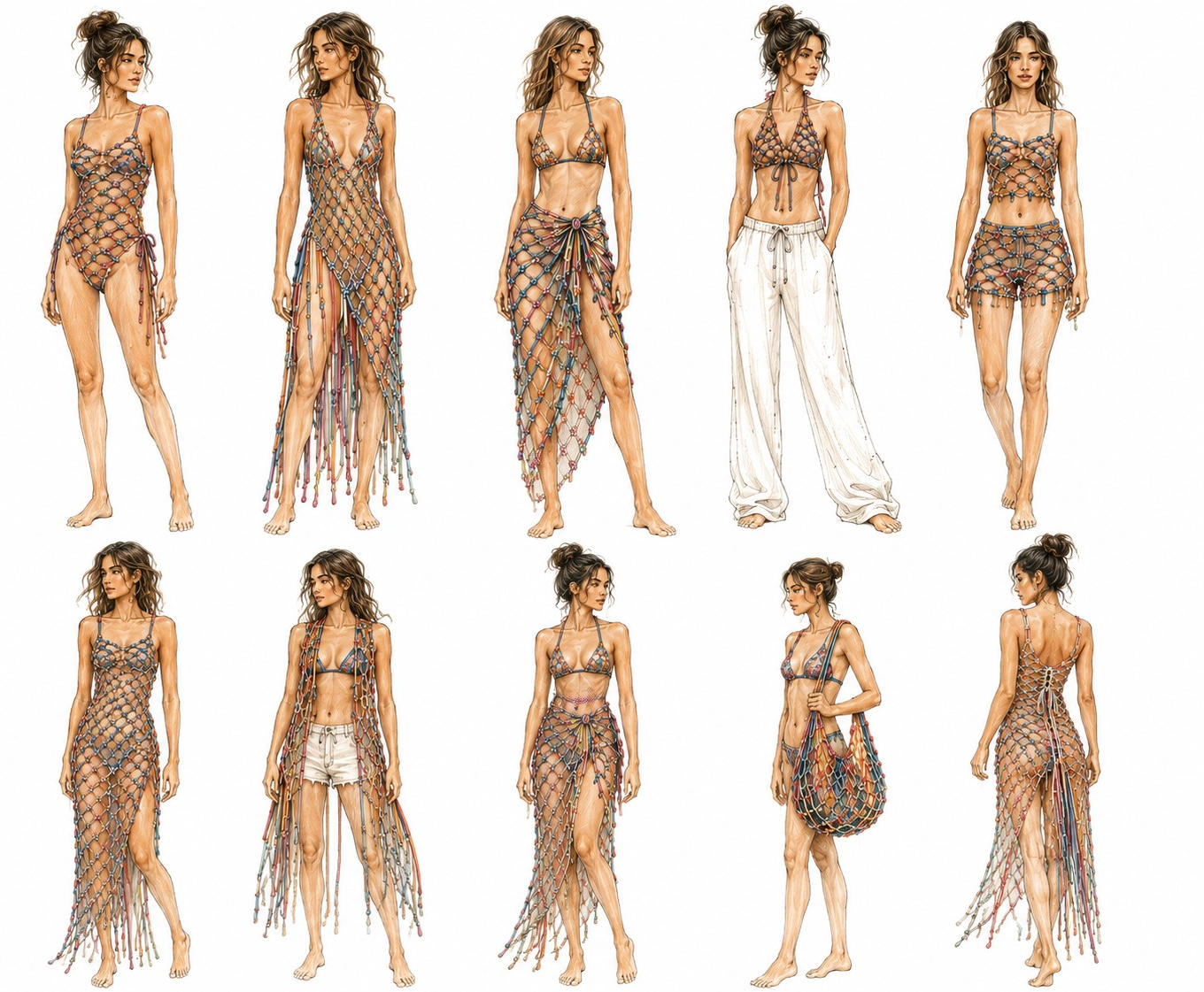
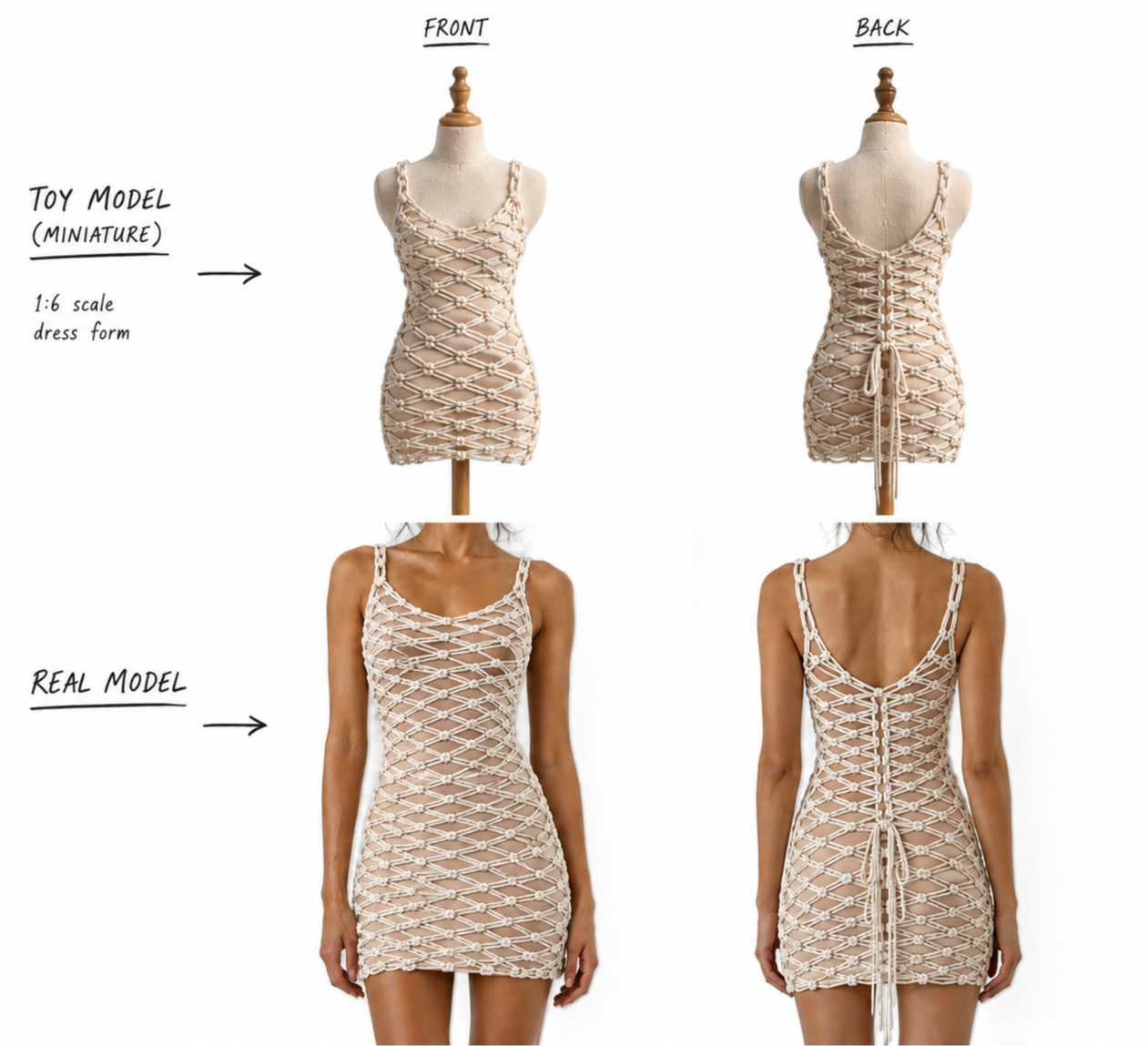
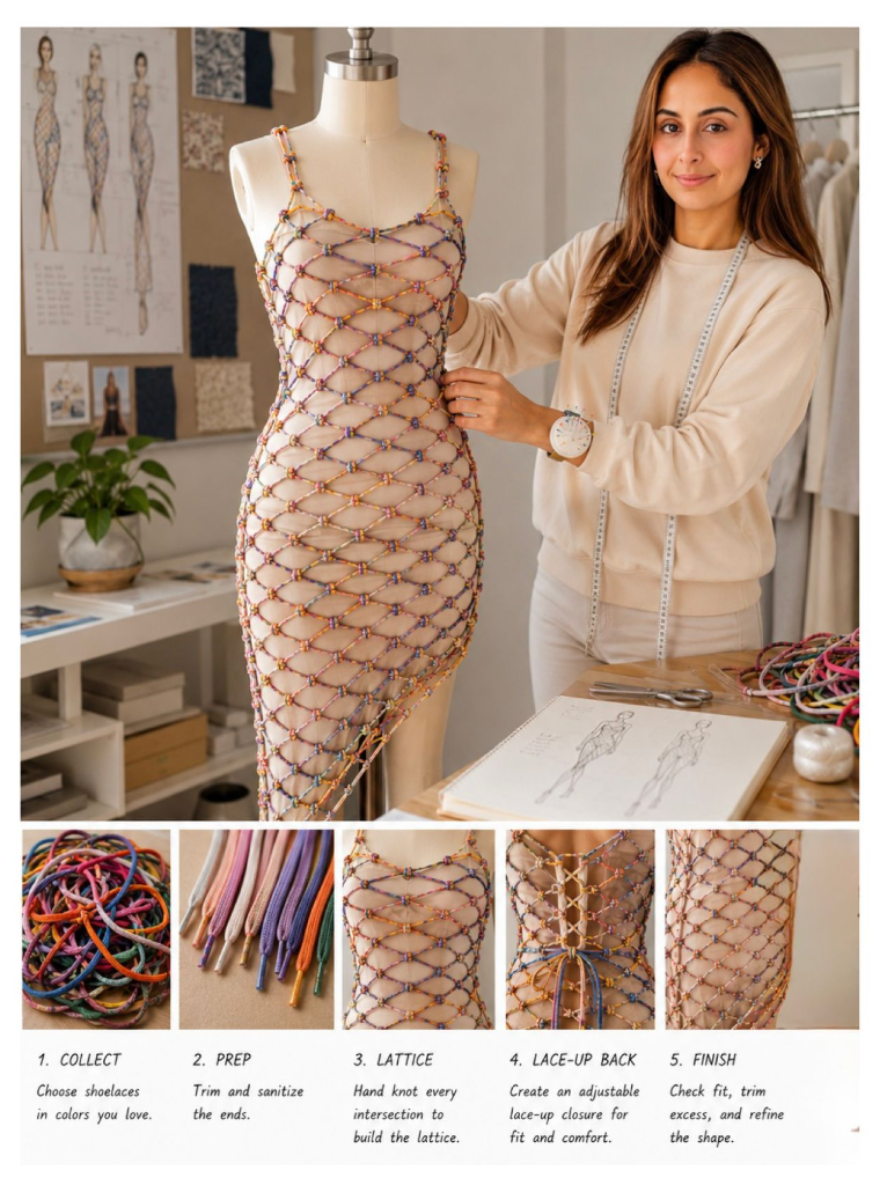

Reimagined Concept: LACE IT – A Modular Circular Conceptual description LACE IT is a circular textile concept that transforms discarded shoelaces into a modular, handcrafted fabric system for fashion and beachwear. Inspired by traditional knotting techniques and contemporary zero-waste design, the project reimagines an overlooked waste stream as a flexible, repairable, and reconfigurable material with a second life. Rather than treating shoelaces as disposable accessories, they are cleaned, sorted, and hand-knotted into diamond-grid textile panels that can be assembled into garments, accessories, and lifestyle products. The modular construction allows individual sections to be replaced, resized, or restyled, extending product lifespan and encouraging mindful consumption. A single set of panels can be transformed into multiple silhouettes, including dresses, cover-ups, skirts, tops, bags, and beachwear. LACE IT challenges conventional ideas of textile production by eliminating fabric offcuts and celebrating craftsmanship, adaptability, and reuse. It demonstrates how existing materials can be elevated through thoughtful design into beautiful, functional pieces while reducing landfill waste and the demand for virgin resources. The project promotes circularity, creative repair, and emotional durability, proving that fashion can evolve through regeneration rather than replacement. Technical description LACE IT is constructed from reclaimed shoelaces collected from post-consumer and post-industrial waste streams. The laces are cleaned, sorted by material and colour, and hand-knotted into a standardized diamond-grid textile structure using secure overhand and square knot techniques. This creates a lightweight, flexible, and breathable fabric without conventional weaving or knitting. The textile is developed as modular panels that can be joined, detached, repaired, or resized using loops and lacing connections, enabling garments to evolve over time with minimal waste. The open-mesh geometry provides natural flexibility and body conformity while reducing the need for cutting, thereby eliminating fabric offcuts during assembly. Pattern development is achieved by varying grid density, panel dimensions, and knot spacing to contour the body and create different silhouettes. The same construction method can be adapted into dresses, cover-ups, skirts, tops, bags, and accessories using interchangeable components. By extending the life of an existing material through low-energy craftsmanship and modular engineering, LACE IT demonstrates an alternative textile system that prioritizes reuse, repairability, customization, and circular design over conventional linear production.
Competitions