Han Luk-Finucane
Bachelor of fine arts - Gold and silversmithing
RMIT University Melbourne
Graduates: 2025
Specialisms: Jewelry / Fine Art / Installation/Sculpture
My location: Melbourne, Australia

Han Luk-Finucane
First Name: Han
Last Name: Luk-Finucane
University / College: RMIT University Melbourne
Course / Program: Bachelor of fine arts - Gold and silversmithing
Graduates: 2025
Specialisms: Jewelry / Fine Art / Installation/Sculpture
My Location: Melbourne, Australia
About
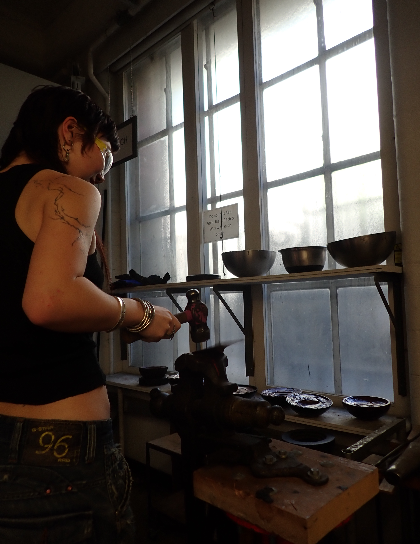
Han Luk-Finucane is a Cantonese/ 'Australian' jewellery, object and instillation artist based in Naarm (Melbourne). Working reflexivley, their practice explores layered diasporic experiences, studies of the body and memory. Through their practice, they are working to create spaces of ritual intimacy, intended to foster care and community. Han continues to investigate methods of decentring whiteness in visual language and developing culturally inscribed means of communicating experiences.
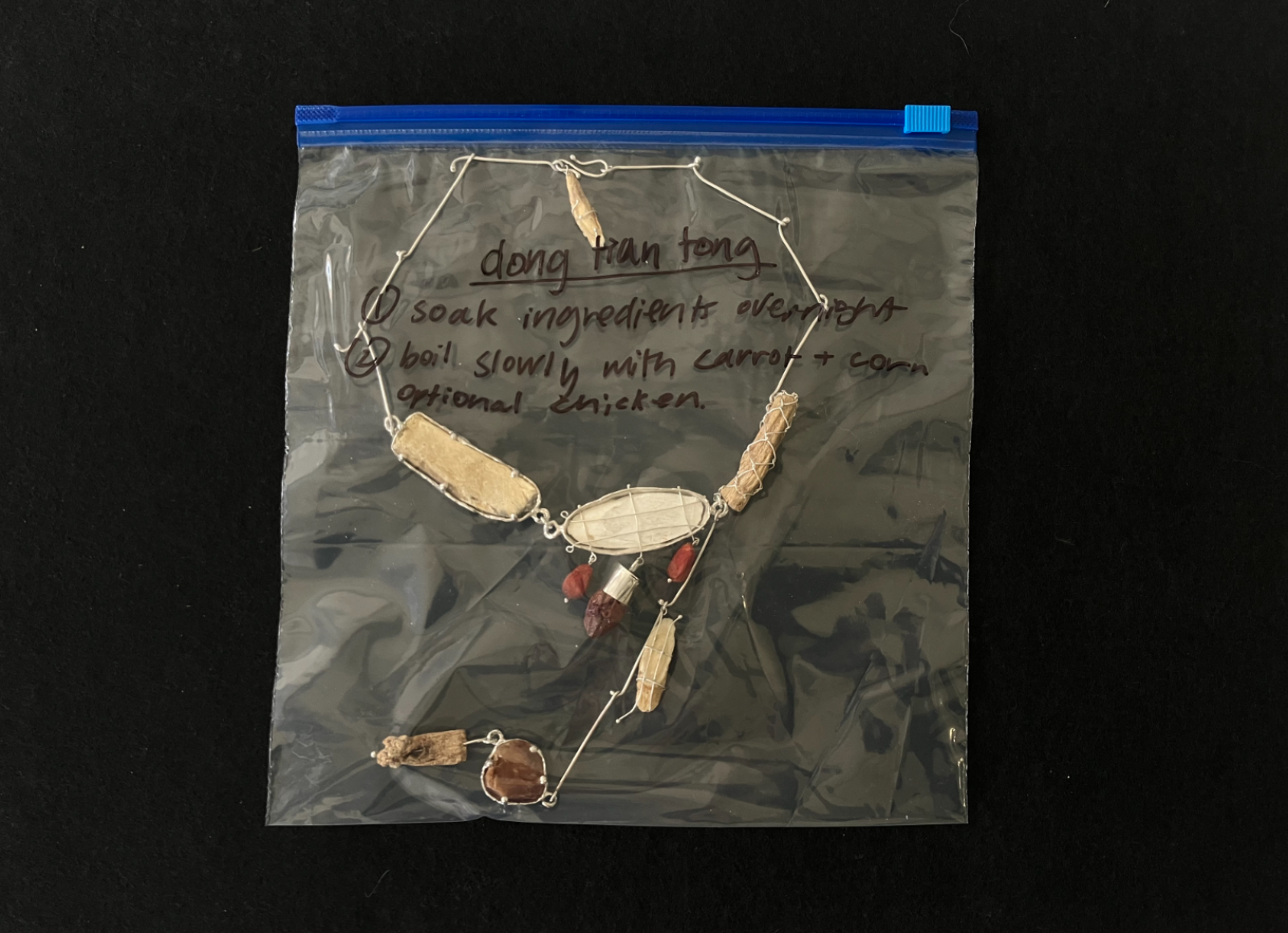
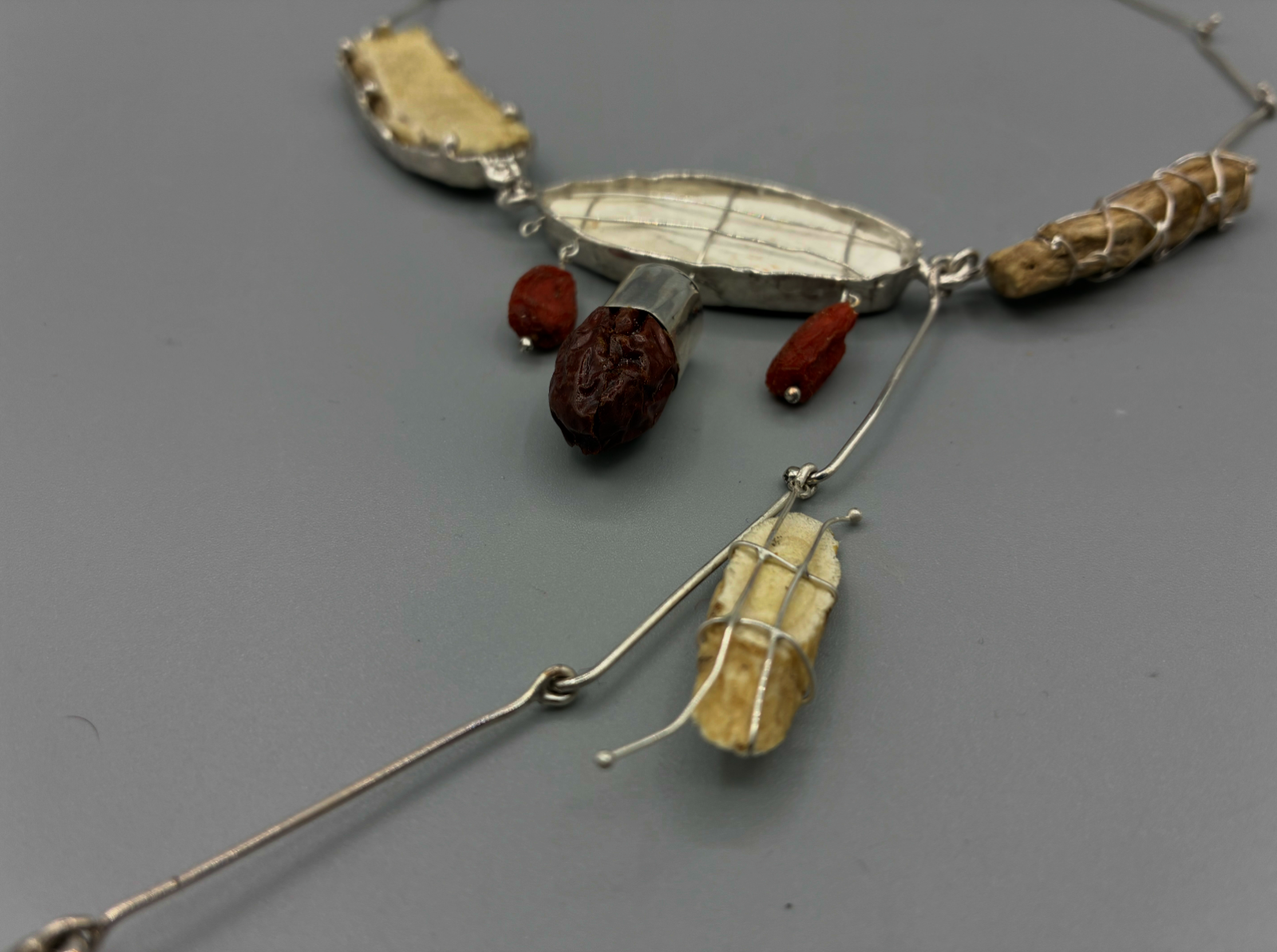
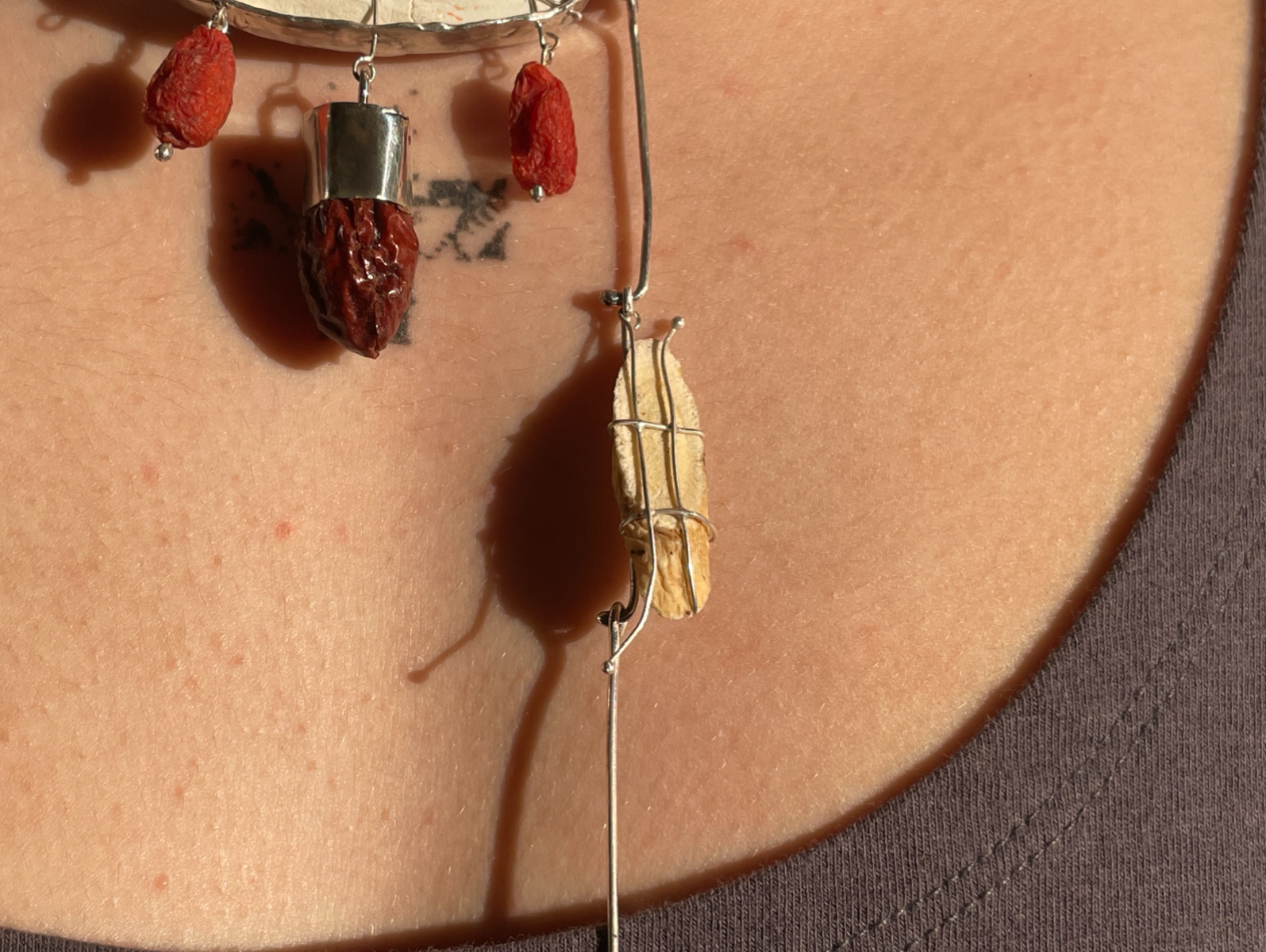
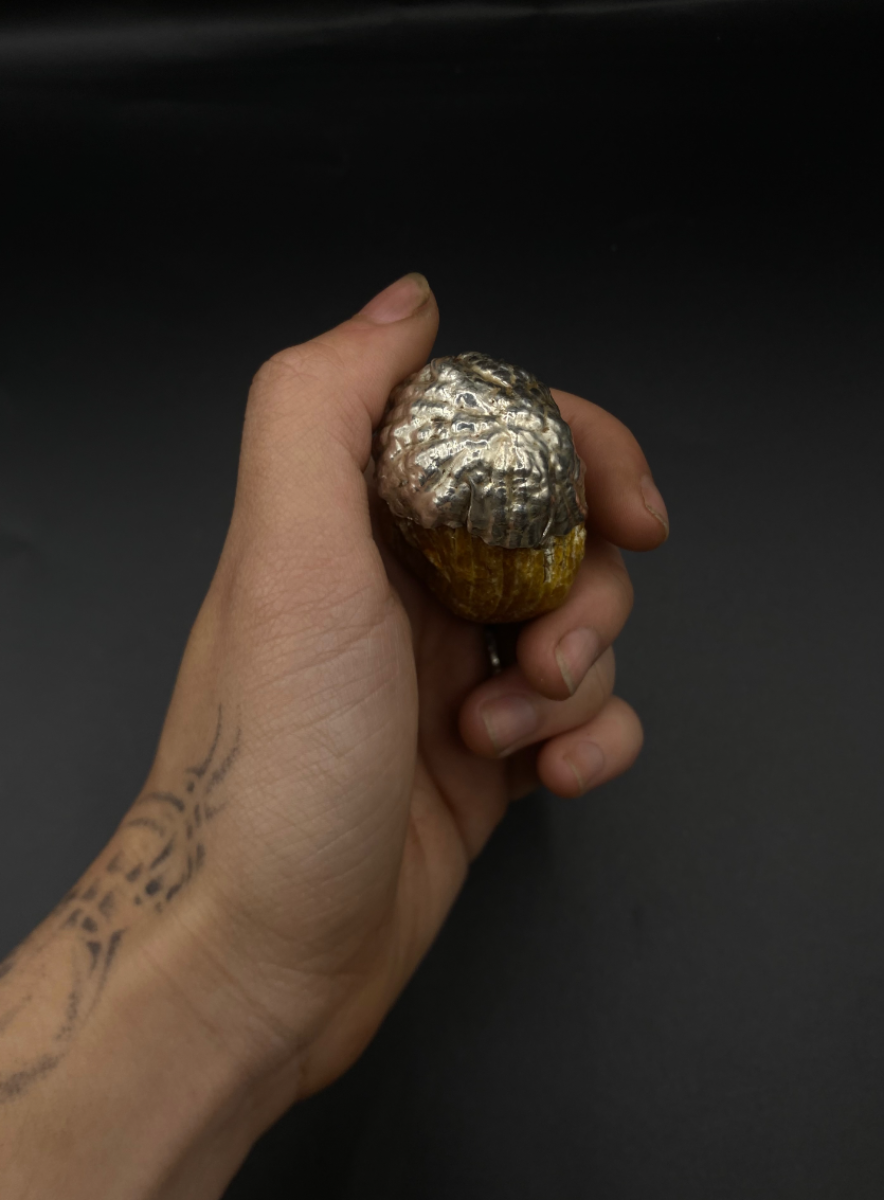
emergency soup because what is happening right now (2025)
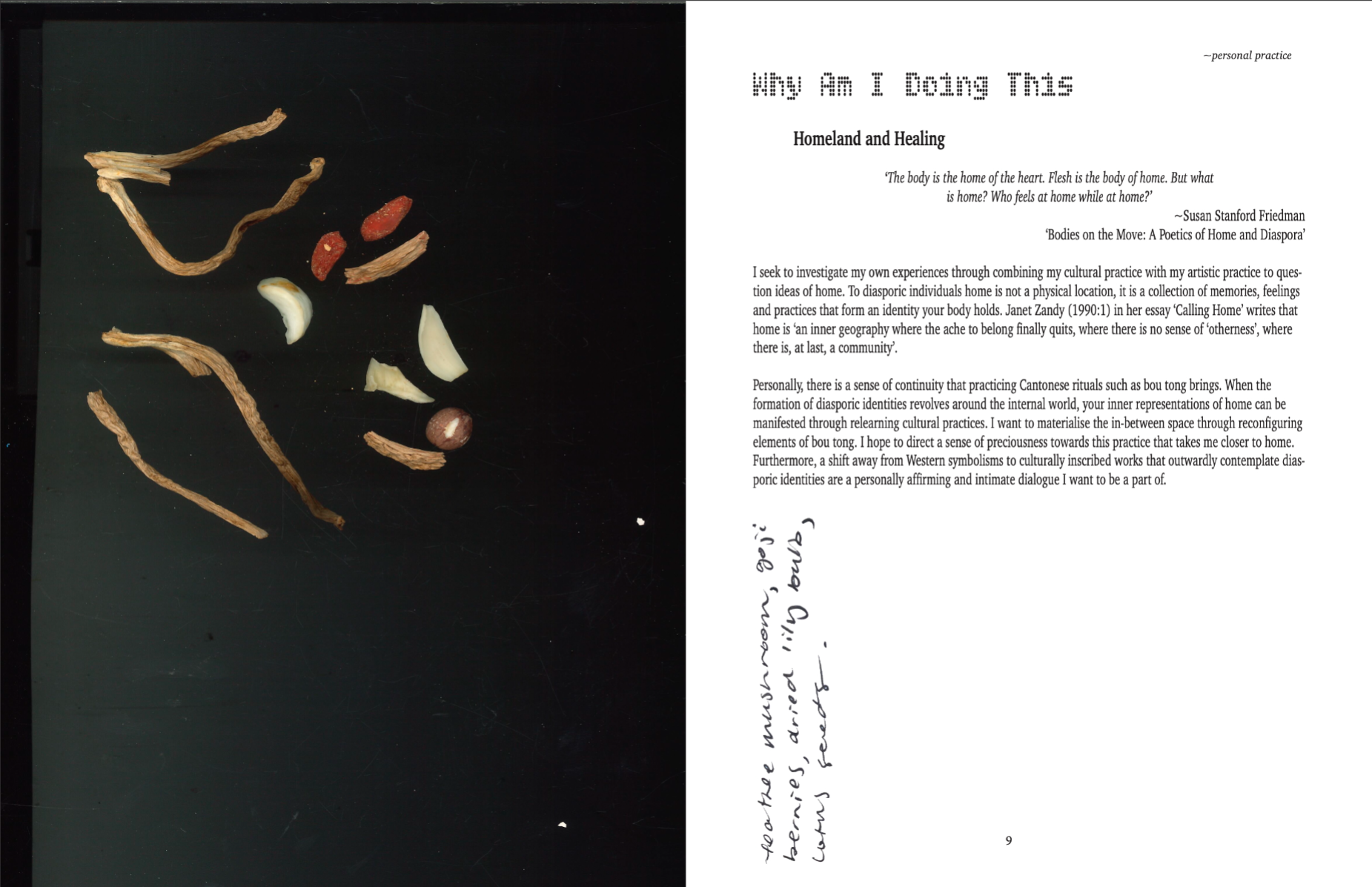
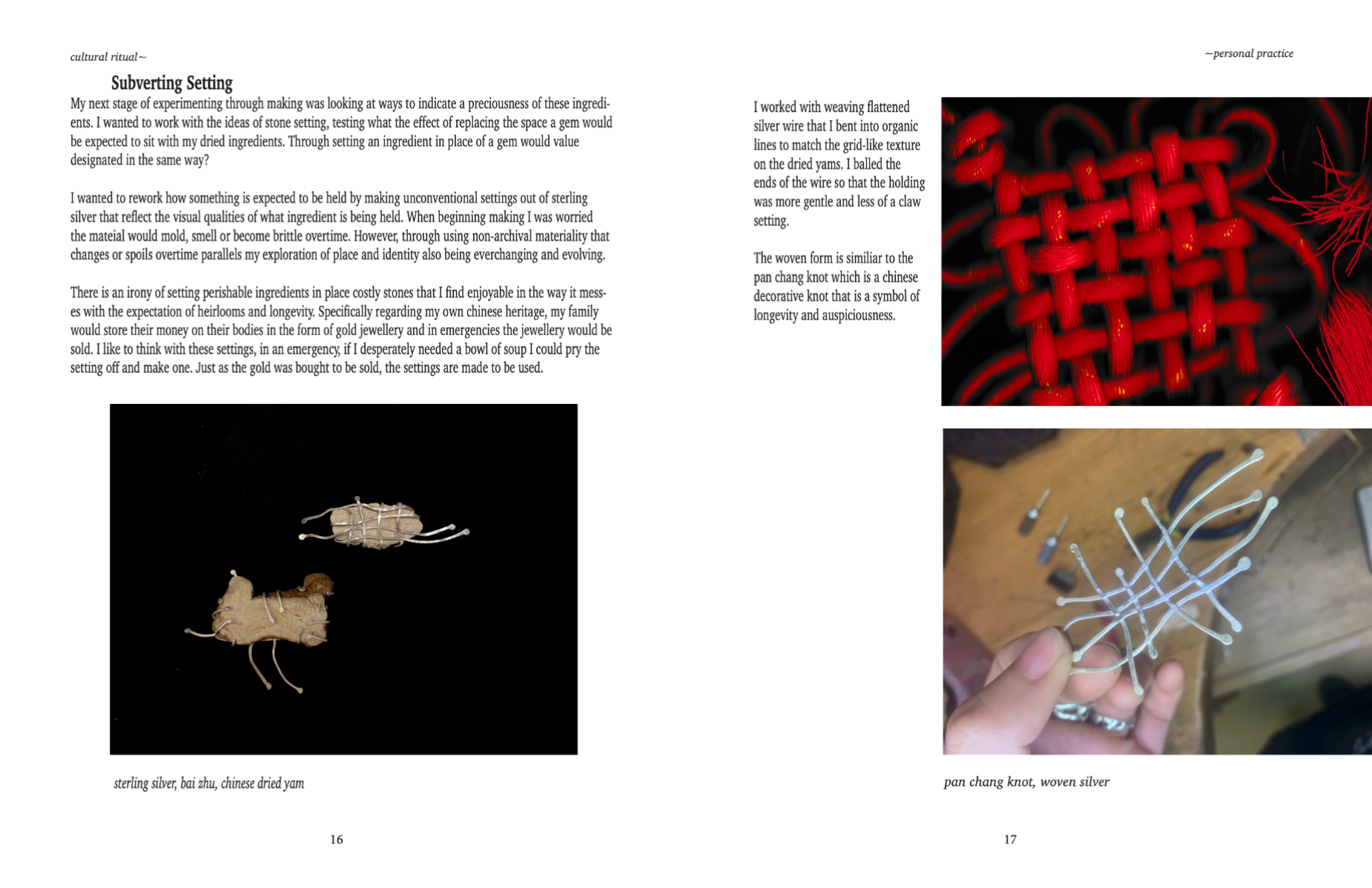
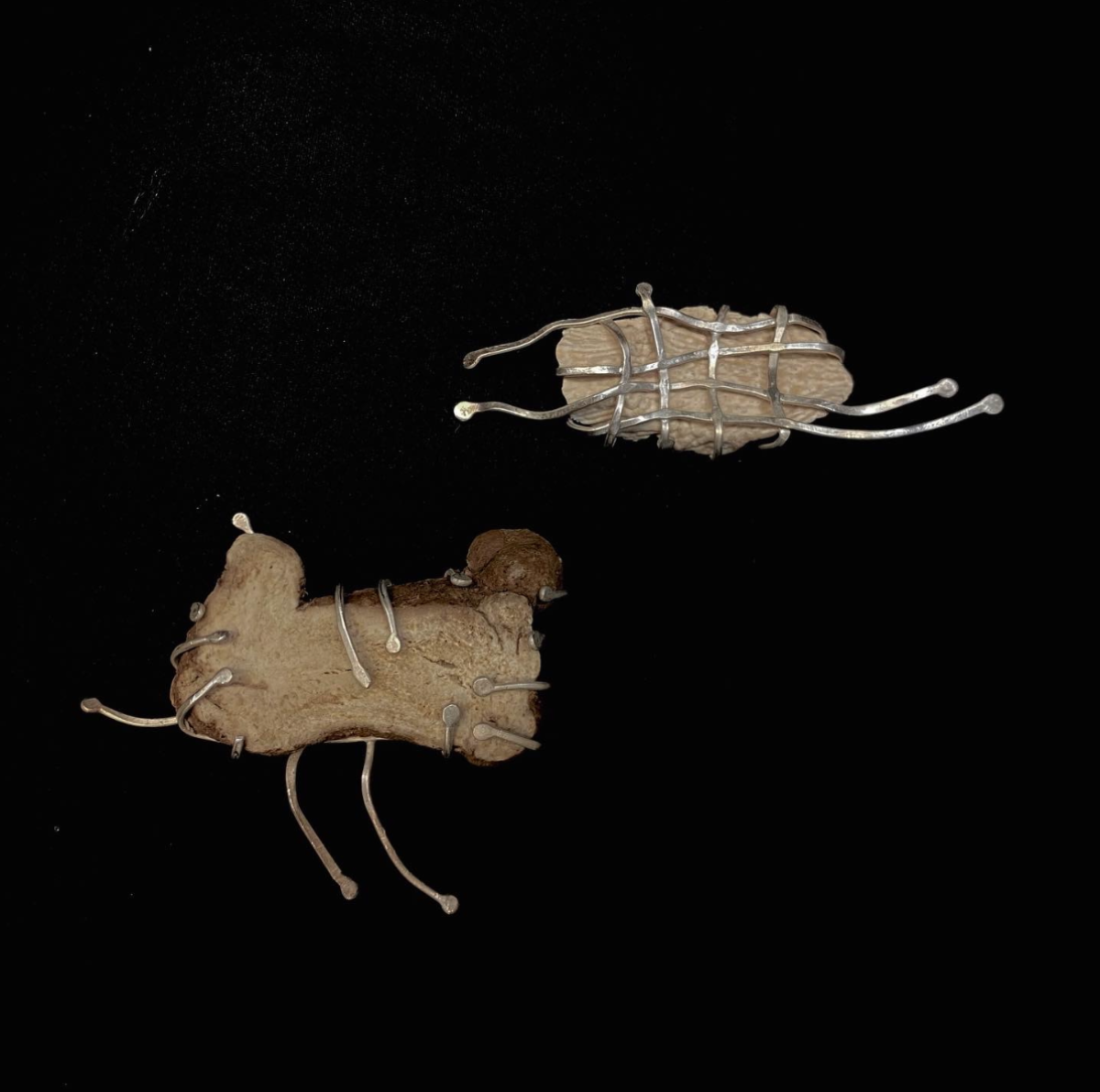
sterling silver, goji berries, jujube, dried longan, chinese wild yam, astragalus, codonopsis This neckpiece holds the dried ingredients needed to make a single serve of my mother’s 'winter soup' recipe. The work became the first piece of my series 'Objects of Care'. This series functioned as an exploration on developing a culturally inscribed visual language that felt honest and true in communicating ideas of hybridity. Grounded in traditional Cantonese medicine practices, this work builds its vocabulary from the care and nourishment-based ritual of Bou Tong (soup making) to create an encoded dialogue available only to those who recognise and identify with its practice. Through this exclusivity, I want to foster spaces of cultural intimacy and create space within the third space that we occupy. I want to prompt a sensory connectivity that extends beyond the visual. When worn the neckpiece has a distinct aroma, playing into ideas of ‘gustatory nostalgia’. This form of nostalgia offers a window into memories that are layered and embodied. Moving beyond the desire to return to a lost home, it uses the sensory richness of a regions food to bridge past and present; an alimentary exploration of identity. I imagine this work to be a protection charm to be gifted to and from members of my community. In moments of need the wearer can pry the ingredients from their settings, soak for 30 minutes, boil and consume. In a culture where gathering to share a meal is central to connection, it is no coincidence that this ritual of nourishment becomes the password to my practice.
Competitions